
It was a weak draft. It had no all-stars. It was the worst draft in NBA history. yada-yada-yada.
Say what you will about the 2011 NBA draft, but since the upcoming season is still in doubt, it is hard to project how this draft class will turn out. But we here at B.I.A.H pride ourselves on going the extra mile, and fighting for every inch. So instead of projecting how this draft class will pan out in 12 months, we are taking a five-year look-forward-look-back at the 2011 NBA Draft class. The accuracy of these projections is questionable at best, but the entertainment value can not be understated.
So read ahead and enjoy our yearbook-esque "In Five Years" look at the 2011 NBA Draft Class.
#1 Cleveland Cavaliers: Kyrie Irving, Duke
Kyrie Irving will spend five mediocre seasons averaging 12-points and four assists for a mediocre Cleveland team. He will then leave the mediocre state of Ohio via free agency in a mediocre publicity stunt called "The Announcement" held on Ustream by mediocre "video-vixen" @RealMissHawaii. Kyrie's toe will achieve much greater success, as it is inducted into the athletic Hall of Fame at UNC-Chapel Hill in the Spring of 2014.
#2 Minnesota Timberwolves: Derrick Williams, Arizona
Williams will be the first player from this draft to play in an All-Star game. Unfortunately, it will go largely unnoticed in the state of Minnesota, where most fans will still be under the impression that he is a one of the nine defensive tackles for the Minnesota Vikings with the last name Williams.
#3 Utah Jazz: Enes Kanter, Kentucky
The Mormon nation of Utah will deem Kanter ineligible to participate in the state due to his affiliation with John Calipari. However, Kanter will have to most productive career out of anyone in this class. He will just have to find an organization willing to let him participate.
#4 Cleveland Cavaliers: Tristan Thompson, Texas
There must be a reason why the Cavs took Thompson so high. Hopefully five years is enough time for us to figure out why they did. But in all seriousness, next too Zydrunas Ilgauskas, Thompson will be the best foreigner ever drafted by the Cavaliers (He's Canadian).
#5 Toronto Raptors: Jonas Valanciunas, Lithuania
Valanciunas is a key-cog for the Raptors towards the end of the decade. Unfortunately, the Raptors will still stink and they will still play in Toronto, where nobody gives a crap about basketball. But in hindsight, the Raptors made a good pick in the first round of the 2011 NBA Draft.
#6 Washington Wizards: Jan Vesely, Czech Republic
In five years Vesely's career highlight will be one of two things: 1) The first European to win a NBA Slam dunk contest, 2) His epic makeout session with Mrs. Central Europe 2011 in the NBA draft Green Room.
#7 Sacramento Kings: Bismack Biyombo, The Republic of Congo (Traded to Charlotte)
Like many Bobcats first round selections, he will get traded no less than three times in three years, finally landing in Memphis, where he becomes a halfway-decent starting forward. However, officials find out that Biyombo was 27 years old when he was drafted, instead of 18 as draft reports indicated. His knees start to deteriorate and is out of the League before 2016. He uses his NBA earnings to help raise the quality of living in his home country of Congo.
#8 Detroit Pistons: Brandon Knight, Kentucky
Knight will be one of the names you remember from this draft class. He will spend 2-3 unhappy years with the Pistons before Dwight Howard will announce his intentions to stay in Orlando, and the Magic will trade their spare parts to Detroit for Greg Monroe and Knight. Orlando makes it to the the NBA Finals in 2014 with Knight as the team's starting point guard.
#9 Charlotte Bobcats: Kemba Walker, UConn
In five years, Walker will be the only first-rounder from this class to win an NBA Championship. In his third season, he will lead the Bobcats to the playoffs for the first time since 2009. Like he did so often in college, Kemba will "Go Ham", averaging 23 ppg, 8 apg, 5 rpg, and 3 spg en route to the organization's first Championship. Oh yeah, they will do it by going a perfect 16-0 in the post-season. This will give Walker a post-season record of 28-0 since 2010.
#10 Milwaukee Bucks: Jimmer Fredette, BYU (Traded to Sacramento)
Jimmer will be a life-long King. His arrival will be a blessing for the city of Sacramento. The team's attendance will steadily increase, as will their popularity amongst the Mormon community. In future year's they will refer to Jimmer as "The Man That Saved Sacramento". By 2013, Sacremento will trail only Salt Lake City in number of Mormon residents. By his fifth year, Jimmer will be the NBA leader in jersey sales and number of offspring. He will win the 2014 and 2015 NBA Three Point contest, forcing the NBA to added a second line to the court, which will be referred to as "From beyond Jimmer range". Shots from here are worth four points.
#11 Golden State Warriors: Klay Thompson, Washington State
Two scenarios for Thompson in five years: 1) The tides turn in the West. The Lakers, Spurs, Suns and Mavericks fall to the back of the pack and teams like the Warriors, Clippers, Thunder and Blazers become the cream of the crop. Thompson will be a key contributor for the Warriors, who make consecutive playoff runs for the first time since the 80s. 2) Thompson takes full advantage of California's marijuana legalization, becomes good friends with Snoop Dogg and Katt Williams, but ends up getting traded...to the Nuggets or Blazers.
#12 Utah Jazz: Alec Burks, Colorado
Burks will become one of the better players from this draft class. Teamed with Enes Kanter, Al Jefferson, Paul Milsaps, Devon Harris and Harrison Barnes, who they will draft in the first round of the 2012 draft, the Jazz will become one of the best teams in the West. They will make it to two consecutive Western Conference finals, but will come up short, causing the organization to do an unnecessary overhaul of the team. Burks will get traded to Denver, where he will become a fan-favorite.
#13 Phoenix Suns: Markieff Morris, Kansas
After a brief stint in Phoenix's version of the Big-3, known as "The Brothers From Another Mother" featuring Taylor Griffin and Brooke Lopez, 'Kieff will leave Phoenix in order to be closer to his brother Marcus. Unfortunately for him, this comes in the form of a D-League contract with the Austin Toros.
#14 Houston Rockets: Marcus Morris, Kansas
Marcus will have a lengthy pro career in which he spends the majority of his time in Houston. in 2016, he will have played 342 NBA games. However, 78 of those games will be played by his brother Markieff, unbeknowst to Rockets fans or League officials.
#15 Indiana Pacers: Kawhi Leonard, San Diego State (Traded to San Antonio)
Kawhi Leonard will make it eventually. He will continue to improve on a year-to-year basis. He will never be an All-Star, and will never win any individual accolades, but he will be a starter for a NBA team at some point or another. It's not the sexiest "Five Years From Now" prediction, but well, the dude will still be in the League. And that can't be said for everybody in this draft.
#16 Philadelphia 76ers: Nicola Vucevic, Southern California
Vucevic will have a much better career than people expected. He will be part of the 2011-2012 Rookies vs. Sophomores game at All-Star weekend and will be a surprise candidate for Rookie of the Year. But a few years into his young career, he will get into an altercation with a fan. (The details are sketchy, but Ric Flair-style knife-edge chops were involved), The Philly Phaithful will chase Vucevic out of town. He will fail to regain the form that brought him success in Philly, and will be on his way out of the league by 2016.
#17 New York Knicks: Iman Shumpert, Georgia Tech
Shumpert does not last long in New York City. Not even a cameo in a Spike Lee joint can save him from the enraged Knicks fans He ends up finishing his first contract in in Oklahoma City, New Orleans or Brooklyn, as part of a large trade that gives the Knicks a superstar point guard.
#18 Washington Wizards: Chris Singleton, Florida State
Singleton will become a long-term pro because of his defense. He will be nothing more than a stopper, as his offensive game will not improve playing next to ballhogs like JaVale McGee and Andray Blatche. But Singleton will have had moderate success by 2016, which will make New York Knicks fans even more irate at Iman Shumpert.
#19 Charlotte Bobcats: Tobias Harris, Tennessee (Traded to Milwaukee)
Say hello to the 2011-2012 Rookie of the Year. Yup that's right, Tobias Harris won the 2011-2012 Rookie of the Year Award. The Bucks will be a top-5 team in the east and compete for the Central Division title on a yearly basis with the Chicago Bulls. Harris will become the face of the "NBA Cares" program, spending time starting water balloon fights with underprivileged teens in the greater-Milwaukee area.
#20 Minnesota Timberwolves: Donatas Montiejunas, Lithuania (Traded to Houston)
In 2016, Montiejunas will be on a NBA roster, and here's how it happens. He will have stayed in Europe for the 2011-2012 season, then played a starring role for the Lithuanian National Team that wins the Bronze Medal at the 2012 Summer Olympics in London. in 2013, he's touted as the next Arvydas Sabonis. After a successful "rookie" season a la Louis Sciola, he gets traded to Oklahoma City. But like Sabonis, he's already old (21 in 2011) and has the knees of a 50-year old. He finishes out his "career" on the pine.
#21 Portland Trailblazers: Nolan Smith, Duke
Smith spends two seasons in Portland as a moderately-used backup guard. But he will ultimately end up where all the prolific, well-known college players of the last decade end up: As a member of the Indiana Pacers.
#22 Denver Nuggets: Kenneth Faried, Morehead State
Unfortunatly for professional scouts and draftniks, Faried is not the next Dennis Rodman. He becomes an excellent "energy guy" but that is about it. Luckily, he is paired together with Denver's other "energy guy", Chris "The Birdman" Anderson. The two join forces to form a tag team known as "High Voltage". They become spokeman for various local companies. Fried chicken throughout Denver is renamed "Faried Chicken".
#23 Houston Rockets: Nikola Mirotic, Montenegro (Traded to Minnesota, then to Chicago)
Do you remember the last native of Montenegro to get drafted? You know, that guy who got picked between LeBron and Carmello? Well, things don't end up much better for Mirotic. Picked No. 23rd overall, Mirotic is the first member of the 2011 draft class to crash and burn. In five seasons he plays a total of 26 games for six different teams. He ends up having a hot girlfriend, but that's about it.
#24 Oklahoma City Thunder: Reggie Jackson, Boston College
Jackson becomes the full-time starter for the Thunder after an locker room altercation takes place between him and Russell Westbrook. The Thunder cut ties with Westbrook, and Jackson goes on to make one all-star game as a reserve. He also becomes the second player from the draft to win a title, as the Thunder defeat the Orlando Magic in the 2015 NBA Finals.
#25 Boston Celtics: Marshon Brooks, Providence (Traded to New Jersey)
In 2016, Brooks will be a member of the Brooklyn Nets and will average just under 6ppg. He will have set a D-League single game record, dropping 94 points against the Maine Red Claws in 2013. The following year, he's a reserve player for Nets but also starts a brand of low-price alcoholic energy drinks with Net's co-owner Jay-Z. A year after that, he's engaged to Kim Kardashian.
#26 Dallas Mavericks: Jordan Hamilton, Texas (Traded to Denver)
Hamilton plays five games for the Mavericks and a full-season in the D-League before he realizes the NBA is no place for an uncoachable forward who can't shoot and won't play defense. He ends up in Italy, not playing defense and missing shots, but making good money.
#27 New Jersey Nets: Ja'Juan Johnson, Purdue (Traded to Boston)
In five years Ja'Juan Johnson will be be solid every-day NBA player. But he will have taken five years worth of Kevin Garnett nut-shots, politically-incorrect statements and general douchebaggery in order to get there.
#28 Chicago Bulls: Norris Cole, Cleveland State (Traded to Minnesota, then to Miami)
By 2016, Norris Cole will have a solid role on one of the top teams in the Eastern Conference. Cole will make it to the NBA Finals six, seven or maybe even eight times in his career. Unfortunately Lebron James will play hide-and-seek during the fourth quarter every time.
#29 San Antonio Spurs: Corey Joseph, Texas
Corey Joseph will be the second of three Texas players taken in this draft to be out of the league with-in five years. After what seems like a decade worth of great late-first-round draft picks, the Spurs draft an absolute bust. But as a consolation prize, Joseph will become the leading scorer on the Canadian National team.
#30 Chicago Bulls: Jimmy Butler, Marquette
Jimmy Butler will have a longer NBA career than 96% of the first round picks taken in this draft. His stats will not not be overwhelming but his presence on the court and in the locker room will be. Multiple teams will be upset that they a) drafted a European and b) passed on Butler.
Continue reading...
Monday, June 27, 2011
Projecting the Future: The 2011 Draft Class in 2016 |

Wednesday, June 22, 2011
Five second round picks that will hang around the league |
The second round of the NBA Draft is, more or less, simply a chance for some lesser college stars to have their one, last chance at seeing their names on TV.
The NBA is not an easy league to make. There are a limited number of roster spots available and an even more limited number of spots in an NBA rotation. Making a team without getting a guaranteed contract through the draft is tough.
But it can be done. There are many stories of players that have carved out terrific careers despite falling out of the guaranteed money. Gilbert Arenas and Manu Ginobli were both picked in the second round. So were Michael Redd, Monta Ellis, Carlos Boozer, Stephen Jackson, and Rashard Lewis. Those are, or recently have been, stars in the NBA.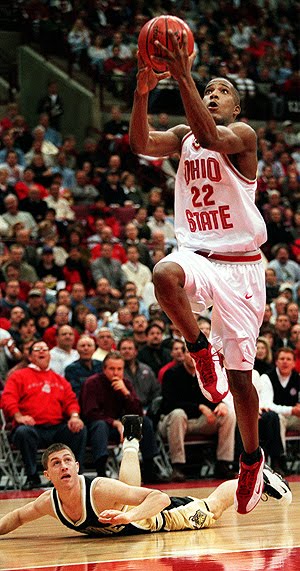
Finding a diamond in the rough like that is rare. But finding a solid starter in the second round does happen fairly often. Last year, it was Landry Fields out of Stanford going to the New York Knicks. The year before that, both Sam Young and DeJuan Blair fell to the second round after leaving Pitt. Before that, Paul Millsap, Trevor Ariza, and Mo Williams beat the odds to make it in the league.
It can be done.
Sometimes its simply the result of a fortunate pairing between franchise, player, and available roles. Other times, its the result of fears about a player's injury history that causes him to drop. There are times when a draft is loaded with border-line first round picks, causing players to go 45th that would usually be picked 25th. There are also times where a front office does their homework and finds a guy that has flown under-the-radar.
Landing in the second round shouldn't be seen as a disappointment to these players.
It should be seen as an opportunity to make the other 29 teams regret their draft day decisions.
Who in the 2011 NBA Draft Class will have an extended NBA career as a second round pick?
Jimmy Butler, Marquette: There is nothing about Butler's game that makes him appear to be an NBA prospect. He's a capable shooter, but not a significant three point threat from NBA range. He's a decent ball-handler, but he won't blow by you to get to the rim. He's a solid athlete with good size, but he won't be making Sportscenter's top ten. What makes Butler a promising prospect is the fact that he is a tough defender, a terrific teammate and leader in the locker room, a willing role player, and a guy that can do a little bit of everything. Throw in the success that former teammates Wes Matthews and Lazar Hayward have had landing a spot in the NBA and the rave reviews he received at the Portsmouth Invitational, and Butler appears headed for an NBA career. He certainly deserves it.
Charles Jenkins, Hofstra: Jenkins was a big-time scorer at the college level, thriving on his ability to shoot from beyond the arc and create space in the mid-range game. The problem is that those numbers came against CAA competition, which is a much improved league but still a far cry from the NBA. Regardless of who he is playing against, however, Jenkins is going to be able to shoot and score. He won't be a starter in the NBA, but the fact that he was able to score at the rate he did (22.6 ppg) while taking more than 20 shots just three times, creating for his teammates (4.8 apg), and protecting the ball (2.2 t/o's) makes him an ideal candidate as a scoring infusin
JaJuan Johnson, Purdue: Johnson's physical profile is terrific. He's a legit 6'10" with a 7'2" wingspan, he's exceptionally mobile for a player his height, and he has a 38" vertical. He also has a versatile skill-set. He can block a shot at one end and beat his defender down the floor for an open dunk. If that's not there, he can knock down 20 foot jumpers, use his dribble to get a better look should his defender close out long, and score in the post using his advanced repertoire of finesse moves. The knock on Johnson is that he has a slender upper body that will be difficult to add much mass or strength to. While that will limit his upside, his tools and skill-set should earn him a spot in the rotation of a team that likes to run the floor and pick-and-pop.
Josh Selby, Kansas: Selby is quite possibly the most unique prospect in this draft class. Coming out of high school, he was considered one of the top five recruits in the country. An explosive perimeter scorer, Selby's freshman season at Kansas was largely forgettable. He battled injuries (a broken hand in the preseason, a stress fracture late in the year), a suspension, and a role that didn't suit his skill set. As a result, he numbers were far from impressive this year. But that doesn't mean that the talent that garnered him so much attention in high school is gone, especially now that he is healthy.
Nolan Smith, Duke: I am a big fan of Nolan Smith's game. He proved this season just what he is capable at the collegiate level when he is the focal point offensively, winning ACC player of the year and finding himself in the conversation for national player of the year before a late slump. But until Kyrie Irving injured his foot, Smith also showed just how good of a role player he can be, ignoring his individual successes and exposure in exchange for winning games with the Blue Devils. Smith can do everything on a basketball court. He can shoot the three, he can beat a defender off the dribble, he can play on the ball or off, and he's a very good defender.
Bold Prediction: DeAndre Liggins, Kentucky: Liggins did not have a great career at Kentucky. As a freshman, he almost left the program due to his lacking relationship with former head coach Billy Gillispie. As a sophomore, in his first year under John Calipari, Liggins struggled to find a role on a team that was stacked with five future first round picks. But as a junior, Liggins really began to come into his own as a player. He embraced the idea that he was a defensive stopper. At 6'6" with length and lateral quickness, Liggins has the potential to guard all three perimeter positions. Throw in his ability to knock down catch-and-shoot jumpers, and I would be surprised if Liggins wasn't able to find a role on an NBA team somewhere.
Continue reading...
Five first round picks that won't get a second NBA contract |
Joe Alexander was the rising star of the 2008 NBA Draft.
The 6'8" forward was a first round afterthought for much of the season before a series of monster performances -- including scoring 29 or more points four times in a five game stretch in March -- and a Mountaineer postseason run to the Big East semifinals and the NCAA Tournament's Sweet 16 sent his draft stock soaring. That tends to happen when you lead a middle-of-the-pack Big East team to wins over Pitt, UConn, Arizona, and Duke in a three week span.
Alexander's stock shot even higher in the draft combine. Not only had he become a star at the collegiate level, but he was a physical specimen. His 38.5" vertical (and over-12 foot max reach), his combine-best 2.99 second 3.4 sprint, and his combine-best 24 reps of 185 lbs on the bench press had scouts drooling. 
That success and potential has yet to translate to the NBA, however. Thanks to a series of injuries and a lack of production when healthy, Alexander became the highest-drafted player to have the organization that drafted him opt against picking up the third-year of his rookie contract. (For those unfamiliar, the way the rookie wage scale works is that a first-round pick receives a guaranteed two-year contract at a slotted salary with team options for the third and the fourth years.)
Who in this draft class projected as a first-rounder is at risk of not making it to their second NBA contract?
Marshon Brooks, Providence: There is no questioning that Brooks was an explosive scorer for Providence, but the way he scored in college doesn't necessarily translate well to the NBA. In college, he had free reign to shoot whenever and from wherever he pleased. In the NBA, he will be a role player asked to hit spot-up jumpers, an area of his game he struggles. In college, he played in an uptempo system that allowed him to use his long-strides and massive wingspan to beat defenders in transition settings. At the next level, his lack of a quick first step and his mediocre explosiveness around the rim will hurt him in a half court setting. Perhaps the biggest issue is on the other side of the ball. He wasn't asked to play much, if any, defense in college. Can he defend in the NBA?
Jordan Hamilton, Texas: As a sophomore, Hamilton developed into one of the most dangerous scoring threats in the Big 12, when he was the focal point of the Longhorn offensive attack. But as a freshman, Hamilton was as much of a risk on the offensive end as he was a strength. Hamilton struggles with the term shot selection. His mindset is to score, score, score, and that hurt Texas at times when freshman Hamilton needed to take a backseat to Avery Bradley, Damion James, and Dexter Pittman. In the NBA, Hamilton will be playing a role more similar to the one he played as a freshman than the one he played as a sophomore. Can he handle being the third or fourth option offensively? And, like Brooks, Hamilton will be a liability on the defensive end. 
Chandler Parsons, Florida: At 6'10" with a three point stroke and the ability to handle the ball and create open shots for his teammates, Parsons is an intriguing prospect. There aren't many players in this draft class with his kind of versatility, skill set, and physical tools. The problem with Parsons is that while he does a lot well, he isn't great at anything. He doesn't have one skill that is NBA ready. The little things that he did on the court to help Florida win games aren't going to translate to the NBA. He seemingly got lost in the shuffle in college playing with Kenny Boynton and Erving Walker. What happens at the next level?
Iman Shumpert, Georgia Tech: On paper, Shumpert looks great. He is a 6'6" combo-guard with a massive wingspan, a 42" vertical, and the strength of a post player. He's also a player that averaged 5.0 apg as a freshman playing a secondary role and 17.3 ppg as a junior is a leading role. But anyone that watched Shumpert play can tell you, he struggles with his shot selection -- forcing far too many jumpers for a player that is a sub-par jump shooter -- and his decision making. He's also a player that played on three disappointing Georgia Tech teams, including one that got an NCAA Tournament bid despite a sub-.500 ACC record.
Klay Thompson, Washington State: There is no question about Thompson's ability to shoot the basketball. Simply put, he has range for days. Combine that stroke with his height (6'7"), his high-release point, and his ability to use off-ball screens to get open, and its no wonder that the son of Mychal Thompson was able to score in bunches at the college level. The problem is that, for the past two seasons, Thompson has seen his performance, specifically his efficiency, slip in Pac-10 play. If he struggled to handle the physicality of the Pac-10 -- the weakest of the six major conferences -- will he be able to handle defenders at the next level?
(And since no list is complete without one):
Bold Prediction: Kawhi Leonard, San Diego State: Leonard, like Alexander, is a physical specimen. He's a smooth player with a terrific motor who has a wingspan typically seen on seven-footers. He's much more athletic than the numbers he posted at the NBA Draft combine -- sitting out the drill work while waiting for 45 minutes in a cold gym is not a way to prepare to test your vertical. There are a lot of things that Leonard can do on a basketball court, but most of those traits -- his defense, his rebounding ability, his hustle -- are the result of those physical tools. Leonard is a power forward trapped in a small forward's body. If he doesn't develop his jumpshot and his ball handling ability, can he play on the perimeter in the NBA?
Continue reading...
Tuesday, June 21, 2011
NBA Draft Profiles: Kyrie Irving, Duke |
Bjorn Zetterberg of SwishScout.com will be helping us out with all of our NBA Draft Profiles this year. You can follow him on twitter @swishscout.
To browse through the latest prospect profiles, click here. To see a complete list of the players we have profiled, click here.
Stats: 17.5 ppg, 4.3 apg, 3.4 rpg, 1.5 spg, 46.2% 3PT, 56.9% 2PT
Age: 19, freshman
Size:
- Listed: 6'3", 190 lb
- Official: 6'1.75" (no shoes), 6'3.5" (with shoes), 6'4" (wingspan), 8'3" (reach), 191 lb

Strengths: While he only played 11 games at the collegiate level, its safe to say in watching Irving that there is not much that he cannot do at the point guard position. For starters, he is a terrific shooter with NBA range. He is lights out when he is able to catch and shoot with his feet set while also being a serious threat off the dribble. That ability to shoot will force defenders to go over a screen in a pick-and-roll situation. He's also terrific at getting to the basket. He's not an overwhelming athlete like a Derrick Rose or a Chris Paul. Instead, he has a great understanding of how to use hesitation moves and crafty dribbling to get his defender off balance. Irving is able to penetrate with either hand thanks to his ability to change speeds. He is a very good passer, capable of throwing darts to the screener on a pick-and-roll or hitting a teammate cutting to the rim or open on the perimeter. He is excellent at pushing the ball in transition as well. But most importantly, Irving seems to have the demeanor to be a point guard. He runs a team well, he was able to be the focal point of the Duke offense early in the season while managing to keep two all-americans happy with their production, and he has the work ethic and leadership ability to back up his quiet on-court confidence.
Weaknesses: If there is a weakness in Irving's game, its that he lacks overpowering physical tools. He's 6'3" in shoes, but he does not have an overwhelming wingspan and could stand to put on some upper body muscle. He's quick, but he doesn't have blazing speed. He can jump, but he's not in the same league athletically as Russell Westbrook or Derrick Rose. Will he be able to get by defenders with his change-of-pace style attack in the NBA? Will he be able to defend the more athletic point guards at the next level?
Comparisons:
- Best Case Scenario: Irving is a tough comparison. The recent point guards that have been drafted at the top of the lottery -- John Wall, Derrick Rose, Russell Westbrook -- have been freak athletes. He's not as quick as a Chris Paul and he's not as solidly built as Deron Williams. Williams may actually be the best comparison based on style of play, as Irving appears to be more of a scorer than the kind of distributor and facilitator that Paul is.
- Worst Case Scenario: Irving is as close to a sure thing as you will find in this draft. Swish Scout says that his worst case scenario is Kyle Lowry while Draft Express says a rich man's Eric Maynor. I don't love either of those comparisons. I'm going to go with Raymond Felton, a starter that averages somewhere in the neighborhood of 15 points and seven assists.
Draft Range: No. 1
And the experts say...
- Chad Ford: "Irving announced that he will declare for the 2011 NBA Draft. Irving may have only played 11 games this season, but he enters the draft as the odds on favorite to be the No. 1 pick in the draft. Irving is one of the most complete prospects in the draft. He has speed, quickness and range on his jumper. He's excellent penetrating to the basket, sees the floor well and is a leader on the court. He's not particularly elite in any one category, but the overall package is pretty impressive."
- Draft Express: "Irving is already one of the best distributors in the NCAA, ranking highly in both PPR as assist to turnover ratio, but he's only really scratching the surface on how good of a point guard he can become in the half-court. Although he's clearly a willing passer, the ball tends to stick to his hands just a tad too much at times, and he has been responsible for a handful of sloppy possessions. His turnover rate (24%) is probably a little higher than Mike Krzyzewski would like, but considering his age, lack of experience and how dominant of a ball-handler he's been for Duke this season, it's more than understandable that there will be some growing pains."
- Swish Scout: "Classic point guard with an NBA skill set in terms of athleticism, passing, dribbling, and the rare ability to take over a game. Solid jump shooter and creator who looks like a 'top three Draft prospect,' but can needs to focus more consistently on being a pass-first type player where he excels."
Continue reading...
NBA Draft Profiles: Brandon Knight, Kentucky |
Bjorn Zetterberg of SwishScout.com will be helping us out with all of our NBA Draft Profiles this year. You can follow him on twitter @swishscout.
To browse through the latest prospect profiles, click here. To see a complete list of the players we have profiled, click here.
Stats: 17.2 ppg, 4.0 rpg, 4.2 apg, 3.2 t/o's
Age: 19, freshman
Size:
- Listed: 6'3", 180 lb
- Official: 6'1.5" (no shoes), 6'3.25" (with shoes), 6'6.75" (wingspan), 8'2.5" (reach), 177 lb
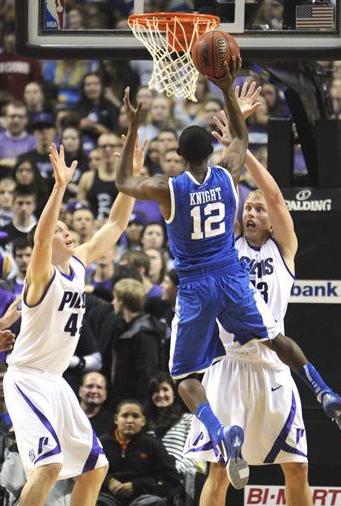
Strengths: Brandon Knight is a combo-guard with a fairly unique skill-set. He's a talented scorer that is excellent in pick-and-roll and isolation situations, using his quickness and ball-handling ability to beat his defender. He's got NBA three point range as well as a solid mid-range game, knocking down pull-up jumpers and floaters at a fairly consistent rate. This is fairly standard in combo-guards, but where Knight differs is his ability to score off the ball. He's terrific at moving without the ball, using off-ball screens to free himself for open shots. Knight is excellent in catch-and-shoot situations as well. You don't see that much with combo-guards that are known for dominating possession. Its where the Jason Terry comparisons come from. Knight has also shown to have a knack for hitting big shots even when he is struggling. He did so in the McDonald's All-American game prior to his freshman season, then had two game-winners in his two worst performances of the NCAA Tournament.
Weaknesses: The biggest issue with Knight right now is that he is still learning how to be a true point guard. You could see the development throughout the season, but he started out as such a pure scorer that he still has a way to go. Knight turns the ball over at too high of a rate -- but a lower rate than the 4.7 t/o's he averaged through his first seven games -- and has a tendency for taking some tough, ill-advised shots. That improvement will come with time and experience managing a team, although he is such a good scorer it will be interesting to see if its worth it to move him off the ball. Another area where Knight struggles is getting to the free throw line. He's a very good athlete and can get all the way to the rim, but he has a tendency to shy away from contact and put up floaters and finesse shots rather than powering his way to the rim. He makes those shots at a decent rate, but by getting to the foul line he should up his efficiency and become an even more potent scorer.
Comparisons:
- Best Case Scenario: Gilbert Arenas. He’s that talented, but he’s also more of a pure scorer that a team will pass off as a PG like Gilbert, you just have to use him correctly. Both are clutch shooters who can hit big shots and gutsy players unafraid to take chances. Jason Terry is another comparison I've seen that I like for Knight.
- Worst Case Scenario: Jarrett Jack. Jack is built and a splendid athlete, but he’s also a little too reckless at times, which Knight can be. Confident Knight develops into a better talent given his smarts and work ethic, but if he can’t put it together he becomes a career backup.
Draft Range: Top five
And the experts say...
- Chad Ford: "Knight is a tough one to peg. He had the best game of his career -- a 30-point outburst against West Virginia -- and hit two game-winners for Kentucky against Princeton and Ohio State. But it wasn't all easy sailing for Knight in the tournament. He really struggled shooting the ball (only 26-for-79 from the field) and had 17 turnovers. In his toughest game, matched up against Walker, he shot 6-for-23 from the field. Knight clearly has talent, but scouts that question his ability to step in and run a team have legit concerns that weren't totally satisfied in the tournament. Nevertheless, he could still end up being the second point guard off the board by going ahead of Walker on draft night. He's younger, taller, a better shooter and a better defender."
- Draft Express: "Projecting Knight to the next level, the diversity of his scoring and shot-creating ability allows him to be more effective off the ball than many combo guards, which could be a key in his minutes early in his career, as it's unlikely a coach is going to hand the reigns of an offensive over to him at this time until he garners more experience and improves his decision making. On the right team, with either a big point guard or a wing player who runs a majority of the teams half-court offense – such as the Lakers, Philadelphia, Miami – could be his best situation to contend for a starting spot early in his development playing for a franchise that is looking to win now."
- Swish Scout: "Known for his clutch 3-point shooting, athleticism, wiry build and ability to score, Knight possesses an NBA skill set. Took some major strides playing PG for Kentucky as a freshman, but Brandon needs to continue developing a stronger point guard mentality, leave his impact in games and become a more consistent distributor down the stretch."
Continue reading...
NBA Draft Profiles: Kemba Walker, UConn |
Bjorn Zetterberg of SwishScout.com will be helping us out with all of our NBA Draft Profiles this year. You can follow him on twitter @swishscout.
To browse through the latest prospect profiles, click here. To see a complete list of the players we have profiled, click here.
Stats: 23.5 ppg, 5.4 rpg, 4.5 apg, 1.9 spg, 2.3 t/o's, 33.0% 3PT
Age: 21, junior
Size:
- Listed: 6'1", 185 lb
- Official: 5'11.5" (no shoes), 6'1" (with shoes), 6'3.5" (wingspan), 8'10.5" (reach), 247 lb

Strengths: Kemba's biggest strength is his athleticism. Simply put, he is impossible to stay in front of. He is lightening quick with the ball in his hands, capable of changing direction instantly even when running at full speed. It also helps that he has the handle you'd expect from a New York City point guard. That quickness, combined with his vertical explosiveness and body control, make him terrific at finishing around the rim despite his diminutive stature. Walker is capable of hanging in the air and contorting his body at awkward angles in order to finish layups amongst the trees. Walker started out the season on fire with his jumper, but he came back to earth as defenses began to key on him more. Still, his stroke looks much improved and when he has time, he's consistent. He likely won't be asked to shoulder as much of a load at the next level as he did at UConn throughout much of the season. Perhaps Walker's biggest strength as a player is his leadership ability. He put that UConn team on his back for much of the season, keeping them in the mix as his young teammates slowly learned from him how to be a winner. He's a charismatic kid that should be a terrific locker room leader down the road.
Weaknesses: The most obvious weakness when it comes to Kemba is his size. While he measured out bigger than expected at 6'1" in shoes, his size is obviously a detriment to him defensively. Its not that Kemba isn't a terrific defender -- he is -- its that bigger, stronger guards like Deron Williams and Derrick Rose will be able to dominate him. That's an issue that could end up keeping him from being a starter. The other concern with Walker is whether or not he is truly a point guard. He averaged 23.5 ppg as a junior, taking more than 18 shots per game. He appeared at times to be more of a natural shooting guard than point guard, although he did also average 4.5 apg and just 2.3 t/o's.
Comparisons:
- Best Case Scenario: Brandon Jennings or Aaron Brooks pre-injury. Smaller point guards that are able to score in bunches while dominating the ball are a trend in the NBA right now. Its more than just the two I listed here. The NBA likes players than can create shots, and that is exactly what Kemba's strength is.
- Worst Case Scenario: Louis Williams. Williams was a big time prospect coming out of high school, but he has yet to fulfill his potential in the League. A double figure scorer, his role is more as a back-up point guard and spark plug than as a consistent starter.
Draft Range: Top Five to Seven
And the experts say...
- Chad Ford: "Walker may be small in stature, but he has a HUGE heart. He has taken UConn on his back this season and has become one of the most prolific scorers in college basketball. He has great quickness, speed in the open court and has really improved his jump shot this season."
- Draft Express: "He is at times criticized for questionable shot selection and a penchant for playing out of control, but Walker's turnover rate is down substantially this year. This is a very good sign, especially considering the huge role he's forced to shoulder offensively. We've seen a handful of possessions this season that reminded us of Walker's old ways, but nothing that should make NBA decision makers overly concerned. This is something to keep an eye on as the season progresses, as opposing coaches will surely be throwing everything in their arsenal at Walker in an attempt to slow him down."
- Swish Scout: "Exciting scoring guard with an NBA skill set when it comes to shooting, passing, dribbling, and picking up steals. Although an undersized combo guard at 6’1” who occasionally forces things, Walker’s an outstanding gamer and clutch performer who can play a gear above everyone else and knows how to win."
Continue reading...
NBA Draft Profiles: Derrick Williams, Arizona |
Bjorn Zetterberg of SwishScout.com will be helping us out with all of our NBA Draft Profiles this year. You can follow him on twitter @swishscout.
To browse through the latest prospect profiles, click here. To see a complete list of the players we have profiled, click here.
Stats: 19.5 ppg, 8.3 rpg, 1.1 apg, 0.7 bpg, 2.6 t/o's, 56.8% 3PT
Age: 20, sophomore
Size:
- Listed: 6'9", 250 lb
- Official: 6'7.25" (no shoes), 6'8.75" (with shoes), 7'1.5" (wingspan), 9'0" (reach), 248 lb

Strengths: There is a lot to like about Williams game. At the college level, he was an absolute nightmare to defend because he is, simply put, a complete package offensively and one of the most efficient players in the country. Williams was an quality scorer in the post, thanks to his ability to establish position on the block, solid footwork, and a soft touch around the rim. Williams is a bit undersized for a power forward, however. His post game may not translate as well to the NBA, which is why his perimeter arsenal is such a valuable asset. Williams developed into a deadly shooter this past season. Midway through the year, he was knocking down over 70% of his shots from beyond the arc before a "slump" dropped him down to 56.8% by the end of the season. He shows tremendous shot selection, rarely forcing contested perimeter jumpers. Williams has a terrific handle for a player of his size, capable of putting the ball on the floor and getting to the rim with either hand. As you'll see in the highlight clips below, he's athletic enough to throw down some truly sensational dunks when he gets a head of steam. He also is excellent at getting to the free throw line, as he understands how to use his body to create contact.
Weaknesses: The biggest issue with Williams as a prospect is that he falls into that dreaded tweener category. He doesn't quite have the size to be a dominant power forward in the NBA, and while his skill set should help him translate well to playing more minutes on the perimeter, his mediocre physical tools for a small forward are worrisome. Is he big enough to be a four? Quick enough to be a three? That's a big question mark, but the talent that Williams' displayed this season and his improvement as a perimeter threat should help quiet those doubters. Beyond that, the weaknesses in Williams' game are fairly fixable. He turns the ball over a bit too much, which is the result of his habit of holding onto the ball for too long. He also needs to work on boxing out. He has a bad habit of going after the ball too early, allowing his man to get a free run at an offensive rebound.
Comparisons:
- Best Case Scenario: Somewhere between a better-shooting David West and less-knuckleheaded Michael Beasley. It depends on just how well he is able to transition to being a perimeter player. I think that Williams will, eventually, be able to become a more perimeter-oriented player, which would make the Beasley comparison seem more fitting. I could see Williams having a career arc similar to that of Antawn Jamison, who has been an 18 and 8 guy for a decade.
- Worst Case Scenario: Thaddeus Young. Young has been a major factor for the Sixers the past three seasons, averaging double figures as a starter for two years before becoming the sixth man this past season. And while he has been productive, Young hasn't become a go-to scoring option. If Williams struggles transitioning to playing the perimeter full-time, I can see him ending up in a similar role.
Draft Range: Top two
And the experts say...
- Chad Ford: "Williams was one of the four or five best players in the country this year. He's become a true inside/outside threat as a scorer. He's aggressive, makes smart decisions and will really attack the rim. Some scouts are worried he's a tweener, but other teams have him No. 1 overall on their Big Board."
- Draft Express: "The deadly combination he brings to the table with his quick first step, long strides, polished footwork and outstanding body control hasn't been seen in college basketball since Michael Beasley. Power forwards at this level simply have no way to slow him down, as evidenced by the incredible rate at which he gets to the free throw line. Better yet, he converts 76% of his attempts, up from 68% last season. Not only can Williams create marvelously, he's also an excellent finisher. He's able to throw down emphatic dunks when given a head start and he shows the ability to contort his body and avoid contact in a manner more reminiscent of a wing player than a power forward."
- Swish Scout: "Crafty forward with a superb inside-out game, consisting of refined post moves and the ability to step out on the perimeter to knock down the 3. Williams needs to keep refining his perimeter game and moves off the dribble to play some SF in the NBA, but has a mature game and is an impact player right now."
Continue reading...
Monday, June 20, 2011
NBA Draft Profiles: Markieff Morris, Kansas |
Bjorn Zetterberg of SwishScout.com will be helping us out with all of our NBA Draft Profiles this year. You can follow him on twitter @swishscout.
To browse through the latest prospect profiles, click here. To see a complete list of the players we have profiled, click here.
Stats: 13.6 ppg, 8.3 rpg, 1.1 bpg, 1.4 apg
Age: 21, junior
Size:
- Listed: 6'10", 240 lb
- Official: 6'7.75" (no shoes), 6'9.25" (with shoes), 6'10.75" (wingspan), 8'10.5" (reach), 241 lb

Strengths: Unlike most NBA Draft prospects, Markieff's strengths are not going to be found on the offensive side of the ball. What's most intriguing about him as a prospect is the blue-collar attitude he plays with. He is a tough and physical defensive player, and while he does not have the ideal length or quickness for an NBA power forward, he does play with a chip on his shoulder. It may be a cliched term, but defense is a mentality, and Markieff makes it personal when he is trying to stop a player one-on-one. He's also a good rebounder on both ends of the floor, again the result of his physicality in the paint. The reason that Markieff is in the conversation as a potential lottery pick this season is the way that his offensive arsenal has developed this season. He's become a more consistent and dangerous shooter from the perimeter, has shown flashes of being able to put the ball on the floor and beat a slower defender, and is a good finisher around the rim.
Weaknesses: Right now, Markieff's biggest weakness is probably his post game. As a back-to-the-basket threat, he was almost non-existent this past season. Some of that probably has to do with the fact that his brother and Thomas Robinson got the majority of the touches, but people did notice that Markieff's post finishes generally consisted of sealing his man high and finishing a pass thrown over the top of the defender. Given that he is a bit undersized for the power forward spot and as average vertical explosiveness, Markieff may never be a threat to score on the block. There are some other question marks as well. He needs to improve his ability to handle and protect the ball. He turned the ball over 2.1 times per game last season, which is very high for a forward that only played 24 mpg. And if he is truly going to be a pick-and-pop threat down the road, he could stand to become more adept at handling the ball, making him a threat in close out situations.
Comparisons:
- Best Case Scenario: Marresse Speights. Similar build, frame, game, and overall type player, except Markieff can step out a little further than Speights. Both play physical and protect the paint pretty well with their length and athleticism, and while they aren’t flashy or super impressive, they are solid. This may be a stretch, but I also like the a comparison with Charles Oakley.
- Worst Case Scenario: Rich man’s Chris Richard. Richard has talent and there’s a reason he was drafted, but he just didn’t quite live up to NBA expectations for a big. Markieff will indefinitely make it in the league, but if he doesn’t, think of him as a notch above what Richard could have been in the league with his post play and D.
Draft Range: Late Lottery to Mid 1st Round
And the experts say...
- Chad Ford: "Markieff has lived in the shadow of his brother, Marcus, for the first two years at KU. No more. Markieff was always known as the better defender -- a taller, slightly more explosive version of his brother. But this year he found his offensive rhythm as well. He actually posted a higher PER rating than Marcus, shot a pretty incredibly 42 percent from three and, at times, looked like the more surefire NBA prospect thanks to his size advantage. Markieff is a likely mid first-round pick this year. "
- Draft Express: "While Markieff Morris may not have a tremendous feel for the game or superstar potential, he has all the tools and versatility to enjoy a long NBA career and be a solid contributor on both ends of the floor. Considering his steady ascension over the course of his three year college career, he could clearly continue to improve if given the minutes necessary to feel out his game in the NBA. With a number of highly touted power forward prospects electing to return to school, the recently declared Morris will surely look even more attractive on draft day."
- Swish Scout: "Mobile post player with a great motor, rebounding ability, and defensive tenacity that will make him a great hustle player in the paint. Markieff is way too passive offensively and needs more work on his post moves, but ultimately a big man who will bring energy off the bench for a team."
Continue reading...
NBA Draft Profiles: Marcus Morris, Kansas |
Bjorn Zetterberg of SwishScout.com will be helping us out with all of our NBA Draft Profiles this year. You can follow him on twitter @swishscout.
To browse through the latest prospect profiles, click here. To see a complete list of the players we have profiled, click here.
Stats: 17.2 ppg, 7.6 rpg, 1.6 apg, 34.2% 3PT, 62.0% 2PT
Age: 21, junior
Size:
- Listed: 6'9", 230 lb
- Official: 6'7" (no shoes), 6'8.75" (with shoes), 6'10" (wingspan), 8'9.5" (reach), 230 lb

Strengths: Marcus Morris is probably the most versatile and well-rounded forward prospect in this draft not named Derrick Williams. He can really do it all from an offensive standpoint. He's got a nice back-to-the-basket game, capable of going over either shoulder or facing up in the post. He's got a soft touch on his jump shots, jump hooks, and finishes around the rim as well. What truly sets him apart, however, is ability on the perimeter. He's got NBA range on his jumper, he can put the ball on the floor and go by a slower-footed defender, and he's got a pull-up and mid-range game that you don't often see in a front court player. Morris also runs the floor well and can get to the offensive glass.
Weaknesses: The biggest question mark in Marcus' game is what position he is going to play at the next level. He doesn't have the size, the length, or the explosiveness that you typically see in a power forward, but he doesn't appear to be quick enough to defend on the perimeter at the next level. Is he a four or a three? Its pretty clear in the interviews that he has had that he wants to be a three at the next level. There are other question marks, as well. Morris was not a great defensive rebounder at the college level, and there is no guarantee that he is going to be able to be one in the NBA. There are also question marks about his ability to defend at the next level. He has the toughness and the desire to be a capable defender, but he doesn't necessarily have the physical tools. He's not all that long or athletic, he's strong but could be outmuscled by bigger power forwards, and he's quick enough to effectively defend the pick and roll but not necessarily quick enough to defend NBA threes full time.
Comparisons:
- Best Case Scenario: Boris Diaw. Another multi-skilled forward who can do it all, much like Marcus is capable of on the perimeter and in the post. Maybe hes not quite the passer Diaw is, but sure D’s up, shoots the ball, and rebounds the ball just as well.
- Worst Case Scenario: Shawne Williams meets Damien Wilkins. Williams emerged this past season as a legit 3-point shooter, and Marcus is capable of being just the same once he incorporates that range into his game. You couple that with the perimeter play and D of Wilkins, and you have a decent NBA forward.
Draft Range: Mid to Late Lottery
And the experts say...
- Chad Ford: "Marcus is coming off another terrific season. The 6-foot-9 forward averaged 17.2 ppg and had one of the highest efficiency ratings in college basketball. He's one of the most polished offensive big men in college basketball. His offensive versatility, motor and high basketball IQ are all appealing to scouts. But teams worry that he's a bit of a tweener at the next level. He's a likely mid first-round pick."
- Draft Express: "Much of Morris's success will be determined by the role he's asked to play early in his career. He's a fairly finished product at this point, and if he's put in a position where he can utilize all the facets of his game, he's going to do some damage offensively if he can stay as dialed in as he's been this season for Bill Self—something that may have been a cause for concern earlier in his career. Morris's skill level is clearly a cut above that of most players at the college level. If he can convince a team that he can translate his terrific production and skill-set to the NBA, he'll be a very popular name during the pre-draft process."
- Swish Scout: "Multi-skilled forward who loves to play on the perimeter and brings some solid perimeter shooting, strong rebounding, play making and plenty of energy to a squad. Although considered a ‘tweener’ forward and only average athlete, the Big XII Player of the Year is a physical player with an outstanding basketball IQ that will allow him to be an impact player in the NBA for many years to come."
Continue reading...
NBA Draft Profiles: Klay Thompson, Washington State |
Bjorn Zetterberg of SwishScout.com will be helping us out with all of our NBA Draft Profiles this year. You can follow him on twitter @swishscout.
To browse through the latest prospect profiles, click here. To see a complete list of the players we have profiled, click here.
Stats: 21.6 ppg, 5.2 rpg, 3.7 apg, 3.4 t/o's, 1.6 bpg
Age: 21, junior
Size:
- Listed: 6'7", 205 lb
- Official: 6'5.75" (no shoes), 6'7.25" (with shoes), 6'9" (wingspan), 8'7.5" (reach), 206 lb

Strengths: In his three years in college, Thompson developed into one of the best scorers in the country. His game centers around his jump shot. He has range well beyond the NBA three point line and is capable of getting hot and reeling off three or four deep triples in a row. He is at his best when he gets put into catch-and-shoot situations. Thompson has a terrific motor and understands how to use screens to free himself up, making him quite tiring to try and defend. He needs to improve his ability to create putting the ball on the floor, but he understands how to create separation with the bounce and that, combined with his 6'7" frame and 6'9" wingspan should help make up for the fact that he has below-average athletic tools for a NBA wing. One area of his game that Thompson really expanded as a junior was his ability to create for his teammates. He averaged 3.7 apg, proving to be a capable creator.
Weaknesses: The biggest weakness in Thompson's game right now is his ability to defend. He has the length and anticipation to be very effective in the passing lanes -- see his 1.6 spg -- but he lacks the strength and, more importantly, the lateral quickness to be considered a defensive stopper. Its not for a lack of effort. Thompson works hard on that end of the floor and seems to understand defensive rotations, but that doesn't change the fact that NBA perimeter players will be able to beat him off the dribble. Thompson also turns the ball over a bit too much. He's not a great ball-handler and was forced to create his own shot off the dribble quite a bit as a junior. Playing more off the ball in the NBA, that should be less of an issue. Thompson is not great when it comes to slashing to the basket, but he does excel when he is coming off of screens and in close-out situations.
Comparisons:
- Best Case Scenario: The easy pick for Klay Thompson is Mike Miller, another tall and lanky jump shooter with obvious question marks on the defensive end of the floor. In his prime, Miller was a very good second or third offensive option with a deadly three point stroke. If Thompson can develop a more expansive offensive repertoire, he may end up one day being a scorer like Kevin Martin, capable of averaging 20 ppg.
- Worst Case Scenario: Draft Express uses Marco Bellinili and Swish Scout uses Francisco Garcia, neither of which I really love. That said, the role those two play is what Thompson will be forced into if he can't find the right fit with an NBA team. If his defense doesn't come around and the rest of his offensive arsenal doesn't develop, Thompson will be nothing more than a spot-up shooter at the next level.
Another issue that Thompson could end up facing will have to do with his arrest this past season for possession of marijuana. He apologized to the fans at center court prior to the game that he was suspended for and there have been reports that he has been open, honest, and apologetic to NBA teams about what happened. That's a good sign, but the arrest is still something that NBA teams are going to have to look into and do their due diligence on.
Draft Range: Late Lottery to Mid 1st Round
And the experts say...
- Chad Ford: "Thompson had one of the most impressive weeks in Chicago. There were a number of great shooters in the combine this weekend, but Thompson had the best shooting performance of any of the prospects on both days. His ability to shoot off the dribble combined with his excellent size (6-7 with a 6-9 wingspan) are going to be very intriguing for a number of teams in need of a shooter. He also handled interviews well. Two NBA teams said Thompson brought up the charges of marijuana possession early in the interview, didn't make excuses for the mistake, and said it would never happen again. While NBA teams will continue to do their due diligence to get a better feel for how big a problem it was or might be in the future, they came away encouraged."
- Draft Express: "With his highly developed perimeter skill set and feel for the game, Thompson could contribute early in his career, and probably doesn't have a significant upside beyond what he is now due to his physical limitations. There's no guarantee he seamlessly makes the role to being a lesser scoring option, however, and he will need to stay away from the bad habits he had earlier in his college career, something being drafted onto a winning team with strong coaching would definitely help avoid."
- Swish Scout: "Smart, efficient player who is a great shooter with range that extends to anywhere on the court and a much improved play maker with the ball in his hands. Klay must add strength and reduce turnovers, but he has the solid all-around game to be a solid contributor for a team on the NBA level."
Continue reading...
Saturday, June 18, 2011
NBA Draft Profiles: Alec Burks, Colorado |
Bjorn Zetterberg of SwishScout.com will be helping us out with all of our NBA Draft Profiles this year. You can follow him on twitter @swishscout.
To browse through the latest prospect profiles, click here. To see a complete list of the players we have profiled, click here.
Stats: 20.5 ppg, 6.5 rpg, 2.9 apg, 2.6 t/o's, 29.2% 3PT, 82.4% FT
Age: 19, sophomore
Size:
- Listed: 6'6", 195 lb
- Official: 6'5" (no shoes), 6'6" (with shoes), 6'10" (wingspan), 8'7.5" (reach), 193 lb

Strengths: Burks is at his best when he is slashing to the basket. He is, for lack of a less cliched word, a shot creator. He can get to the rim going either direction and has q quick first step and long strides that make him a nightmare to try and stay in front of. When he gets into the paint, he has the explosiveness to finished around the rim. He needs to add strength to finish better through contact, however. Burks is also a better ball-handler and distributor than you would think for someone described by Draft Express as a "smooth yet explosive slasher" that averaged over 20 points per game. He is willing and capable of finding an open man, and he has the handle to run the pick and roll and bring the ball up in transition. Burks is more than just a scorer as well. He is probably the best rebounder of the perimeter players in this draft not named Kawhi Leonard or Travis Leslie. He also projects as a very good defender with his size, length, athleticism, and ability to play in the passing lanes.
Weaknesses: The biggest weakness in Burks' game right now is his shooting ability. He shot just 29.2% from beyond the arc this past season -- down from 35.2% on fewer attempts as a freshman. He's even worse in pull-up situations, although some of that can be attributed to the role he played for the Buffaloes. He had to create the majority of his scoring opportunities at Colorado as the Buffs really had only two offensive options. As a result, teams started to send multiple players to help side when he put the ball on the floor, forcing him to take some tough pull-ups. He doesn't have great from on this shot, has he has a tendency to fade and shoot without squaring his shoulders.
Comparisons:
- Best Case Scenario: Poor man's Brandon Roy. Like Roy, Burks has terrific size for a guard with his skill set. I think Roy is a better playmaker than Burks will become, but they both have the same kind of scoring ability. I also like the comparison with Eddie Jones, although I think both of those comparison assume that Burks will improve his ability to shoot the basketball.
- Worst Case Scenario: The consensus seems to be Marquis Daniels. I think its fair, both in production and style of play. If Burks is unable to better his shooting stroke and can't put on much more strength on his frame, it will be tough for him to become more than just a role player at the next level.
Draft Range: Late Lottery to Mid 1st Round
And the experts say...
- Chad Ford: "He is a great athlete with a smoothness to his game that is really elusive. He has the ability to snake in and out of defenders and is a terrific finisher at the rim. He made several dunks in the workout on Thursday that were "wow" moments. Questions about his jump shot have been the biggest concern for NBA scouts. He shot the ball well on Thursday both from midrange and from 3. It's still an area that needs improvement, but his form is pretty good. I think it's fixable. One scout in attendance on Thursday compared him to DeMar DeRozan -- a great athlete who will make a living slashing to the basket even without a great jump shot. DeRozan may be more explosive than Burks, but Burks has a fluidity to his game that DeRozan still lacks and, at this point in the process, Burks is the better shooter."
- Draft Express: "One area of his game in which scouts surely would have liked to see more progress this season is his jump shot. He doesn't take (or make) many 3-pointers—he's just 21 of 69 on the season from this range--but he is streaky from mid-range too, a place many Big 12 teams have forced him to operate from by taking away the paint with help-side defense. Burks has converted just 54 of 184 (29%) jumpers this season, largely due to his struggles shooting off the dribble (30 of 118, or 25%)."
- Swish Scout: "Versatile scorer who loves to attack the rim and can get to the free throw line, but can make the defender pay for playing off by knocking down the midrange jumper. Burks is the best pure SG available in 2011 and a very good rebounding on the wing as well, but needs to fill out his body and extend his shooting range to the NBA 3."
Continue reading...
NBA Draft Profiles: Tristan Thompson, Texas |
Bjorn Zetterberg of SwishScout.com will be helping us out with all of our NBA Draft Profiles this year. You can follow him on twitter @swishscout.
To browse through the latest prospect profiles, click here. To see a complete list of the players we have profiled, click here.
Stats: 13.1 ppg, 7.8 rpg (3.0 off), 2.4 bpg, 48.7% FT, 54.6% FG
Age: 20, freshman
Size:
- Listed: 6'9", 230 lb
- Official: 6'7.5" (no shoes), 6'8.75" (with shoes), 7'1.25" (wingspan), 9'0.5" (reach), 227 lb

Strengths: Tristan Thompson is about as raw offensively as big men get, but what makes him a potential lottery pick is how hard he plays the game. Thompson has a terrific motor. He's always attacking the offensive glass -- seeing him get five or six offensive rebounds was common, he grabbed 10 against Texas A&M -- and was impressive moving without the ball. The majority of the points that he scored this season came off of catch-and-finish situations, be it a put back dunk or a lay-in off of a dump down. Thompson is a bit undersized for the power forward position at 6'8", but he makes up for it with a massive wingspan and above-average explosiveness. He is strong enough to hold his position in the post on both ends of the floor, but still needs to add some muscle and mass to his upper body to help himself finish through contact. Thompson is also a terrific shotblocker and will only become a better defender as he learns to better position himself on the block.
Weaknesses: Thompson is far from a finished product on the offensive end of the floor. He's so raw, in fact, that there is some debate about just how good of a prospect he is offensively. We'll start with the worst -- Thompson cannot shoot the ball. He rarely steps out to take a jump shot. And while he is one of the best players in this draft at getting to the foul line, he shoots an abysmal 48.7% from the charity stripe. Thompson's back-to-the-basket game also is going to require quite a bit of refining. He doesn't have a go-to move in the post, far too often settling for fadeaway jumpers with a hand in his face. For him to be more than just a rotational player in the NBA, he is either going to have to develop a consistent post game or be capable of knocking down a 15-18 footer when he is left open. Thompson's defensive rebounding is another area of his game that is lacking. He has a bad habit of going after the ball instead of boxing a man out. That will hurt him quite a bit at the next level.
Comparisons:
- Best Case Scenario: The two comparisons that I have seen the most have been Paul Millsap and Tyrus Thomas. I'm not sure I love either of them. Thompson doesn't have the same kind of strength and wide body that Millsap does, and Thomas is not the kind of hard-worker that Thompson appears to be. The role that Millsap and Thomas play, however, is probably equivalent to Thompson's upside. A part-time starter that averages around 12-15 points and seven or eight rebounds.
- Worst Case Scenario: Joel Anthony. There are some things that Thompson is always going to be able to do on a basketball court regardless of the level that he plays at -- he'll always be able to get to the offensive glass, he'll always be able to defend, and he'll always play hard. That will earn him, at the very least, a spot in a rotation for a while. But if his offensive ability doesn't develop, his upside is severely limited.
Draft Range: Mid to Late Lottery
And the experts say...
- Chad Ford: "Thompson needs plenty of work. Another year at Texas would really help his game. But his draft stock? I don't think it will ever be higher. Teams are looking for tough, athletic, versatile forwards. Thompson's work on the offensive boards alone should get him into the lottery. Right now, folks are willing to overlook the flaws in his game. If the flaws persisted over another year at Texas, I'm not sure they'd do it again."
- Draft Express: "His development could follow any number of trajectories from end-of-bench rotation player to NBA starter, from Carl Landry to Luc Richard Mbah a Moute. His ceiling is arguably higher than both, however, if further develops his post skills and re-tools his jumper. The said, such development is never a given, particularly with raw post players who are two-years older than most of their classmates, as is the case with Thompson. Ultimately, however, it is clear why Tristan Thompson is a likely lottery pick in the 2011 NBA Draft. His size, athleticism, and energetic style of play on both ends of the court should earn him rotation minutes early and his potential is certainly enticing looking to the future. Whether or not he achieves this significant potential is unknown, but even now, there is clearly a niche in the NBA for Tristan Thompson."
- Swish Scout: "Athletic, but undersized, talent in the paint with great post awareness, ball moves, motor, and toughness. Thompson has tremendous defensive potential and rebounding skill, but lacks a reliable face up jumper and is very inconsistent on a night to night basis."
Continue reading...


 Posts
Posts

