
Over the course of this week, we will spend a few minutes catching you up on how some of the best conferences in the country currently look. With conference play starting up, its time to get into the basketball spirit.
You can find the rest of the Conference Catch-ups here.
Favorite: BYU
The Cougars are still a bit of an unknown entity, and that is in very large part due to the way that Matt Carlino has kicked off the season. He's only been on the roster for four games after transferring in from BYU, but Carlino has been fantastic in those four games, averaging 17.3 ppg and 4.8 apg and, most importantly, giving the Cougars a playmaker and a scorer on the perimeter. He's not Jimmer, but he can take the pressure off of BYU's big men, as we saw in BYU's near-upset of Baylor. And those big men -- namely Brandon Davies and Noah Hartsock -- have been terrific in the early going. BYU is the highest ranked team in Kenpom's efficiency ratings this season and are a much-improved defensive team. That defensive prowess, combined with the 1-2-3 punch of Carlino, Davies and Hartsock, is why BYU gets the nod over Gonzaga and St. Mary's.
Continue reading...
Wednesday, December 28, 2011
Conference Catch-ups: The WCC |

Wednesday, November 30, 2011
The WCC is the best, deepest mid-major league in the country |
We are no stranger to talented mid-major programs these days.
George Mason and VCU have both made the Final Four in the last six years. Butler is coming off of back-to-back trips to the National Title game. Harvard, Iona and Belmont all have the makings of teams from one-bid leagues that can make a run in the NCAA Tournament come March.
What's rare, however, is when you find a mid-major league that is as deep and balanced as some of the high-majors. Belmont steam-rolled the Atlantic Sun last season going 19-1 and winning the league by three games and returned everyone this season. Iona's only real challenge for the MAAC crown is going to be a Fairfield team that is playing like, well, Fairfield. The Ivy is better than you think, but if Harvard is really as good as they looked in the Bahamas, the likes of Princeton and Penn and Yale don't have a chance at winning the conference.
Enter the WCC.
Gonzaga hasn't been a secret in over a decade, and they've been a nationally ranked powerhouse -- a high-major program, if you will -- since Adam Morrison and his glorious porn-stache graced the Spokane campus. With BYU entering the fray this season, that gives the league another national brand and a program that will, at the worst, consistently be competing for an at-large berth into the NCAA Tournament. St. Mary's isn't quite on that level yet, but if Randy Bennett keeps the momentum building in the direction it has been for the last four or five years, the Gaels will give the WCC as good of a top three as any league outside the BCS conferences.
But what you may not know about the WCC is that the middle of the league is much better than a typical mid-major conference.
Let's start with Santa Clara. The Broncs finished third in a watered-down 76 Classic over the Thanksgiving weekend, but in the process they knocked off both New Mexico and Villanova, two teams thought to be headed for the NCAA Tournament. And while Kevin Foster as been his same old self and Evan Roquemore as been better than we could have imagined, the Broncs are winning these games without Marc Trasolini, their second-leading scorer from last season that tore his acl back in September.
Well, what about Loyola Marymount? Yes, the Lions have lost to Middle Tennessee State and Harvard, they also have notched wins over UCLA and St. Louis. The scary part is that LMU is only going to get better. Their most talented player, Drew Viney, won't be able to suit up for a couple more weeks thanks to a foot injury and Ashley Hamilton, their second-leading scorer this season, hasn't played in the last three games, including Tuesday night's win over St. Louis.
Do the math, and its fair to say that five of the nine teams in the WCC can compete with -- and beat? -- anyone in the country.
There's more, too. Pepperdine knocked off Arizona State (which may say more about Arizona State than about Pepperdine, but still), Portland beat Florida Atlantic and while San Francisco has stumbled out of the blocks, Rex Walters' team finished third in the conference last season and returned basically their entire roster.
In other words, the middle of the WCC is much, much better than a typical mid-major league.
So unless you are playing San Diego, you better come ready to play. Every night in the WCC is going to be a dogfight.
Continue reading...
Monday, October 3, 2011
The Only Conference Preview You Need To Read: West Coast |
Over the next month and a half, we will be rolling out all of our 2011-2012 Season Preview posts. You can find a full schedule of all the preview posts here. If you want to browse through the rest of the conference previews, click here.
AWARDS
Player of the Year: Elias Harris, Jr., Gonzaga
Picking the WCC Preseason Player of the Year was not a simple task, as the conference brings back a ton of talent, including seven of the ten players named to the all-conference team. Harris wasn't one of those seven, as the 6'8" combo-forward struggled through his sophomore campaign, seeing his numbers dip across the board. There were a number of reasons for this -- Harris was battling a shoulder injury during the offseason and an achilles injury all year, Gonzaga struggled to find consistent ball-handling and play-making, and Robert Sacre continued to develop as a front court presence. I picked Harris simply because there isn't a more talented player in the league. He has the potential to be a first round pick whenever he decides to go pro. He's too strong and explosive in the post to be defended by WCC small forwards, but he's a bad matchup for power forwards because of his perimeter ability and the fact that he is a dangerous three-point shooter. If he is healthy, he should regain the explosiveness and conditioning that made him such a matchup problem as a freshman. Harris is the most talented player in the conference, and I'm not sure its even close. The question is whether or not he returns to and improves on his freshman year form.
And a close second goes to...: Matthew Dellavedova, Jr., St. Mary's
Like picking the Player of the Year, this was not an easy decision based on the amount of talent in this conference. I went with Dellavedova here because A) I think that if St. Mary's is going to compete for the WCC title, Dellavedova is going to have absorb the play-making and leadership roles left open by Mickey McConnell's graduation and B) I think that St. Mary's is, in fact, going to compete for the WCC title. I love Dellavedova's game. He's a relatively unathletic, play-making combo-guard with an awkward looking jump shot and an even more awkward haircut, but he still manages to post impressive numbers. He was second in the conference in assists last season despite playing on the same team as the conference's leader in assists. And while its tough to give him the edge over teammate Rob Jones, who will be the heart and soul of this season's Gael team, I think Dellavedova will be the more important piece.
Breakout Star: Anthony Ireland, So., Loyola Marymount
I really wanted to go with Gonzaga's Sam Dower or Stephen Holt of St. Mary's here, but in an effort to try and spread around some of the love, I'll take LMU's Anthony Ireland as the breakout star of the WCC. Ireland had a terrific and promising freshman campaign, playing his way into the starting lineup and averaging an impressive 10.6 ppg and 3.0 apg. He really came on at the end of the season as well, hitting for more than 20 points in two of the Lion's last four games. As a sophomore, this is going to be Ireland's team to take control of. Drew Viney will be the star, but with Vernon Teel out of the picture, Ireland will take the reins in the back court. And while that record is ghastly -- 11 wins, 2-12 in the WCC -- LMU was not nearly that bad. They lost seven of the nine games that were one possession differences or went to overtime. They still have the majority of the talent that made them a trendy pick for second in the league. I fully expect them to be better next season, and Ireland will be a major reason why.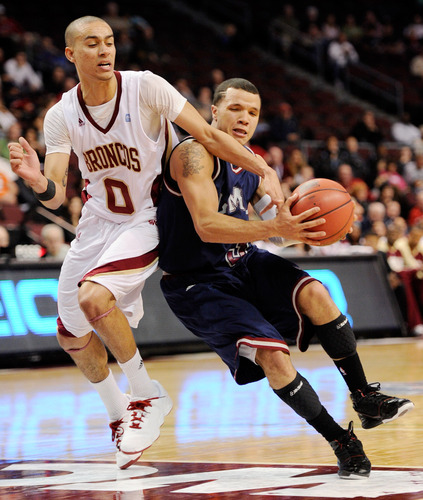
All-Conference First-Team:
- POY: Elias Harris, Jr., Gonzaga
- G: Matthew Dellavedova, Jr., St. Mary's
- G: Kevin Foster, Jr., Santa Clara
- F: Rob Jones, Sr., St. Mary's
- F: Drew Viney, Sr., Loyola Marymount
- C: Robert Sacre, Sr., Gonzaga
All-Conference Second-Team:
- G: Mike Williams, Jr., San Francisco
- G: Nemanja Mitrovic, Sr., Portland
- G: Rashad Green, Sr., San Francisco
- G: Evan Roquemore, So. Santa Clara
- C: Brandon Davies, Sr., BYU
Four summer storylines
- Marc Trasolini tears his acl: This was less of a story line as it was an isolated event, but regardless, Santa Clara losing Trasolini for the season is a big deal. The Broncos lost a number of important pieces this offseason -- to transfer, graduation, and Europe -- but with their big three of Kevin Foster, Evan Roquemore and Trasolini returning, this was a team that many had pegged as a sleeper to make a run at a top three finish in the league. Without Trasolini -- who injured his knee playing an exhibition on a team trip to his hometown of Vancouver -- SCU will head into the season without a proven front court player.
- Why does Gonzaga have so much roster turnover?: Anyone that has been paying attention to the Gonzaga hoops program will have noticed that over the past two years, there have been a multitude of players leaving the program. In fact, thanks Bud Withers of the Seattle Times, we know the precise numbers -- of the 13 players that Mark Few has signed in the three classes that are currently sophomores, juniors, and seniors, seven have left the program. That includes this offseason, as Demetri Goodson transferred to Baylor to play football, Manny Arop transferred to Indiana State and Keegan Hyland left and eventually ended up at Fairfield.
The question this left folks asking is why? Why does Gonzaga have such turnover? Why is this happening at a program whose head coach is as firmly entrenched as any in the country? Is this a sign that there is something wrong with the program, or that it has fully reached the status of high-major, with kids opting to transfer out instead of waiting their turn to play and/or being recruited over? The one thing that is certain is that this hasn't exactly had a negative effect on the program. Last year was a "down year" for Gonzaga, and they still managed to win a share of the WCC regular season title (something they have done every season since 2000), with the WCC Tournament title, and win a game in the NCAA Tournament.
- San Diego's point-shaving scandal: Back in April, the college basketball world was rocked when news leaked that two former Toreros -- including Brandon Johnson, the program's all-time leader in points and assists -- and a former assistant coach were arrested for their alleged involvement in a scheme to fix the outcome of games. Apparently, Johnson influenced the outcome of a game in February of 2010 and conspired to get another player to influence a game in January of this past season. Johnson plead not guilty to the charges
- Brandon Davies gets reinstated: Back in late August, BYU finally ended almost six months of speculation by announcing that Brandon Davies would be allowed back into school and onto the basketball team. If you've forgotten, Davies was suspended last March for violation BYU's honor code by, reportedly, having premarital sex with his girlfriend. The importance of Davies to the Cougars cannot be understated. With so much leaving in the form of the graduation of Jimmer Fredette and Jackson Emery, losing Davies may have left the Cougars in the bottom half of the WCC this season.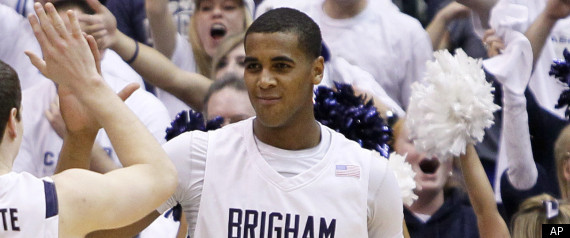
Four storylines to follow this season
- How long is BYU going to be in the WCC?: Conference expansion in college sports is all about football, but its effect on hoops is far from negligible. The WCC is a perfect example of that. Due to BYU's interest in becoming an independent on the gridiron, the WCC was able to add a program that is probably one of the nation's 50 best over the last decade. That's never a bad thing, especially for a school like St. Mary's. Sure, it may be more difficult to finally win a conference regular season title, but that poor strength of schedule that cost the Gael's two NCAA Tournament trips in the past three seasons is going to be helped immensely.
But conference expansion is far from over, and one of the rumors that has persisted throughout the past couple of months is that the Big 12 has a heavy interest in adding BYU. If BYU does, in fact, head to the Big 12, it means that their stopover in the WCC may end up being as short as a single season. Whether or not that actually happens is far from clear -- does anyone actually have any rock-solid info when it comes to realignment? -- but it will be a story to keep an eye on.
- Which Elias Harris will we get?: After his freshman season, Harris shocked folks when he announced that he would be returning to Gonzaga. He had a legitimate shot at being picked in the lottery. But as a sophomore, Harris was no where near the same player. Between an offseason shoulder injury and an early-season achilles injury, Harris was put on some weight, got himself out of condition, and lost some of his explosiveness -- three things that made him highly-regarded by NBA folks. So which Harris shows up this year? Will he be back in shape, dominating the paint and creating mismatches with front lines around the country? If he is, than Gonzaga has to be considered the favorite to win the conference.
- Will there be more tournament teams this season than in 2008?: Back in 2008, the WCC peaked. Not only did they send three teams to the NCAA Tournament, thanks to San Diego's epic run through St. Mary's and Gonzaga to the WCC Tournament title, but that same Torero team knocked off UConn in the first round of the tournament. At the time, the league wasn't a stranger to getting at-large bids -- the was well into Gonzaga's reign atop the conference -- but for the team that came in second to also earn an at-large bid made a statement. Now, with the addition of BYU, the WCC has three programs -- Gonzaga and St. Mary's the other -- that head into the season with the expectation, not the hope, of making the NCAA Tournament. But could there be more?
Its a possibility, but it would require a couple of things to happen. For starters, the WCC will have to clean up in non-conference play. Raising the league's RPI makes everyone look better. The other thing that will likely have to happen is that someone from outside of the big three will need to earn the league's automatic bid. There are some quality teams in this conference - San Francisco, Santa Clara, Loyola Marymount -- but the likelihood of those schools earning an at-large bid is quite small. The odds of them getting hot for three games and making a run through the conference tournament is much higher.
- So is Loyola Marymount for real?: This team is tough to peg. There's no question that they have talent on the roster, but talent isn't going to guarantee wins when your team lacks chemistry, is ravaged by injuries and cannot win a close game. At least one of those issues will be solved heading into this season. Vernon Teel, who was diametrically opposed to getting along with the coaching staff, is gone. His talent will be missed, but sophomore Anthony Ireland should be enough to fill the void. Better chemistry and a better leader at the point should solve some of the problems in close games, as well. If this team stays healthy, the pieces are there for a run to the top half of the conference.
Power Rankings
1. Gonzaga: The Bulldogs had a weird year in 2010-2011. It began about as poorly as one can imagine. After being ranked in the top 15 in the preseason, they got off to a 4-5 start before finding themselves at 13-8 and 3-3 in the WCC, three games out of first place with just eight to play. Included in those losses? A 22 point whooping at the hands of Washington State and a 14 point loss at Santa Clara followed by an overtime loss at the hands of San Francisco. But once Mark Few solidified Marquise Carter as the fifth starter and David Stockton and Sam Dower as his first two players off the bench, Gonzaga took off, winning 10 in a row to take home a share of the regular season title and win the WCC tournament championship. But then after beating St. John's, the Zags were stomped by a Brandon Davies-less BYU team in the second round of the Big Dance.
Gonzaga will, once again, have the look of a top 25 team in 2011-2012 despite some significant roster turnover. Steven Gray graduated while both Demetri Goodson and Manny Arop transferred out of the program. The good news, however, is that Mark Few does return a loaded front line, led by Elias Harris and Robert Sacre. Harris struggled as a sophomore after a promising freshman campaign that had his name being mentioned as a potential lottery pick. Some of that was an achilles injury that limited his explosiveness. If he can return to freshman year form -- or improve on it -- he's a potential Player of the Year in the WCC. Sacre has slowly developed into one of the best big men on the west coast. He does a little bit of everything -- scoring in the paint, rebounding, blocking shots -- and it wouldn't surprise me to see him continue to develop as a senior. The Zags are deep up front as well. Sam Dower is a potential game-changer off the bench, an active and athletic power forward that really came on strong late in the year. Kelly Olynyk can stretch the floor with his ability to shoot and can hold his own on the glass. The perimeter is more of a question mark. Sophomore point guard David Stockton -- yes, that's John's son -- was a steadying force late in the season, and while he plays smart basketball and can run the team, he's not an overwhelming playmaker. Senior Marquise Carter, however, has the potential to be. Gonzaga's late-season surge came when he was moved into the starting lineup, and he had a couple big games down the stretch. Carter can do a lot of things -- shoot, drive, find assists -- but he will need to become more consistent in his production. The third perimeter spot will be up for grabs. Sharpshooting Mathis Monninghoff started eight games but couldn't get off the bench at the end of the season. Mathis Keita earned some starts as well, but he, too, couldn't keep his minutes. Will freshman Gary Bell, the jewel of a six-man recruiting class, start immediately? There's a chance. Also, keep an eye on freshman Kevin Pangos, who should push David Stockton for minutes at the point.
2. St. Mary's: It may be hard to believe, but for St. Mary's, a season in which they won their first share of the WCC conference title in 14 years was a major disappointment. The magnitude their collapse down the stretch -- an unacceptable loss to San Diego, losses to Gonzaga and Utah State that would have sealed an tournament trip, and another loss to Gonzaga in the WCC Tournament finals -- should tell you how good of a season the Gaels had for three months just to manage a share of the WCC title. In mid-February, they were 22-4 and 10-1 in the WCC, holding a two game lead with three games left while playing sensational basketball. Their season ended fittingly, with WCC Player of the Year Mickey McConnell missing a game-winning layup at the buzzer in the first-round of the NIT against Kent State.
While McConnell has moved on to the professional level, Randy Bennett's club returns the rest of their roster from 2010-2011. Matthew Dellavedova will take the reins of this team as a junior and he should be primed for a big season as the feature guard in Randy Bennett's offense. He will likely be joined in the back court by sophomore Stephen Holt, a highly-regarded recruit when he entered the program that had a couple of impressive performances late in the season. Jorden Page missed most of last season with a knee injury. He had a couple of big games in the WCC Tournament two seasons ago and should provide a spark off the bench. Same with Paul McCoy, a transfer that averaged 13.4 ppg as a freshman in 2008-2009. In the front court, Clint Steindl and Rob Jones will start at the forward spots. Steindl is a lanky, 6'7" sharpshooter at the small forward spot while Jones, despite standing just 6'6", is the team's second-leading scorer and best rebounder. He's more of a combo-forward than a pure power forward, but Jones plays with a mean streak. Kenton Walker got 26 starts last season, but only played 15 mpg. Mitchell Young actually played more minutes that Walker and averaged double figures off the bench. Tim Williams and Northwestern transfer Kyle Rowley will also be in the front court rotation. If Dellavedova and Jones embrace the role of the leader, youngsters like Page and Holt develop into big-time players and the Gael's front court plays well, this is a team that has the potential to make a lot of noise; not just in the WCC, but on a national level.
3. BYU: While BYU's storybook season was dulled by the suspension of starting center Brandon Davies in March, it shouldn't put a damper on what was one of the most memorable years in college basketball in the last decade. Much of that credit is due to the play of Jimmer Fredette, the superstar with unlimited range, a vicious crossover, and a goodie-two-shoes image that made Tim Tebow look like Marlo Stanfield. But with the graduation of Fredette and a couple of other very important pieces and BYU's move to the WCC for hoops, Dave Rose will, essentially, have a brand new program to work with in 2011-2012.
Not only does BYU lose The Jimmer next season, they well also be playing with out Jackson Emery and Kyle Collinsworth, who will be on his Mormon mission. What that means is that Rose is going to have to build his club around Davies, who recently was officially reinstated to the BYU program. Davies is a quality post presence, able to score on the block with a variety of effective-but-awkward post moves. Davies will be joined on the front line by Noah Hartsock, a senior with the ability to stretch the floor thanks to his jumper, and Chris Collinsworth, who will hopefully be back to 100% after battling through a knee injury and eventually having surgery in January. Throw in Stephen Rogers, a junior reserve, and the crop of freshmen bigs Rose signed, and BYU will have a solid front line, although it would be nice to see that group develop a bit of a mean streak. The perimeter is where the question marks lie. Jimmer and Emery rarely left the court, and when either one did, Kyle Collinsworth was usually the player that slid down to the two. Senior Charles Abouo is back, but he is a small forward that isn't known for his ability to handle the ball. That leaves a trio of freshmen. Anson Winder, who redshirted last season, and Damarcus Harrison, a true freshman, will initially be relied upon to handle back court duties until UCLA transfer Matt Carlino is able to get himself eligible. How good Carlino ends up being will likely be the determining factor in whether or not BYU wins the WCC.
4. San Francisco: The Dons are in a very good position heading into the 2011-2012 season. Not only is this a team that finished 10-4 in the league last season -- just a game behind both Gonzaga and St. Mary's -- they also bring back essentially their entire team, losing only Moustapha Diarra and Marko Petrovic. It didn't take long for Rex Walters to turn around this program, as he now has USF in a position to legitimately be considered a threat to win the conference title.
The Don's strength will be in their back court this season. It starts with Mike Williams and Rashad Green, their two leading scorers from a season ago and all-WCC members. Green has about four inches on Williams (who is listed at 6'0"), but is the better playmaker. Williams is a better scorer and more of a consistent three point threat. The back court will be held together by Cody Doolin, a freshman point guard who was forced into a starting role due to another season-ending knee injury to Dominique O'Conner in the second game of the season. Doolin proved to be a very capable WCC point guard with the potential to develop into an all-league caliber playmaker. With a healthy O'Conner and sophomores Charles Standifer and Avery Johnson joining that group, the Dons may have the second best perimeter attack in the league. Inside, losing Moustapha Diarra will hurt their depth. He was big and he produced -- 7.8 ppg in just over 17 mpg. But with Perris Blackwell and Angelo Caloiaro back, the Dons will have a solid inside-outside duo. Blackwell is better around the rim while Caloiaro is more of a face-up four, although he does get to the glass at a solid rate. It will be nice if he shoots better than 32.7% from three or takes fewer than five per game, however. 6'9" German sophomore Justin Raffington will be one of the guys counted on to provide depth in the front court. The WCC will be tough up top, and its always interesting to see how a team handles expectations (see Loyola Marymount last season), but San Francisco should be in the mix atop the WCC all year long.
5. Santa Clara: The Broncos had a terrific year in 2010-2011. They won 23 games, they finished fourth in the WCC and they were able to win a postseason title, beating Iona on the road for the CIT championship. And while Kerry Keating's club lost two starters and a couple of bench players, the fact that they were returning their big three of Kevin Foster, Marc Trasolini and Evan Roquemore had them being picked as a potential sleeper in the WCC. That was until Trasolini blew out his knee in August.
We already talked about the loss of Trasolini above, so let's focus on what Santa Clara does have. It starts with their back court, as Foster, a senior, and Roquemore, a sophomore, form a terrific tandem. Foster is one of the most potent scorers in the country, averaging over 20 ppg as a sophomore. Foster can be streaky. He shoots a ton of threes -- exactly 10 per game last year -- and when he gets hot, watch out. He went for 25 or more points 12 times, including a 36 point outburst in a win against Gonzaga in January. Roquemore is more of an all-around player and a much better creator, but he has the ability to explode as well, going for 30 points in SCU's win over USF in the CIT. Robert Cowels looks to be in line to start the the three, but the Bronco's back court depth will more than likely be entirely freshmen. The front court is going to have a ton of question marks without Trasolini. Junior Niyi Harrison and sophomore Jon McArthur are really the only returners, but redshirt freshman Yannick Atanga and true freshman Robert Garrett, a seven-footer, were both highly-rated recruits in high school. At least two players out of that group are going to have to develop into solid contributors this season for the Broncos to have a real shot at finishing in the top four of the league.
6. Loyola Marymount: Last season was disastrous for the Lions. They had a roster stocked with talent and a buzz heading into the season, which is why they were picked by quite a few people to contend with St. Mary's for the second spot in the conference. But the year ended up being a disaster. The Lions were plagued by injuries, their star guard Vernon Teel couldn't find a way to get along with the coaching staff, and LMU ended the season with just 11 wins, finishing in last place in the conference at 2-12. One thing that I am positive of is that Loyola was not as bad as their record indicated last season. As a team, its hard to argue with the results, but there was -- and still is -- plenty of individual talent on that roster.
The issue this season is going to be A) keeping that talent on the court and out of the training room; B) developing team chemistry, which is just as important as talent; and C) winning close games -- they were just 2-7 in one possession and overtime games last year. Nine of the 11 players Max Good started in more than one game last season return, including the five guys that were starting by the end of the season. The centerpiece of this team will be forward and 17.2 ppg scorer Drew Viney. (Ed. Note: Of course, the day after we originally posted this preview, Viney had to go and get surgery on his foot.) He'll be joined up front by sophomore Godwin Okojoni, who was starting by the end of the year in place of Edgar Garibay, another sophomore. Garibay is a big-bodied, 6'10" center that will hopefully be healthy this season. The athletic Ashley Hamilton will also play a big role, while LaRon Armstead and Tom Diedrichs should see minutes up front as well. Anthony Ireland really came on down the stretch of his freshman campaign and should develop into a quality starting point guard. He'll be joined in the back court by sophomore Ayodeji Egbeyemi, who was able to start by the end of his freshman season because Jarrod DuBois had his year cut short by injuries. With both Teel and Larry Davis gone this year, LMU's back court may have some depth issues. The Lions have the talent to make a push for a top four finish in the conference, but will all the pieces come together?
7. Portland: The success that Eric Reveno has had in Portland is a perfect example of why the WCC looks primed to be one of the best mid-major conferences in the country for a long time coming. Despite playing in a league that includes three perennial tournament teams in Gonzaga, St. Mary's and now BYU, Portland has steadily been competitive, not only in the league but nationally as well, despite losing important pieces that past two offseasons. This year will be the test. After losing four starters from the 2009-2010 season, Portland appeared to be a challenger for the league title early in the season before road struggles during conference play derailed that bid. They finished .500 in league play, ending up fifth, right where everyone expected them to be. But their 20 wins and invitation to the CIT should tell you that their season was more successful than it appears on paper.
This season, Portland will once again be forced to deal with the graduation of quite a bit of talent. Leading scorer Jared Stohl graduates, as does the league's leading rebounder in Luke Sikma and a four-year starter for the Pilots in center Kramer Knutson. The Pilots should be able to handle the loss of Stohl in stride as they have plenty of perimeter talent. Nemanja Mitrovic proved to be just as dangerous of a three-point marksmen, hitting 46.3% of his triples while shooting more than Stohl on the season. Senior Eric Waterford started 23 games at the point, while junior Derrick Rodgers, sophomore Tanner Riley and freshman Kevin Bailey -- who was a highly regarded recruit -- should all contribute this year. But the x-factor may end up being sophomore Tim Douglas, who earned a spot in the starting lineup late in his freshman campaign. He played well in the nine games he started, leading Portland to a 6-3 record which includes a 26 point, five rebound, four assist performance in a 15 point win over St. Mary's. Portland lost both games prior to his insertion in the lineup as well as the last three games of the season, which Douglas missed with a foot injury. The front court is a much, much bigger question mark. Only two players that saw any action return -- sophomores Ryan Nicholas and Riley Barker, who played a combined 17.1 mpg last year. A couple of freshman will be thrown in the mix as well -- John Bailey, Thomas van der Mars, and Dorian Cason. Will any of those five players be able to step up and replace the production and leadership lost with Sikma and Knutson?
8. Pepperdine: Tom Asbury's second tenure didn't go quite as well as his first, when he built the Waves into the premiere program in the WCC in the early 90's. To get a feel for how poorly Pepperdine performed, think about this -- the Waves were 12-21 overall and 5-9 in league play while have two of their players, including star Keion Bell, suspended midway through the season, and this was the most successful year in Asbury's three year reign. Asbury is now gone -- along with Bell and second leading scorer Mychel Thompson -- but all hope is not lost for Pepperdine.
Clearly, losing a player of Bell's caliber is less than ideal, but having a player of Bell's caliber that does not buy into to the concept is just as bad. Case in point -- Pepperdine was 6-14 with Bell on the roster last season; they were 6-7 without him. The bigger loss may actually be Mychel Thompson, Klay's younger brother, who was the team's leading scorer after Bell left. This season, new head coach Marty Wilson will center his offensive attack around Lorne Jackson, a senior guard that turned into a legitimate go-to scoring threat late in the year, averaging 20.8 ppg in the last five games. Junior Joshua Lowery looks like he might be the answer at the point after solidifying the position as a sophomore. Throw in senior Dane Suttle, junior Caleb Willis, and a couple of newcomers, including touted freshman Jordan Baker and Norweigan JuCo transfer Nikolas Skouen, and Pepperdine has a decent blend of talent and experience on their perimeter. The starters in the front court will most likely be the senior duo of Taylor Darby and Corbin Moore, who both have some size and plenty of experience but lack upside in terms of potential. Those two will combine with sophomore Jan Maehlen and freshman Ramon Eaton, who are going to have to provide minutes even if they aren't quite ready. The front court will be an issue, but if Pepperdine can get some solid perimeter play out of Jackson and Lowery, than I don't think a .500 WCC season is out of the realm of possibility.
9. San Diego: Bill Grier had such an incredible start to his tenure at San Diego. He went 11-3 in the league, he knocked off both St. Mary's and Gonzaga en route to the WCC Tournament title and then he went on to beat UConn in the first round of the NCAA Tournament. It doesn't get much better than that. And it also doesn't get much worse than where the program has ended up since then. They won 16 games -- and just six in the conference -- the following season, seeing those numbers drop all the way to six wins and just two leagues wins last year.
San Diego's prospects don't look all that much better for this season. They have a young roster -- eight freshmen and two sophomores -- and lost two of their top four scorers from last season. There are a couple of bright spots, however. Darian Norris, a JuCo transfer playing his first season as a Division I point guard, proved that he is capable of playing at this level of basketball. He'll be the only senior of the USD roster next year. The Toreros also have a solid front line. Chris Manresa, a junior, averaged a respectable 7.3 ppg and 5.4 rpg while Chris Gabriel went for 7.5 ppg and 3.4 rpg. Gabriel has the potential to be a real force in the WCC, but he needs to get control of his weight. He's currently listed at 285 -- which is down from the 310 he was listed at as a sophomore -- but weight isn't the only factor when it comes to conditioning. Gabriel only managed to stay on the court for 15 mpg last year. There are some decent freshmen coming in -- including redshirt frosh Ben Vozzolla and point guard Chris Anderson -- but they will take some time to develop. Expect another year at the bottom of the league.
Continue reading...
Friday, March 4, 2011
Previewing the Madness: The WCC Tournament |
As we have grown accustomed to these days, the WCC regular season title came down to Gonzaga and St. Mary's. In other news, grass is green, water is wet, and Virginia Tech is on the bubble.
Gonzaga was the favorite to win the league coming into the season, but the loss of Matt Bouldin hurt this team much more than anyone expected. The Zags struggled during their difficult non-conference schedule and took a couple of early losses in WCC play, including their first matchup, to fall behind the Gaels by two games. St. Mary's seemingly had tossed the season into cruise control, but they went down to San Diego and suffered one of the most excruciatingly inexplicable losses of the season. They followed that up with losses to Gonzaga and Utah State at home, and all of a sudden the Gaels had not only blown their WCC lead, they put themselves in serious jeopardy of losing a potential at-large bid.
It says up a terrific scenario should both teams make it to the finals of the WCC Tournament. Two nationally recognized teams with familiar names and faces playing a nationally televised rubber match which, potentially, could be for their conference's only bid to the NCAA Tournament. That, my friends, is March Madness at its best.
Where: Orleans Arena, Las Vegas
When: March 4th-7th
Final: March 7th, 9:00 pm on ESPN2
(Bracket can be seen here.)
Favorites: Gonzaga Bulldogs
Whether or not you consider Gonzaga or St. Mary's the favorite for the WCC Tournament is a matter of opinion. I just happen to be of the opinion that Gonzaga is playing better right now. The Zags have won seven in a row, they erased a two-game deficit in the WCC standings in the span of a week, and just eight days ago they beat the Gaels in Moraga in overtime. Elias Harris and Sam Dower are both playing arguably their best basketball of the season, and -- as least Zags fans hope -- this team appears to be peaking right now.
Sleeper: There are a number of them in this league, but I think the best pick outside of the top two is San Francisco. The Dons lost their top two scorers this season, but with a more balanced attack led by Michael Williams, Rashad Green, and Perris Blackwell, USF finished third in the WCC at 10-4, one game off the lead. They also knocked off Gonzaga. This team is legit.
Players to Watch
Continue reading...
Thursday, September 2, 2010
Reactions to BYU's move to the WCC |
By now, you're heard about it. BYU has left the MWC. They are headed to the WCC. Gonzaga now has competition. The league has a better overall profile. Their ESPN becomes that much sweeter.
We posted our thoughts on Tuesday. Here's what everyone else is saying:
Mike DeCourcy, The Sporting News: Gonzaga has managed to supersede the league's middling RPI ranking to earn solid NCAA Tournament seeds in recent years but always has fought the perception that it is treading water or retreating during the conference schedule. The Zags even established a series with Memphis of Conference USA that is positioned within each team's conference season so they both face a high-level challenge on the way to Selection Sunday. Now, the Zags will have two big-time games against the Cougars, who've averaged among the top 20 Division I teams in attendance for three consecutive seasons and have reached the NCAAs four years in a row.
Andy Katz, ESPN.com: Adding BYU is a major coup for the WCC, which is expanding to nine teams and adding a new member for the first time in 30 years, when it added San Diego and Gonzaga. The WCC will increase its 14-game men's basketball schedule to a true round-robin 16-game schedule for the 2011-12 season. The WCC will have to move the dates of its conference tournament, at the Orleans Arena in Las Vegas, since the semifinals have traditionally been held on Sunday and the final on Monday. BYU is not allowed to play on Sundays. The WCC now has a major presence in Spokane, Wash.; Portland, Ore.; San Francisco-Oakland; Los Angeles; and Salt Lake City. "This transforms the league with one move," said one source with knowledge of the situation.
Gary Parrish, CBSSports: Think about it: The Zags have won 10 consecutive conference championships, but folks discount the titles each year because they're mostly examples of what happens when one school overwhelms its league brethren in funding, facilities and commitment in general. When Gonzaga wins, we yawn. When Gonzaga loses, we rip. And though nobody would ever argue it's a bad setup (because it's actually a tremendous setup, which is among the reasons Few has passed on several job opportunities in recent offseasons), it must be frustrating to feel as if you must apologize for loading the trophy case year after year. Come next year, those days are over. The Zags might not win every WCC title over the next decade, but each time they add one you'll now be required to take it seriously. The addition of BYU (for the 2011-12 season) gives the league a second marquee program that operates at a high level, and it will give Gonzaga at least two and possibly three additional games each year against a school that's made the past four NCAA tournaments. That's the upside Few believes outweighs any potential negatives.
Jeff Eisenberg, The Dagger: The lingering question facing the league's other programs is whether BYU's arrival will help the rest of the WCC bridge the gap with Gonzaga or further widen the gap between the haves and have-nots. Saint Mary's made a surprise run to the Sweet 16 last season and San Diego and Portland have enjoyed successful spurts, but no team has consistently matched Gonzaga's success during the past decade.
Eamonn Brennan, ESPN.com: But what we're interested in is college basketball. To that end, it's difficult to say whether this is a wholly positive step for BYU hoops. But it's also hard to see it as a negative. Sure, the WCC is filled with teams whose arenas don't come close to the Mountain West's average hoops home, and BYU is going to be playing in front of high school-esque crowds for much of its regular season. Can BYU put together a schedule tough enough to keep it among the nation's elite? Can it dominate the conference enough to be consistently considered one of the best mid-majors in the country? (And now that it's in the WCC, is BYU actually, like, a real mid-major?)
Matt Norlander, CHJ: From a basketball perspective and what it does to the Cougs' strength of schedule, it's a demotion, no question. The Mountain West has produced multiple legitimate tournament-caliber teams over the past half-decade, while the West Coast Conference has occasionally given us an inconsistent second fiddle to Gonzaga but not much more. Top to bottom, the MWC is/was a better basketball league. Now, if Portland and St. Mary's can continue to ascend, the gap is not so grand. That remains to be seen. As of now, the Cougars will not be facing teams that can equate to UNLV, San Diego State, New Mexico and Utah on a year-in, year-out basis.
Jon Wilner, Mercury News: What’s next for the WCC? Will it expand to become a 10 team league … and find a travel partner for BYU? You don’t expand just to expand — the right fit has to be available. Is Seattle, Pacific or Denver, the right fit? The WCC has been exploring its expansion options for more than a year and didn’t see reason to invite any of those teams, so why jump now? Remember, every team you add means two more conference games, which means two fewer non-conference games. That’s OK if the additions are two conference dates with BYU, because that helps your RPI. But you don’t want to add two conference games against a RPI 150+ team and thereby lose the opportunity to play two non-conference games against, say, RPI 50-100 teams.
Continue reading...
Tuesday, August 31, 2010
Both the MWC and the WCC would be good landing spots for BYU |
The current realignment stalemate revolves around BYU and their decision on whether or not to go independent in football.
If they do go independent, then in all likelihood they are going to have to leave the MWC in all other sports. With a Wednesday deadline to make a decision (that could very well come this afternoon), all the talk this week is about where BYU and what is their best option.
I'm not going to pretend to know much about the economics of college football, so in this forum we are strictly talking about what the best outcome is for college hoops and Dave Roses's program. And as we know all too well, that probably plays a (very) minor role in the decision making process.
Jeff Eisenberg says that the best option for BYU basketball is to stay in the Mountain West Conference, and I tend to strongly with that sentiment. Let's face it -- the MWC is a better league than the Pac-10 this season, and it was last season as well. With programs like New Mexico (who has signed Steve Alford to a ten year deal), San Diego State, and UNLV being joined by Fresno State and Nevada -- two programs with their own storied, and in some cases notorious, basketball programs -- it is quite possible that the MWC will continue to battle with the Pac-10 for West Coast supremacy. Don't forget about Boise State, who made the NCAA Tournament in 2008.
If BYU does stick around, then don't be surprised if the MWC also adds Utah State, bringing another very good basketball program -- and even more of the Salt Lake City market -- into play. That, my friends, would be an absolutely loaded basketball conference; one that would be difficult to label as a mid-major if they routinely put three and four and five teams -- which is a real possibility -- into the Big Dance.
But if the Cougars do decide to go independent, Andy Katz says that joining the WCC is a better move than becoming a member of the dead conference walking WAC. He makes some compelling argument. For starters, BYU is always going to play Utah State, who is a perennial NCAA Tournament threat (two at-large bids and four tournament overall in the last six seasons), so by joining a different conference, they aren't going to be losing a quality resume game. And by joining the WCC, BYU would make the league a perennial two-bid conference, with the potential -- with St. Mary's and the recent successes of teams like Portland, San Diego, and even upstart Loyola Marymount -- for even more.
BYU is much bigger -- 33,000 students, while no one in the WCC has even 10,000 -- and could complicate things with the religious aspect -- BYU is a mormon school, while seven of the eight WCC schools are Catholic while Pepperdine is affiliated with the Church of Christs -- but the WCC is still the Cougars best option.
And don't forget about the league's ESPN deal, which allows Gonzaga to get quite a bit more national exposure than BYU gets in the MWC even if it is coming around midnight on the east coast. Hey, I'm watching.
BYU is going to be alright now matter what decision they happen to make.
The real question is what happens to everyone else. Do teams like UT-San Antonio fill in the holes in the WAC? Do we get some amalgam of the non-BCS schools forming a super-conference across the country? Will Fresno State and Nevada be able to afford the $5 million they may be forced to pay the WAC?
Whenever BYU makes their decision, the trickle down will be fun to watch unfold. Stay tuned.
Continue reading...
Friday, March 5, 2010
Conference Tournament Preview: The WCC |
Where: Orleans Arena -- Las Vegas, NV
When: Friday, March 5th - Monday, March 8th
Championship: 3/8 - 9:00 pm: ESPN
The Favorite: #1 Gonzaga
Its the WCC. This league is Gonzaga's to lose until, well, they lose. Despite the gaudy records, the Zags don't have the same aura of invincibility that they normally do around this time. Losses to San Francisco and Loyola Marymount will do that to you. What is for sure is that Gonzaga is the most talented team in the conference. Matt Bouldin was the league's POY, and Elias Harris was voted newcomer of the year and played his way into the brains of every NBA GM. Steven Gray is as underrated as anyone in the country, Robert Sacre is a high-major caliber seven-footer, and the Zags have a bevy of capable subs. Its tough to get a gauge on how good Gonzaga is nationally, but its safe to say that they are the favorite in this tournament. Elias Harris is as athletic as anyone in the WCC.
(photo credit: ESPN)
And if they lose?: St. Mary's
Matt Bouldin may have won the conference player of the year award, but that doesn't necessarily mean he's the best player in the league. If you haven't seen Omar Samhan play, you are missing out. He may look like Shrek and be built like an 12 year old overeater, but Samhan has a great touch around the rim, deceivingly quick feet, and a great understanding of the game. He is pretty much a lock for 20 and 10 on any given night. The problem for the Gaels is what they get from the guys around him. Gone are Patty Mills and Diamon Simpson. In are Mickey McConnell, Matthew Dellavedova, and Ben Allen. How well those three play will determine how well St. Mary's does in the WCC. With wins over San Diego State and Utah State, but not much else, the Gaels probably need to earn the auto-bid in the don't want sweat out Selection Sunday.
Don't discount: Portland
If you remember, early in the season the Pilots were the team every was talking about. They had beaten Minnesota and UCLA and earned a trip to the finals of the 76 Classic. But a couple bad losses, a less than stellar performance in the WCC regular season, and the loss of leading scorer has led to Portland being written off by some. But this is a team with size, shooters, and a very good point guard.
Sleeper: Loyola Marymount
The Lions have been injured throughout much of the season. When they are healthy, they are quite talented. Wins at USC, at Notre Dame, and against Gonzaga prove that. The Lions have won five of their last seven games heading into the WCC tournament, which includes the Gonzaga win and a win over Portland.
Names you need to know:The up and coming Lions of Loyola Marymount have been bolstered by the outstanding play of their junior guard from Jamaica, New York. Teel has grown into a complete package in the WCC. He's averaging nearly 15 points a game and leads the conference in assists per game with almost six. Forward Drew Viney has gotten most of the attention this season at LMU but don't sleep on Teel.
Continue reading...
Friday, November 27, 2009
What is the best league on the West Coast? Not who you think... |
Yesterday, was Thanksgiving. And as the tradition goes, if you are watching sports on Thanksgiving, you are probably watching football.
If you did happen to have basketball on the brain yesterday, our old friend tryptophan might have made it difficult to stay up for the fourth game of the 76 Classic out in Anaheim.
As you may or may not have heard, UCLA played Portland last night in a game that tipped at about 11:20 here on the east coast. The game, played all of 40 miles from the UCLA campus, pitted one of college basketball's blue bloods against a typical WCC also-ran.
The final score was 74-47.
If I gave you three guesses at who won, how long would it take you to say Portland?
And as the score would indicate, this one was never even close. Portland never trailed, shooting 57% from the field and 6-8 from deep in the first half to open up a 36-19 halftime lead. That hot-shooting continued in the second half, as they finished the game at 54% from the floor and 11-19 from deep. Jared Stohl led the way with 15 points on 5-5 shooting while Nik Raivio, a potential all-league performer, had 13 points and 5 assists.
It was painfully clear who the best team on the floor was tonight, and given that Portland could very well be the fourth best team in the WCC, it begs the question: is the WCC better than the Pac-10 this season?
Its much closer than you think.
For starters, the WCC is 4-2 against the Pac-10. Arizona State (104-65 over San Francisco) and the Bruins (71-52 over Pepperdine) have the lone wins. In addition to beating UCLA, Portland also owns a win over Oregon, San Diego beat Stanford in the opener for both teams, and USC lost to Loyola-Marymount.
Advantage: WCC.
Well, what about big wins?
Portland not only has beaten UCLA and Oregon, but they own a 17 point win over a good Seattle team that was won at Weber State and Utah and beaten Fresno State at home. San Diego whooped up on Oklahoma, taking a 23 point second half lead before the Sooners came back with Brandon Johnson out of the game. Gonzaga won the Maui Invitational with wins over Cinci and Wisconsin, but their most impressive performance was probably taking Michigan State to the buzzer at the Breslin Center. Even St. Mary's, who always seems to play a weak non-conference schedule, beat a good SDSU team by 22 at home.
The Pac-10? To be honest, its pretty embarrassing. As a league, they own just two wins over power conference teams - Arizona beat Colorado, the worst team in the Big XII that barely hung on the beat Chaminade, in overtime while Stanford knocked off Virginia, a team not expected to make much noise in the ACC. Their best performance of the season came in Stanford's OT loss to a Kentucky team that has been playing far from their best basketball.
Advantage: WCC.
Enough comparing of numbers.
Washington is the best team on the west coast. Even with Gonzaga's win out in Maui, Washington has to be given the edge, especially with way Quincy Pondexter is playing right now.
Having said that, is there another Pac-10 team that you think is better than any of the WCC's top four (Portland, Gonzaga, St. Mary's, San Diego)?
Maybe once Cal gets healthy, yes. But after seeing them struggle in their four CvC games, and knowing that Harper Kamp and Theo Robertson are still out of uniform, right now this does not look like a tournament team, let alone a top 25 team. Arizona State has some talented kids on their perimeter - Trent Lockett, Derek Glasser, Rihard Kuksiks - but unless Eric Boateng makes a big improvement or Victor Rudd turns into a Jeff Pendergraph or an Ike Diogu, I don't think this team has the interior play to make the dance.
Stanford? No one outside Landry Fields.
Washington State? Ditto for Klay Thompson.
Arizona? Too young.
Oregon? They lost to Montana.
UCLA, USC, Oregon State? Please.
I can legitimately see a scenario in which the Pac-10 gets just one team into the dance.
The WCC, on the other hand, has three or four teams that could play their way to an at-large bid. Gonzaga is going to be back in the top 25 after their Maui win, and deservedly so. They are tough, they are balanced inside, and they have a star in Matt Bouldin. Portland is your typical quality mid-major - senior laden team with capable-to-above average bigs and a slew of shooters. San Diego has a number of quality role players surrounding potential all-league player Brandon Johnson. St. Mary's has had the least non-conference success thus far, but they may actually be the best team in the conference - Ben Allen and Omar Samhan are both big, talented posts while Matthew Dellavadova and Mickey McConnelly are excellent shooters and creators in the back court.
The season is young, and there is still plenty of chances for the WCC kids to falter and the Pac-10 teams to turn it around. But on paper, right now, the WCC looks to be a better league, especially at the top.
And I know what you're going to say - the bottom of the WCC is much worse than the bottom of the Pac-10.
Remember this: Loyola Marymount, who is in the bottom of the WCC, has already beaten USC, who is in the bottom of the Pac-10.
Continue reading...


 Posts
Posts

