
Over the course of this week, we will spend a few minutes catching you up on how some of the best conferences in the country currently look. With conference play starting up, its time to get into the basketball spirit.
You can find the rest of the Conference Catch-ups here.
Favorite: North Carolina
Is it just me, or does it feel like no one is talking about North Carolina as a title contender anymore? That may be a bit of an overstatement, but since UNC lost to UNLV and Kentucky in the span of a week, it feels like they have become the forgotten juggernaut. Do they have flaws? Of course. Kendall Marshall can't guard a door frame. Harrison Barnes has a tendency to become nothing but a jump shooter. Neither John Henson nor Tyler Zeller have the kind of physical strength inside to bang with a guy like Jared Sullinger. But that almost feels nitpicky when you are talking about a team that has the amount of talent on their roster that the Tar Heels do.
Continue reading...
Wednesday, January 4, 2012
Conference Catch-ups: The ACC |

Wednesday, October 19, 2011
The Only Conference Preview You Need To Read: ACC |
Over the next month and a half, we will be rolling out all of our 2011-2012 Season Preview posts. You can find a full schedule of all the preview posts here. If you want to browse through the rest of the conference previews, click here.
AWARDS
Player of the Year: Harrison Barnes, So., North Carolina
To say nothing of the talent level in the ACC, I'm not sure how anyone can possibly pick someone other than Barnes to be the Preseason Player of the Year in the ACC. We're talking about a kid that could have been the No. 1 player in the NBA Draft had he decided to enter the 2011 NBA Draft. Barnes started off his freshman season slowly, struggling to gain confidence and find a rhythm playing along side Larry Drew. But once Kendall Marshall was moved into the starting lineup -- and after Barnes hit a game-winning jumper to beat Miami in mid-January -- he found his confidence and he turned into the player that made some preseason first-team all-america ballots. In his last 18 games, Barnes averaged 19.7 ppg and 6.5 rpg while shooting 45.5% from the floor and 37.8% from three. He's a prototype for a small forward -- he's 6'8" with advanced skills and an understanding of how to play the game. There may not be a better player in the country.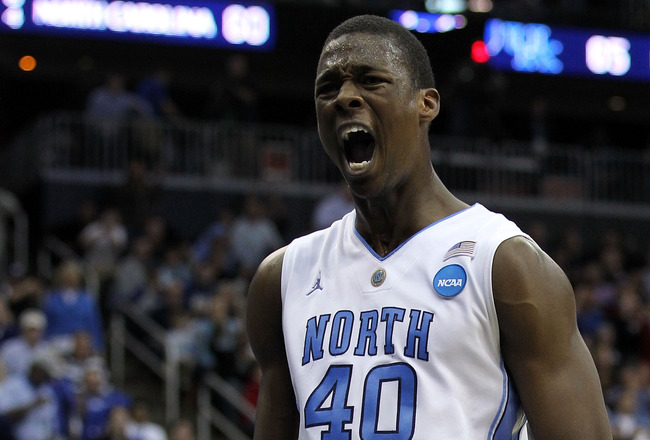
And a close second goes to...: Mike Scott, Sr., Virginia
Frankly, this spot probably belongs to another player on UNC or Duke's Austin Rivers (see below), but since this is more than just a Tobacco Road preview, I decided to write about Scott here. Thanks to Virginia's struggles as a program and the fact that Scott missed the majority of last season with an ankle injury, its easy to forget just how good he was before he went down, averaging a double-double at 15.2 ppg and 10.1 rpg. Scott is a difficult matchup on the block at this level. He's capable of stepping out onto the perimeter and knocking down a jump shot, but he also has a variety of moves on the block. Perhaps the most difficult thing about guarding him is his strength. He's not overly explosive, but got a mature build and can finish through contact given how hard he goes to the basket. The Cavs are a sleeper in the league this season, and if Virginia does make a run towards that third-place finish, don't be surprised to see Scott's name pop-up on Player of the Year ballots.
Breakout Star: Erick Green, Jr., Virginia Tech
As much as hype as Ryan Kelly has gotten this offseason, I'm going with Green to be the breakout star of the ACC this year largely due to the fact that he performed well in the ACC last year. Not much was expected of Green last season, but after Dorenzo Hudson went down with a season-ending injury, Green was called upon to fill the back court role alongside Malcolm Delaney, and he did so admirably. Green finished the year averaging 11.7 ppg, but he played his best basketball late in the year, even notching a trio of 20 points games. Green is a more natural point guard, and without Delaney dominating the ball, expect this junior and his 2.3:1 assist-to-turnover ratio to have a very good year running the Hokies.
All-Conference First-Team:
- POY: Harrison Barnes, So., UNC
- G: Kendall Marshall, So., UNC
- G: Austin Rivers, Fr., Duke
- G: Malcolm Grant, Sr., Miami
- F: Mike Scott, Sr., Virginia
- C: Tyler Zeller, Sr., UNC
All-Conference Second-Team:
- G: Seth Curry, Jr., Duke
- G: Terrell Stoglin, So., Maryland
- G: Durand Scott, Sr., Miami
- F: Dorenzo Hudson, Sr., Virginia Tech
- F: John Henson, Jr., UNC
Newcomer of the Year: Austin Rivers, Duke
This pick was almost as easy as choosing Barnes to be the league's Player of the Year. In fact, I'd go as far as to say that Rivers, if he lives up to the hype he has coming this season, will be Barnes' biggest competition for the honor. Rivers can flat out score the basketball. He's a bit of a streaky shooter, but his hot streaks are the stuff of legend, as he's capable of putting on a show once he gets into a rhythm. Rivers has terrific range and a wide-variety of moves with the ball in his hands. He's not limited to being a jump-shooter, although he does need to improve his handle as a driver, especially going left. Rivers needs to make sure he focuses on limiting his turnovers and poor shots, but this kid has the kind of ability that will remind some Duke fans of Jay Williams.
All-Freshmen Team:
- G: Austin Rivers, Duke
- G: Nick Faust, Maryland
- F: Dorian Finney-Smith, Virginia Tech
- F: Julian Royal, Georgia Tech
- F: Ryan Anderson, Boston College
Five Summer storylines
- ACC expansion: The biggest news in all of college sports this summer was conference expansion, and for the ACC it was no different. With Texas and Oklahoma appearing to be on the verge of joining the Pac-12 and the Big 12 looking like it was on its death bed, most people believed that conference armageddon was upon us, and both the ACC and the Big East would be unable to survive the fire and brimstone that rained down. So the ACC made a preemptive strike, shocking the nation late on a Friday night in September with the news that they were adding both Pitt and Syracuse.
Conference armageddon didn't happen -- I guess Bruce Willis was able to set off the nuke in time, keeping Texas and Oklahoma from heading to the Pac-12 -- and the Big 12 actually managed to solidify itself as a league by stealing TCU away from the Big East. With the nation's premiere basketball league on the verge of collapsing, UConn made it abundantly clear to the ACC that they wanted in. As it turns out, the likelihood of that happening is fairly small. The ACC wanted the Huskies initially, but Boston College -- who is still holding a grudge from comments UConn made eight years ago when BC left the Big East for the ACC -- vetoed that move.
- Jim Larranaga dealt a bad hand: The Hurricanes certainly didn't have a boring offseason. After losing Frank Haith to Missouri and ignoring to overtures from Frank Martin, Miami made an impressive hire by luring Jim Larranaga away from George Mason. After what happened this summer, I wonder if Larranaga ended up regretting that decision. First, his star center Reggie Johnson went down with a torn meniscus, which is a huge blow to the Hurricanes. Johnson was arguably the best big man in the conference that plays outside of Tobacco Road. A double-double machine, he game The U a post option to balance out their guard play. He is scheduled to be back in January, but given the weight issues he has, can Miami really count on him for a stretch run?
That was just the start of it. In August, Yahoo published their massive report on Miami's booster Nevin Shapiro, and while the shrapnel hit all over the football program, the basketball team didn't get away scot-free. Shapiro alleged that he paid DeQuan Jones, who is currently on the Miami roster, $10,000 to ensure that Jones joins the Hurricanes. Eight days after that came out, Julian Gamble -- who likely would have started in Johnson's place -- tore his acl. That's not an ideal way to start your new job.
- Wake Forest's embarrassing summer: In the past 18 months, Wake Forest has lost five players from what was once a promising young core. Tony Woods was forced to transfer after assaulting his girlfriend. Ari Stewart transferred after their abomination of a 2010-2011 season. Melvin Tabb was kicked out of school because of an arrest involving breaking and entering and fraud. JT Terrell had to leave because he has a drinking problem. And Ty Walker is suspended for the first semester. Throw in the alleged rape during the 2009 NCAA Tournament that was announced on the Today Show back in May, and its safe to say Jeff Bzdelik probably hasn't had a worse summer in his career.
- Allan Chaney's career is over: The heart issues that kept the Florida transfer sitting out the past two years at Virginia Tech have ended the big man's career. He was diagnosed with viral myocarditis, which is an infection in the heart that can cause scarring and inflammation of the heart.
- Maryland, NC State and Georgia Tech coaching changes: Three relevant ACC programs will be heading into the 2011-2012 season with new leadership. Georgia Tech replaced Paul Hewitt with Brian Gregory, a solid hire given the $7.2 million the school still owes Paul Hewitt as a buyout. NC State missed on a number of big names, but they were able to sign former Alabama head coach and ESPN announcer Mark Gottfried. Maryland lost Gary Williams to retirement, but hiring Mark Turgeon away from Texas A&M is as good of a hire as there was this offseason. Turgeon promptly locked in assistant coaches with very strong ties to the AAU programs in Baltimore (Bino Ranson) and DC (Dalonte Hill), all but ensuring himself success recruiting the I-95 corridor.
Five storylines to follow this season
- Will the Plumlees ever become quality post players?: With Marshall Plumlee joining his two elder brothers at Duke this season, we are entering year four of the seven year Plumlee experiment at Duke, and to date, none of the three has been able to manage any kind of consistency inside. Mason has the most potential -- he's the strongest, he is the broadest, and he probably has the most talent -- but for every 25 points, 12 rebound, 5 block performance (win over Marquette) he has a 2 point, 4 rebound game (loss to St. John's). Miles has had people talking about him at the start of practices, but we've heard that before. Marshall? If he's anything like his brothers, he'll be a non-factor early in his career.
All accounts have Ryan Kelly coming in much-improved this season. He was an offensive weapon last year, and with his versatility and ability to score on the perimeter, he'll create some matchup problems. But if one of those three Plumlees can become a low-post scoring threat, Duke will have a dangerous high-low tandem.
- North Carolina best team in the country?: The last time that the Tar Heels had this much talent on their roster, Tyler Hansbrough, Ty Lawson and company cut down the nets in Detroit. In terms of raw talent, this group may actually be better than that 2009 UNC team -- and the 2005 team as well -- but they are not the hands down favorites to win the title this year. Kentucky is loaded, as they brought in one of the best recruiting classes in recent memory and actually returned a couple of players from last season. UConn added Andre Drummond, who may actually be the best freshman in the country, to a group that was already a top ten team. Ohio State and Syracuse -- and even Duke -- all bring back teams with enough talent to legitimately have a shot at winning it all.
But Carolina, on paper, is the best team in the country. Will that shine through come March?
- Will Florida State's perimeter develop?: The Seminoles have one of the biggest and best front lines in the country. Bernard James anchors a group that legitimately goes five deep. The fifth guy on that depth chart? Seven-footer Jon Kreft, who was a five-star recruit back in 2006 before he got into some trouble with the law. They'll block shot, they'll rebound and they'll generally make life miserable for their opponents, providing the foundation for what should once again be one of the best defenses in the country. The question for Florida State is going to be how their perimeter develops. Who is going to score? Who is going to be the zone-buster? Can anyone in that group create their own shot? Michael Snaer is the guy that will be facing the most pressure. He will be a junior this season and he will need to finally realize the potential that got him rated in the top 10 coming out of high school.
- Reggie Johnson's knee: With Johnson anchoring the middle, Jim Larranaga's Miami team is one of the most dangerous in the ACC. Durand Scott and Malcolm Grant form one of the most dangerous back courts in the country. With guys like Garrius Adams and DeQuan Jones to play defense and grab some rebounds, the 'Canes do have some glue guys. But without Johnson, they are missing a low-post scoring threat to take pressure off of their perimeter guys. Johnson is scheduled to be out until the turn of the calendar. How healthy will he be for the ACC stretch run? Will he be in good enough condition to contribute immediately? Grant is a senior, so this is the year for Miami.
- Can Virginia or Virginia Tech make the jump this year?: Neither of the ACC's two Virginia schools has made the NCAA Tournament since 2007, but both programs have enough talent on their roster to earn a bid this season. UVa caught a break when Mike Scott was cleared by the NCAA for a fifth-year after suffering an ankle injury last season. But Tony Bennett's club is more than just one player. The Cavs have a young and talented back court that goes six deep while Assane Sene and James Johnson will join Mike Scott up front. 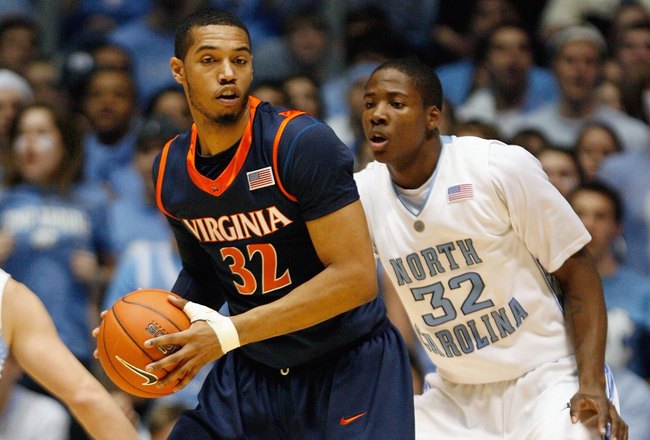
Tech, on the other hand, loses star guard Malcolm Delaney, but they do return Dorenzo Hudson, who averaged 15.2 ppg as a junior. Erick Green was impressive filling in for Hudson last season and should be able to slide in as Seth Greenburg's point guard. With veterans like Victor Davila and JT Thompson being joined by newcomers like Dorian Finney-Smith and CJ Barksdale, the Hokies have the potential to be a sleeper this year.
Power Rankings
1. North Carolina: The Tar Heels looked like they were heading for a disappointing season early on in 2010-2011. They lost a number of close games early in the season, they were struggling to find consistent point guard play and their superstar freshman, Harrison Barnes, was anything but a superstar. But after an embarrassing 20 point loss at Georgia Tech in the third game of ACC play, things started to turn around for the Heels. It started with Larry Drew's surprising decision to leave the team midway through the year. This allowed Kendall Marshall to slide into the starting point guard spot, a move that probably should have been made earlier in the year based on the results. And then Barnes hit a game-winner against Miami, which finally gave the freshman some much-needed confidence, and he all of a sudden transformed into the player that some had pegged as a first-team all-american in the preseason. The Heels found their groove and eventually went on a run that led to an ACC regular season title and a trip to the Elite 8.
This season, with essentially their entire roster intact and a loaded freshman class coming in, the Heels are arguably the most talented team in the country. Its starts with a front line that features as many as four potential first round picks. The name that is going to pop up on every all-american team is Barnes. A smooth, 6'8" small forward, Barnes could have been the No. 1 pick in the 2011 NBA Draft had he decided to go pro. Barnes proved down the stretch of last season that he has the ability to go for 25 on a given night and could end up being an 18 ppg scorer this season. The post spots will be manned by John Henson and Tyler Zeller. Zeller is the better offensive option, a talented seven-footer with a variety of moves on the low-block. Henson is less of an offensive weapon, but he might be the best shot-blocker in the country this year. Both Zeller and Henson are a night mare to keep off the offensive glass. James McAdoo is a supremely talented freshman that could start at any other school in the conference, while Desmond Hubert will provide some depth.
The back court is just as talented even with Leslie McDonald sidelined with a torn acl. Marshall is the engine that makes this UNC team go. He's not all that fast or all that athletic, but he is a perfect fit for Roy Williams' uptempo system thanks to his ability to pass the ball. He's got the kind of court vision that will get his teammates the ball in a position to score before they even know they are open. Dexter Strickland will likely start along side Marshall. Strickland, a junior, is probably UNC's best perimeter defender. It will be interesting to see how Williams divvies up the minutes in the back court, as both Reggie Bullock -- who should finally be healthy as a sophomore -- and freshman PJ Hairston are big time shooters and scorers on the wing that will be able to spread the floor for UNC's big men inside. Senior Justin Watts will provide depth on the wing for the Heels. North Carolina is scary good this season, and will be a favorite to win the national title this year.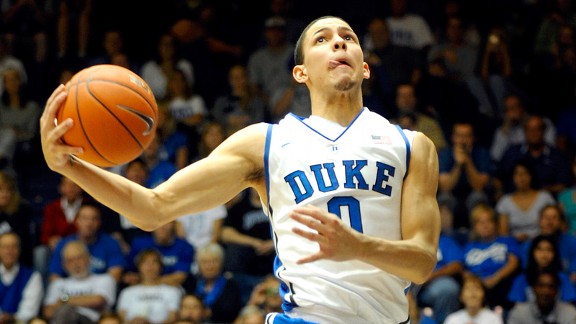
2. Duke: The Blue Devils went into the 2010-2011 season as the overwhelming favorite to win a second consecutive national title, and while they looked like they were going to fulfill that destiny early in the year, a freak toe injury to Kyrie Irving changed that. Without Irving, Nolan Smith flourished, but the Blue Devils didn't live up to their lofty expectations. Kyle Singler struggled, the Plumlees were overwhelmed inside and Duke ended up losing the ACC regular season title on the last day of the year. The Blue Devils rebounded, beating UNC in the finals of the ACC Tournament before bowing out in the Sweet 16 when Irving returned for the NCAA Tournament.
Duke is going to have quite a bit of production to replace. Both Kyle Singler and Nolan Smith exhausted their eligibility while Kyrie Irving headed to the NBA after all of 11 games in a Blue Devil uniform. But Duke reloaded with yet another talented freshman class. The star of the group is Austin Rivers, a high-scoring combo-guard that can put on some incredible scoring displays when he gets into a rhythm. He's a bit of a streaky shooter, but he has deep range and is also aggressive getting to the rim. Shot selection, turnovers and over-confidence -- yes, its a thing -- will be an issue, but expect Rivers to remind a lot of folks in Durham of one Jay Williams. Joining Rivers in the back court will be Seth Curry, Steph's younger brother who will finally have a chance to step into the spotlight. Curry will need to embrace the role of point guard as opposed to a scoring guard playing alongside Rivers, but he was successful late in the year doing the same playing with Smith last season. The sharp-shooting Andre Dawkins will see a lot of time this year, likely battling with another touted freshman -- Michael Gbinje, a fundamentally sounds, 6'7" wing -- for the third starting spot on the perimeter. Sophomore Ty Thornton and freshman Quinn Cook will be the two true point guards on Coach K's bench.
Duke's front line will be a question mark heading into the season not because of a lack of size or a dearth of talent, but because of disappointing performances in the past. Duke currently has three Plumlees on their roster -- senior Miles, junior Mason and freshman Marshall. Mason is probably the best out of the group, as he led the Blue Devils in rebounding and blocks last season. He needs to become more of an offensive threat, however. Miles has been inconsistent throughout his career, but reports from practice have said that he's impressed as much as anyone. Marshall is probably the tallest and the most athletic of the trio, but he'll need some muscle and weight before he's really effective in the ACC. The x-factor along the front line is going to be Ryan Kelly. Kelly was terrific when the Blue Devils went to China and has apparently become a more physical and aggressive presence. If he can become a threat as a face-up, he'll be a weapon spreading the floor for the Blue Devils. Alex Murphy and Josh Hairston will also see minutes up front. UNC is the favorite in the ACC this season, but Duke was the favorite a year ago and ended up finishing second in the regular season. If the front line plays big, the Blue Devils will have a chance.
3. Florida State: The Seminoles had, by far, their most successful season under Leonard Hamilton last year. After finishing third in the ACC, Florida State came within two dumb decisions by Derwin Kitchen of making the Elite 8 and playing Kansas for the right to go to the Final Four. FSU is not a team that comes up in the conversation all that often when we're talking college hoops, so last year's success may seem like a surprise, but the Seminoles have slowly been building this program; the only other team in the ACC to win 20 games overall and 10 leagues games the past three years in Duke. This season will be the real test for Florida State, as they head into the year without their top two scorers from last season in Chris Singleton and Derwin Kitchen.
Singleton will be the most difficult piece to replace. Florida State built their team around their defense, and Singleton was the single best defender in the country last season. A versatile forward that could defend three or four different positions. As a result, Florida State is going to have to rely even more on their massive front line. Bernard James is the best of the group. A former staff sergeant in the Air Force, James took a while to really acclimate to playing this level of basketball, but he became a capable scoring option and a quality shot-blocking and rebounding presence by the end of the season. In March, he averaged 11.8 ppg, 6.8 rpg and 3.0 bpg while shooting 70.3% (26-of-37) from the floor. Okaro White, Xavier Gibson, Terrence Shannon and Jon Kreft will all see minutes in the front court as well. White, a sophomore, is probably the best offensive option out of the group while Gibson will be Hamilton's first option when he is looking for more rebounding and shot blocking.
Florida State's back court will have a few question marks -- namely, they need a player that can create shots on the perimeter and a couple of players that will hit open threes and prevent defenses from collapsing on the interior. At the point, sophomore Ian Miller -- who was disappointing as a highly-touted freshman -- and senior Jeff Peterson -- a transfer from Arkansas -- will split time. Junior Michael Snaer will be the most talented player on the wing, but the former five-star recruit has yet to find offensive consistency. He settles for too many tough jumpers for someone with his ability to slash to the bucket. Snaer and Deividas Dulkys are probably the Seminole's best perimeter defenders that return. Offensively, Dulkys does some things well, but he needs to become more of a consistent spot-up shooter. The same can be said for Luke Loucks. Both of Hamilton's perimeter recruits -- Antwan Space and Terry Whisnant -- have a reputation as good shooters, which will definitely help. The Seminoles will, once again, be an elite defensive team with their size around the rim and their ability to pressure the ball defensively. It will enough to make the Seminoles the favorite to finish third in the ACC. How far they go into the postseason, however, will be determined by how good they can become offensively.
4. Virginia: Tony Bennett as done a solid job of turning this Virginia program into a successful one early in his tenure as the Cavalier's head coach. The Cavs, who were picked to finish 11th in the ACC last season, managed to string together some wins and climb all the way to seventh in the league standings by the time the season was done. Perhaps more impressive is the fact that they were able to do so with Mike Scott sidelined with an injury. In his absence, Mustapha Farrakhan became UVa's star, and while his career in Charlottesville has come to an end, the NCAA cleared Scott to return for one more year, putting Virginia into a very good position heading into the 2011-2012 season.
The anchor for this team -- and perhaps the determining factor as to whether or not the 'Hoos will earn themselves an NcAA Tournament -- will be Mike Scott. When he's healthy, Scott is a double-double machine. He was averaging 15.2 ppg and 10.1 rpg when he went down last season, an improvement that was likely the result of his increased ability to draw fouls early in the season. Joining Scott on the front line will be fellow senior Assane Sene. Sene is a legitimate seven-footer that developed into a legitimate presence in the lane, rebounding the ball well and blocking shots as well as anyone on the Virginia team. There isn't much experience behind those two, but sophomore Akil Mitchell and redshirt freshman -- and former top 100 recruit -- James Johnson also in the fray, UVa will have a front line that can, at the very least, hold their own against most competition.
The back court will be an interesting one to keep an eye on, as there is quite a bit of talent on the roster, but a lot of youth as well. Senior Sammy Zeglinski and junior Jontel Evans will likely share the point guard duties. The two compliment each other well, as Zeglinski is a more dangerous shooter and a better scorer while Evans is the team's most talented creator. One of the biggest boosts the Cavs should get will come from their wings. Both KT Harrell and Joe Harris played very well as freshmen, and with a year under their belts playing an expanded role, both should be expected to be better as sophomores. But their spots in the starting lineup are far from guaranteed, as Bennett brings in a couple of talented wings in Malcolm Brogdon and Paul Jesperson. With Miami's Reggie Johnson out with a knee injury to start the season, Virginia will be the trendy sleeper pick in the ACC.
5. Virginia Tech: With a talented and experienced roster returning and thanks to a pumped-up non-conference schedule put together by head coach Seth Greenburg, 2010-2011 was supposed to be the year that Malcolm Delaney finally got a chance to play in the NCAA Tournament. It wasn't meant to be, however, as the Hokies suffered through some terrible luck on the injury front. Big man Allan Chaney was never cleared to play due to a heart condition. JT Thompson blew out his acl in July. Dorenzo Hudson and Cadarian Raines both had their season shut down in December and took a medical redshirt. Throw in Jarell Eddie's suspension and Victor Davila's bum shoulder, and by the time the NIT rolled around, Greenburg was using a 6'3" walk-on to provide him with post minutes.
If there is a silver-lining to that awful string of luck, its that those injuries mean that the cupboard won't be completely bare for Tech heading into this season. Not only will Thompson and Hudson return for another season, but the open minutes freed up playing time for some of the youngsters. One of the guys that benefitted was sophomore point guard Erick Green, who averaged 11.7 ppg and 2.7 apg despite Delaney dominating the ball on the offensive end of the floor. Green will need to shore up his perimeter jumper, but one of the most promising signs for his future is the 2.3:1 assist-to-turnover ratio he posted. The key for Tech this season may be the health of Hudson. As a junior, he averaged over 15 ppg and posted a couple of big games, including dropping 41 on Seton Hall when Delaney was injured. If Hudson is back to his old form and Green continues to improve, Greenburg has a solid back court to work with. There are a couple of talented youngsters as well -- sophomores Tyrone Garland and Jarell Eddie and freshman Robert Brown and Marquis Rankin will provide some minutes off the bench.
The front court will be anchored by the senior Davila, a bruising, 6'8" power forward that will provide Greenburg with some toughness in the paint. Thompson will be back as well and should be healthy. He's only 6'6", but he's a tough defender and will get to the glass on both ends of the floor. Freshman CJ Barksdale will likely see minutes as well, but the x-factor may end up being Dorian Finney-Smith, a versatile, 6'8" combo-forward that is the highest-rated recruit Greenburg has landed in quite a while. A trip to the NCAA Tournament would not necessarily be a surprise for this group, but it shouldn't be an expectation. There is potential here, but there are also quite a few question marks and unproven youngsters penciled in for big minutes.
6. Miami: The Hurricanes finished last season at 19-14 and just 6-10 in the ACC, but that final league record is a bit misleading. Miami was not a bad basketball team. Of those 10 ACC losses, only two came by double digits -- both to Duke, and by a combined 21 points. They were within a Harrison Barnes three of knocking off North Carolina early in the season before losing the the Heels by two in the ACC Tournament. With only one player from last season's rotation gone, there was plenty of reason to be excited about the 'Canes prior to their disastrous offseason (see the summer storylines).
With all the drama surrounding Miami, the biggest blow to the program came in the form of a knee injury suffered by center Reggie Johnson in July. Johnson tore his meniscus and had surgery which will keep him out until conference play starts. Even if he is able to return for the season, there is no way to tell how long it will take him to get into game shape -- the 300 lb Johnson isn't known for being in the best shape as is -- and whether or not he will be effective when he returns. The gaping hole in the middle of the Miami lineup is made even bigger when consider that Julian Gamble went down with a torn acl. It will put a ton of pressure on Florida transfer Kenny Kadji to become an effective post player, and also throws undersized Erik Swoope and seldon-used sophomore Raphael Akpejiori into much more influential roles.
Without Johnson, the Hurricanes are going to have to rely heavily upon their talented back court duo of Malcolm Grant and Durand Scott. Both Scott and Grant are above-average guards in the ACC. Grant, who is 6'1" and the better shooter of the two, is more of a ball-handler while Scott, who checks in at 6'5", is the better slasher. As a duo, they combined for 28.4 ppg and 6. apg last season, numbers that are going to have to go up next season. Small forward Garrius Adams came on strong late in the season, winning the starting small forward job away from Adrian Thomas. DeQuan Jones is a ridiculously athletic wing, although he has yet to live up to the hype he had coming out of high school. UMKC transfer Trey McKinney Jones will also see quite a few minutes in the back court, while freshmen Shane Larkin and Bishop Daniels will provide depth. If Johnson can return from his injury and be effective in ACC play, the Hurricanes will be a sleeper this season. If not, there is enough firepower in the back court for this team to compete on a nightly basis and, in all likelihood, pull off a couple of upsets along the way.
7. Clemson: The Tigers were expected to be rebuilding in 2010-2011. Not only were they losing their star big man in first round pick Trevor Booker, but head coach Oliver Purnell made the decision to take the DePaul head coaching job. With a new coach running a new system, it only made sense that the Tigers would take time to rebuild. But Brownell, who had led both UNC-Greensboro and Wright State to the NCAA Tournament, didn't miss a beat, leading Clemson to their fourth straight NCAA Tournament appearance through stout defense, offensive execution and a team that continued to compete and get better throughout the season. After consecutive losses to Michigan, South Carolina and Florida State put the Tigers are 5-4 on the season, Clemson responded with an eight game winning streak and eventually finished tied for fourth in the ACC.
Perhaps the most noteworthy accomplishment Clemson had last season is that they were never blown out. Their 70-59 loss to Duke at the end of the regular season was the only time the Tigers lost by double figures. And while Clemson does lose Demontez Stitt and Jerai Grant, there is still more than enough talent on this team to expect another push for a tournament bid. Clemson will be anchored by their senior back court of Tanner Smith and Andre Young. Both are terrific on-ball defenders, which makes them ideal for Brownell's system. Young, who played off-the-ball last season, will be forced to take on more of a point guard role this year. It will be interesting to see how that works out, as he is more of a natural scorer. The change should be made easier by the fact that Smith is a capable creator as well. The rest of the Clemson perimeter attack will be made up of freshmen. KJ McDaniels is an active and athletic small forward that will have a shot of starting at the three, while a trio of guards -- Daniel Sapp, Devin Coleman, and Rod Hall -- will provide depth.
Clemson's front court is intriguing. Milton Jennings was a big-time recruit coming out of high school, a McDonald's all-american that was recruited by just about everyone. But he has yet to come close to living up to those expectations. As a sophomore, Jennings averaged 8.3 ppg and 5.2 rpg while playing 20 mpg coming off the bench. With the graduation of Jerai Grant, Jennings is going to be a guy counted on for a big season. The same can be said for Devin Booker, the younger brother of Trevor. Devin didn't have quite as much hype coming out of high school, but he did start over Jennings last season and put up similar numbers. If those two can put it all together, they will give Brownell an athletic and versatile (they both have three-point range) front court. The uber-athletic Bryan Narcisse and freshman big man Bernard Sullivan will program front court depth. Clemson will, once again, be a tough out everytime they step on the court.
8. NC State: The Wolfpack headed into the 2010-2011 season with lofty expectations. They returned a number of key pieces and brought in the best recruiting class of former head coach Sidney Lowe's tenure. But thanks to a myriad of injuries and a couple of ill-timed suspensions, NC State once again struggled, falling into a 10th place tie with Georgia Tech in the ACC standings. The disappointing season was enough to get Lowe fired. After a coaching search that missed on a number of big name targets, the Wolfpack settled on Mark Gottfried, the former Alabama head coach that had taken a job as an analyst for ESPN broadcasts.
Gottfried will have a decent young core to build on in Raleigh. It starts with CJ Leslie a maddeningly inconsistent but supremely talented sophomore big man. Leslie, who averaged 11.0 ppg and 7.2 rpg as a freshman, struggled at times but also showed the kind of promise that make some pundits believe he'll be an all-ACC performer before his is done at NC State, possibly as early as this season. Leslie will be joined on the front line by Richard Howell. Howell is a 6'9" junior that is the best offensive rebounder on the team. He started when Tracy Smith was out with a knee injury and was quite productive when he was on the court. Juniors Deshawn Painter and Jordan Vandenburg will both be counted on to improve this season with more minutes, while they will be pushed for playing time off the bench by Terrel Harris, the younger brother of first round pick Tobias.
In the back court, Lorenzo Brown will be the guy that is called upon to run this team. With Ryan Harrow transferring out of the program and into Kentucky, Brown is left as the one point guard on the roster. Joining Brown in the back court will be junior sharp-shooter Scott Wood, who is capable of getting hot and carrying the team for stretches. After that, however, there are a lot of question marks in the back court. CJ Williams has been a starter before and has had his moments for the Wolfpack, while freshman Jaqawn Raymond will also be counted on to provide some minutes. After that, however, there isn't much on NC State's roster. There are some pieces for Gottfried to work with in his first season running this program, but the depth isn't there for this team to make a serious run in the ACC.
9. Maryland: Things are going to look quite different at Maryland than they did last season. Jordan Williams made the decision to enter the NBA Draft, which, when combined with three key players -- two starters -- graduating, leaves the Terps without four of their top five scorers and their only real inside presence. Without Williams on the roster, head coach Gary Williams decided that he no longer wanted to coach the Terps, surprising just about everyone with his decision to retire in early May. Maryland did make a homerun hire, however, pulling Mark Turgeon away from Texas A&M. But the coaching change wasn't without collateral damage, as two-thirds of Maryland's solid recruiting class decommitted and ended up elsewhere. 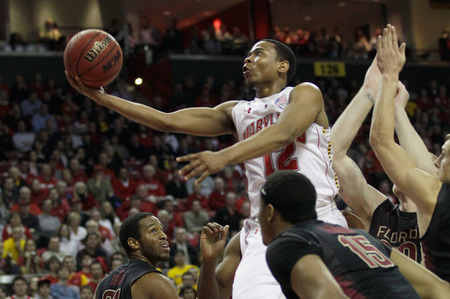
Turgeon was able to keep the jewel of the class in Baltimore native Nick Faust, an off-guard with a dangerous offensive repertoire. At 6'6", Faust brings some much needed size to the Maryland perimeter, because the rest of the back court is small. It starts with Terrell Stoglin, a (generously listed) 6'1" point guard. Stoglin really came on strong late in his freshman season, eventually become the best ball-handler on the Maryland roster. He needs to develop into more of a point guard role, but some of that pressure will be taken off with Pe'Shon Howard sharing the back court with him. Howard look like he was going to be the young star of this Maryland team early in the season, and while he struggled a bit through the middle of the year, Howard also played well late in the year. Throw in Sean Mosley, who has been consistently solid for three years now, and the Terps have a talented back court.
The front court is a different story, however, as losing Jordan Williams left them with bare bones. James Padgett, a 6'8" junior that has never been able to earn more than a handful of minutes a game, is going to be heavily counted on by Turgeon to provide some kind of production in the paint. As will senior Berend Weijs, a 6'10" native of the Netherlands that also struggled to get consistent minutes last year. Mychal Parker, a 6'5" athlete and former four-star recruit, should be able to help in the front court with his athleticism, but the key may end up being getting Alex Len eligible. Len is still waiting to hear from the NCAA if he has to miss any games this season, but the 7'1" Ukranian should help provide some depth inside. Losing Williams was a killer for this team. Their back court is good enough to compete with teams that don't have much size, but without Williams, the Terps are going to get dominated in the paint.
10. Georgia Tech: Georgia Tech may have been the worst team in the country on the road last season. That's not an exaggeration, either. Their losing streak started with an 17 point beatdown at the hands of Kennesaw State in the second game of the season and didn't end until their very last road game, which just so happened to come against a Wake Forest team that had long since given up on the season. When it was all said and done, the Yellow Jackets were 13-18 on the season and 5-11 in the ACC, which was enough to finally get the Georgia Tech athletics department to terminate Paul Hewitt. To get an idea of how fed up the higher-ups at Tech were with Hewitt, think about this -- it cost them a $7.2 million buyout to get rid of him.
The Yellow Jackets brought in Brian Gregory from Dayton, which wasn't exactly a homerun hire but was far from a worst case scenario given how hamstrung the school was by Hewitt's buyout. Gregory's first task was to re-recruit both Iman Shumpert and Brian Oliver, but it didn't work. Shumpert went pro and Oliver transferred to Seton Hall, leaving the Yellow Jackets short-handed heading into this season. There still is some talent on the roster, however. When junior shooting guard Glen Rice Jr gets into a rhythm, he's a dangerous scorer that is capable of putting up some pretty impressive numbers. He's a bit streaky, however, and can get into situations where he has to force some tough threes off the dribble. With Moe Miller's graduation, expect Mfon Udofia to get another shot at running the team. Udofia was a highly-regarded recruit in high school but has not developed into a playmaker at this level. If Udofia can't perform this season, don't be surprised to see Brandon Reed take over the reins. Reed was a high-scoring combo-guard at Arkansas State -- he averaged 16.8 ppg in Sun Belt play as a freshman -- before transferring to the Yellow Jackets. Sophomore Jason Morris, a wing player that shot 40% from three and came on strong late in the year, will also see a lot of minutes.
Up front, Gregory is going to need someone to develop into some kind of scoring threat. Daniel Miller proved to be a capable rebounder and an excellent shot blocker, but he averaged 4.4 ppg and managed to get to the line just 46 times all season (he only made 17 of those). Kammeon Hosley is a terrific athlete when he's healthy, but he looked like he was still shaking off the effects of a torn acl during the season. Sophomore Nate Hicks showed some potential as a defensive presence as a freshman. Freshman Julian Royal may end up being the best option, as he has a reputation for being able to put the ball in the bucket. Gregory's team is fairly young, but there are some talented scorers, especially in the back court, that could spark an upset similar to the one Tech pulled off against North Carolina last season.
11. Boston College: All in all, 2010-2011 should probably be considered a successful season for Boston College. After being predicted to finish in the cellar of the ACC, the Eagles managed to scrap their way up to a tie for fourth place in the conference. And while they won a game in the ACC Tournament and earned themselves a bid to the NIT, there could have been so much more. What if the Eagles hadn't lost to two Ivy Leagues opponents early in the season? What if the last-second three in a 48-46 loss to North Carolina hadn't rimmed out? What if BC hadn't lost at home to Miami late in the season, or had been more competitive in their ACC Tournament loss? Could this group have earned an NCAA Tournament bid?
That question will loom large this season as the Eagles are in full-on rebuilding mode. Seriously. Their leading returning scorer is walk-on Danny Rubin at 4.1 ppg; he averaged 1.9 ppg in ACC play. Only three other players that were in the program last year are back -- Matt Humphrey, who sat the season out as a transfer from Oregon; Gabe Moton, who averaged a whopping 2.5 ppg; and Peter Rehnquist, another walk-on. Steve Donahue did manage to bring in a nine-member recruiting class. Ryan Anderson, a 6'8" power forward out of California, is probably the most-highly regarded prospect of the group. KC Caudill, a 6'10" center that also hails from Cali, joins the group as well. Patrick Heckeman is a versatile, 6'5" guard out of Germany. 6'10" Dennis Clifford is a fairly skillled big man from the area. There is some potential for down the road, but don't expect too much out of BC this season.
12. Wake Forest: The good news for Wake Forest is that, front this point forward, there is no where for them to go but up. The bad news? It may take quite a while for the Demon Deacons to get up. Wake struggled through a non-conference schedule that featured embarrassing losses to the likes of Stetson, Presbyterian, Winthrop and UNC-Wilmington. There was no rebound, either. After halting a four game losing streak by knocking off High Point right before ACC play started, Jeff Bzdelik's club went on to lose 16 of the 17 games their played against ACC competition. Throw in the flurry of defections from the program -- both voluntary and mandated -- and Wake is in big trouble heading into the season.
The good news is that the Demon Deacons do return their best player from last season in Travis McKie. McKie developed into one of the better freshman in the conference last season, averaging 13.0 ppg and 7.7 rpg as one of the lone bright spots on the Wake Forest roster. Carson Desrosiers, a seven-foot sophomore, and Nikita Mescheriakov, a Georgetown transfer, also are back. Throw in 6'10" freshman Daniel Green, and Wake has a decent front line to work with. The back court will return Tony Chennault and CJ Harris, two important pieces from last season's team that will be counted on to provide some scoring and offensive creativity. Was last season's debacle the result of a lack of talent in the program, or was it simply what happens when a team completely lacks chemistry? I'll go with all of the above. Don't expect too much improvement this season, although I do think Wake will get more than a single ACC win.
Continue reading...
Thursday, March 10, 2011
Previewing the Madness: The ACC |
The unlikeliest conference finish of the season belongs to the ACC, where North Carolina, the team that everyone had left for dead heading into conference play, is champ.
Duke was the favorite coming into the season. Not the favorite to win just win the ACC, but to win everything. Hell, if was just three months ago that we were talking about the possibility of the Blue Devils going undefeated. Seems like a long time ago, doesn't it?
The rest of the ACC has been mired in mediocrity all season long, with teams like Florida State and Virginia Tech going from ranked in the top 25 to the bubble conversation. And while that mediocrity has made for, at times, some ugly basketball, it hasn't caused a like of excitement or intrigue heading into the league tournament.
With three teams -- Boston College, Virginia Tech, and Clemson -- sitting on the bubble's cut line and a fourth -- Maryland -- a run to the final away from a bid, there will be plenty decided over the next four days in Greensboro Coliseum.
Where: Greensboro, NC
When: March 10th-13th
Final: March 13th, 1:00 pm, ESPN
Favorite: Duke Blue Devils
I know, I know, I know. North Carolina just ran Duke off of the court in the regular season finale, locking up the regular season title in the process. And while North Carolina is currently the hottest team in the conference, if not the country, I am not yet ready to hand over the title of tournament favorite just yet. Duke is experienced. They've won titles before, including last year's national title. For my money, the national player of the year is on Duke's roster in the form of Nolan Smith. Seth Curry is turning into a dangerous complimentary scorer. And Kyle Singler? Well, if you remember, last year's Final Four most outstanding player had a relatively ho-hum regular season in 2009-2010 as well.
Sleeper: Virginia Tech Hokies
Ugh. I hate putting any kind of faith in Seth Greenberg's teams late in the season. But at some point, they have to come away with some big wins, right? Outside of Duke and UNC, the Hokies are probably the most talented team in the conference with Malcolm Delaney and Jeff Allen on their roster. They also knocked off Duke two weekends ago, which gives me some faith that this team can still wake up before the season is over.
Players to Watch:
Continue reading...
Tuesday, December 28, 2010
Conference Play Primer: The ACC |
Favorite: Duke Blue Devils
I'm not expecting too much of an argument on that one. Not only is Duke the No. 1 team in the country right now -- even without Kyrie Irving -- but the rest of the ACC has been just pitiful. People are legitimately discussing whether or not Duke has a chance to go undefeated this season, and I guarantee that there are more people that think Duke won't lose a game than think the Blue Devils won't win the ACC.
Player of the Year: Reggie Jackson, Boston College
There are a number of legitimate Player of the Year options in the ACC at this point in the season, but I'm going with Jackson. He's second in the conference in both scoring (19.2) and assists (5.0) while grabbing 4.4 rpg and shooting an obscene 50.9% from three. He's also been the catalyst in BC's resurgence under Steve Donahue, carrying the team to a 10-2 mark here early in the season, which includes a win on the road against Maryland in their ACC opener. As crazy as it may sound, BC might just be the second best team in the ACC. And Reggie Jackson is the reason why.
All-Conference Team:
Biggest Surprise: Virginia Tech Hokies
Boston College has probably been the only team in the conference that has been a surprise in a positive way. Since I don't want to talk about the Eagles, I'll go the other direction. This was supposed to be Virginia Tech's year to breakthrough. With senior Malcolm Delaney leading this way, the Hokie's were going to have the supporting cast around the ACC Player of the Year as they gave Duke a run for their money atop the conference. That was the plan, anyway. Then Allan Chaney had a heart condition discovered, JT Thompson tore his acl, and Virginia Tech struggled through the non-conference portion of their schedule before finding out that Dorenzo Hudson, last year's leading scorer, would miss the rest of the season due to injury. Without a quality win, and with very few quality wins available in the ACC this year, it looks as if the Hokies will once again miss the NCAA Tournament.
Biggest Disappointment: Harrison Barnes
Since I'm not going to simply answer "the conference as a whole" (because that would be too correct accurate easy), I'll go with Barnes. Barnes has been far from bad this season. He is the Tar Heel's second leading scorer at 12.3 ppg, which, as an incoming freshman, is commendable. The problem is that with the hype bestowed upon this young man this season, "commendable" is not good enough. Barnes was named CBSSports.com preseason national Player of the Year and became the first freshman to ever be named an AP Preseason All-American. Its not his fault that he had this much hype coming in, but he certainly hasn't lived up to those expectations. Its not an issue of talent, it seems more to be an issue of confidence. Barnes is not playing as aggressive as many expected him to, and he certainly isn't shooting the ball all that well. There is still time for him to turn things around. Personally, I'm hoping he will; Barnes seems like a genuinely good kid.
Teams to keep an eye on:
Teams to forget about:
Continue reading...
Tuesday, August 24, 2010
The Only Conference Preview You Need To Read: The ACC |
Summer officially ends on September 22nd, but for me, the end of summer always coincided with the end of August. Or when I had to go to school. (That first day was always the worst, wasn't it?) Anyway, school is right around the corner, which means that college basketball season is around the corner, down the street, through two lights, and on the left. Since we've all had a fight with our GPS at one time or another, we at BIAH will take this week to roll out our way-too-early, all-encompassing conference previews.
To browse through the other conferences, click here.
Pre-season Awards
Player of the Year: Malcolm Delaney, Virginia Tech
This may be an unpopular pick with the folks down in Durham, but let me explain. Duke legitimately has two, maybe even three (depending on how good Kyrie Irving ends up being), players that will contend for conference player of the year. That's why they are going to be the best team in the league. Kyle Singler can afford to have an off-night, because Nolan Smith and Irving, and even a Seth Curry or a Plumlee, are talented enough to carry the Dukies, at least for stretches. No disrespect to Dorenzo Hudson or Jeff Allen -- both are very good players -- but they are a notch below the second and third options that the Blue Devils have. I think Delaney has the kind of senior season that Greivis Vasquez had last year; one where he puts up very impressive numbers and leads his team to their best season in recent memory. (Duke also had two, maybe three, viable player of the year candidates last year as well.) Keep in mind, Delaney has been on the wrong side of the bubble in each of his three seasons in Blacksburg. You don't think he is determined to win something this year?
And a close second goes to: Kyle Singler, Duke
Runner-up came down to Singler and Nolan Smith, but with the amount of talent that Duke has in their back court this year, Smith may not have the opportunites that Singler does. Hell, Smith could very well be a second-fiddle in the back court to Irving by season's end. I see Smith playing a complimentary role -- albeit very well, but still as a second or third option -- this season. Before last season, I called Singler the best complimentary player in the country. Last season changed my opinion of him. He played fantastic basketball down the stretch, capped by an outstanding tournament, a better title game, and a Final Four MOP award. This is Singler's team.
Breakout Star: Tyler Zeller, UNC
Zeller has had a rough first two seasons with the Tar Heels. As a freshman, he broke his wrist in the second game of the season before returning late in the year for front court depth and a shot to participate in a national championship. As a sophomore, Zeller missed 10 games with a stress fracture in his foot before returning for an essentially meaningless stretch run. And for the majority of his time in Chapel Hill, he has played second fiddle to the likes of Tyler Hansbrough, Ed Davis, and Deon Thompson. Zeller is a talented player in the post, with a solid back-to-the-basket game and a nice touch of his jumper. Playing on a team where he is the only real offensive threat in the post with a talented back court, Zeller should have plenty of opportunities to get post touches and will be needed to rebound the ball effectively. He averaged 9.3 ppg and 4.6 rpg playing just over 17 minutes as second fiddle last year. What happens this season when he is the a go-to guy in the post and gets 34 minutes?
All-Conference First Team:
All-Conference Second Team:
Freshman of the Year: Harrison Barnes, UNC
Barnes has a very real shot at being the first pick in the 2011 NBA Draft should he decide to come out. A 6'8" small forward, Barnes is an incredibly smooth player. He doesn't have the length or freakish tools of a Kevin Durant, but plays a similar style to Durant. He's always under control, thrives in the mid-range, and is an excellent all-around shooter. Barnes is a smart kid that understands how to play the game and has sneaky athleticism. Barnes will likely be the focal point of the Tar Heel attack from day one, and some believe he has a shot at being a first-team all-american.
All-Freshman Team:
What Happened?:
What's Next?
Next up was Oliver Purnell, who simply up and left Clemson for DePaul. A week later, the Tigers signed Brad Brownell away from Wright State.
Perhaps the most surprising coaching change belongs to Wake Forest, who fired head coach Dino Gaudio despite making a second straight tournament after another disappointing finish to a season. The Demon Deacons hired Colorado head coach Jeff Bzdelik, who pulled of one of the more impressive recruiting feats I can remember. Bzdelik kept the Wake Forest assistant coaches on staff, and was able to convince all five members of Gaudio's impressive recruiting class to stay and give him a chance.
More bad news was sent the Hokies way when they found out that JT Thompson would miss the season after tearing his acl.
Power Rankings:
Continue reading...
Thursday, March 11, 2010
Conference Tournament Preview: The ACC |
Where: Greensboro Coliseum, Greensboro, NC
When: March 11th-14th
Final: 1:00 pm ESPN/Raycom
Favorite: Duke Blue Devils
Look, I love Maryland's team this season, but Duke is the best team in the conference. There are not many teams in the country, let alone the ACC, than can match the 1-2-3 punch the Devils have in Kyle Singler, Jon Scheyer, and Nolan Smith. Scheyer and Singler are seniors and are/have been all-americans. Nolan Smith will likely be on a number of all-american lists next season. Hate them or love them, you cannot deny those three can hoop. Nolan Smith could end up being an all-american next season.
(photo credit: XOS Sports)
Beyond that, Duke finally has some good big men. Brian Zoubek has come out of no where to be a force in the paint and on the offensive back boards. The Plumlees are as long and athletic as any Duke team in recent memory. Combine that with the watered down ACC and the tournament being played in North Carolina with UNC struggling, and Duke looks primed to make a run through the ACC.
And if they lose?: Maryland Terrapins
As I mentioned above, I love this Maryland team. Obviously, there's Greivis Vasquez, who has been phenomenal this season. But the Terps are much more than just a flamboyant Venezuelan. Eric Hayes has turned into quite the college player, the steadying force paired with Vasquez in the back court. Hayes is one of the smarter players in the ACC, and has become a knock down shooter. Sean Mosley and Landon Milbourne are undersized, but they are scrappy players that defend and play much bigger than their listed height. Cliff Tucker and Adrian Bowie are capable reserves that have saved the Terps on a couple occasions.
The key for Maryland is going to be the play of Jordan Williams and Dino Gregory, but I will get into that in a bit.
Don't count out/Sleepers: Well, everyone?
Part of the reason the ACC has been as fun to follow as it has this year is that the league is so wide open. Duke is the best, and Maryland isn't far behind, but after that there are five teams that are good enough to make a run to the ACC championship, but may also be in danger of playing their way out of the NCAA Tournament with a poor showing in Greensboro.
Clemson and Florida State are probably the two best in this group. Clemson had a hiccup midway through the conference season when Demontez Stitt injured his ankle, but with the PG healthy, the Tigers are back to full speed. At full speed, they are a tough team to matchup against. Clemson is so athletic and takes advantage of that in their press. When Booker is playing well and their threes are going down, this team can play with anyone.
What Florida State lacks in guard play, they make up for with sheer length, especially along their front line. The Seminoles are going to struggle to score at times as they don't really have any, well, scorers. But this is the best defensive team in the country according to Kenpom, using their length to make it difficult to get a clean look at the rim.
Wake Forest and Georgia Tech are the disappointing teams. Tech has collapsed, as Paul Hewitt teams usually do. There are few front lines better than what Georgia Tech has to offer, and Iman Shumpert is a talent at the point, but something is missing with this team. Be it leadership, be it decision making, and at times I'd even argue that its simply effort, but Georgia Tech just has not been the team many expected them to be. That said, if they can put it all together, who knows what could happen. Tech is in the worst spot in terms of an at-large bid and may want to win two games to feel safe.
Wake Forest is in a bit of the same boat. I can't figure this team out. Ishmael Smith is a player at the point. Al-Farouq Aminu is a lottery pick. They have shooters on the wing and size in the paint. They defend. But they lost four in a row before closing the ACC season with a win over Clemson. It will be interesting to see which Wake team shows up here. The Demon Deacons are probably safe, tournament wise, but may want to avoid a first round loss. There may not be a better 1-on-1 player in the ACC than Delaney.
(photo credit: BIAH)
Virginia Tech is the x-factor. I don't think anyone has a feel for just how good this team is. Malcolm Delaney is a stud, Jeff Allen and Dorenzo Hudson are capable complimentary players, and they put together some nice wins the last month of the season. The problem is that the Hokies did a bunch of nothing before that, and lost to BC just three weeks ago. Tech should also avoid losing their first game if they want to feel safe next Sunday.
Names you need to know
Continue reading...


 Posts
Posts

