Showing posts with label 2010 Prospects. Show all posts

Thursday, June 24, 2010

NBA Draft Prospects: Daniel Orton, Kentucky

Click here to find all of our 2010 NBA Draft prospect breakdowns.

Stats: 3.4 ppg, 3.3 rpg, 1.4 bpg, 13.2 mpg

Size:

  • Listed: 6'10", 260 lb, 19 yrs old
  • Combine: 6'9 3/4" (with shoes), 269 lb, 7'4 1/4" (wingspan)


About Him: With DeMarcus Cousins and Patrick Patterson dominating the minutes in the front court, and with John Wall and Eric Bledsoe hoisting up their fare share of shots during the season, Daniel Orton didn't get much of a chance to show himself during the season, averaging just 3 points and 3 boards in 13 minutes.

Its not difficult to see why Orton is such an intriguing prospect for NBA teams. At 19 years old, he is nearly 6'10" with a wingspan of more than 7'4". While most raw big man prospects are trying to put on strength and weight, Orton is already checking in at a solid 269 lb and sporting above average athleticism. He also runs the floor well, has quick feet, and excellent hands. In other words, his physical tools are ideal for an NBA post player.

That said, we have very little indication of what Orton can do with those tools. His most NBA ready skill is probably his shot blocking ability. His length and athleticism, combined with good timing and instincts, made Orton a defensive force down the stretch of the season.

Offensively, we have a very small sample size to base an opinion on for a variety of reasons, the biggest of which is that Orton's role was basically to crash the offensive glass. That said, there were glimpses. He's a capable finisher around the rim thanks to his length and strength. He's can use his size to carve out space in the paint, and does have some (emphasis on some) footwork and post moves once he makes a catch in the post. And, like I said, he can go get an offensive rebound. There is reason to believe he could eventually be a good player on the offensive end of the floor in time.

Having said all that, its all still potential as Orton is raw in both his skills and his understanding of the game on the offensive end. He still doesn't quite know how to use his tools effectively, and could stand a healthy dose of toughness as well.

The question teams are going to have to ask themselves is how long it will take Orton to fulfill that potential. Is it worth a 1st round pick if he won't be ready to contribute until he's under contract with a different team? One aspect that could contribute here is Orton's inner circle. His father was reportedly involved heavily in Orton's recruitment, and now there are reports saying that Orton and his agent have had a falling out and that the player is once again taking the advice of his father.

Comparison:
  • Best Case Scenario: The two players that come to mind when discussing Orton are JJ Hickson and Marreese Speights, although both were much more accomplished at the collegiate level.
  • Worst Case Scenario: Isn't it obvious? Any draft out of the league in three years.
Outlook: Orton is all over the board. Some him at the back end of the 1st round, some have him dropping into the second round, and there are still reports that he could go 10th to the Pacers. For my money, Orton seems like to big of a risk without enough upside to warrant a 1st round pick. If you are picking outside of the lottery, there are plenty of players that can contribute immediately to an NBA team in playoff contention.

Highlights:


Continue reading...

NBA Draft Prospects: Quincy Pondexter, Washington

Click here to find all of our 2010 NBA Draft prospect breakdowns.

Stats: 19.3 ppg, 7.4 rpg (3.0 off), 1.3 spg, 1.9 t/o's, 52.3% FG, 82.7% FT

Size:

  • Listed: 6'6", 220 lb, 22 yrs old
  • Combine: Did not attend the combine


About Him: Quincy Pondexter was a highly sought after recruit coming out of high school, but through the first three years of his career at Washington, he was unable to fulfill that lofty potential. The reasons Pondexter was so highly regarded are evident in simply looking at any youtube clip of him -- Pondexter is a well-built 6'6", 220 lb wing with long arms, solid perimeter skills, and excellent explosiveness.

As a senior, Pondexter's game and the work he has put in to develop his game really began to show. The most effective part of his game right now is his ability to attack the basket as a scorer. Averaging right around 20 ppg for the entire season, Pondexter got the majority off his offense in isolation situations where he proved to be a very difficult matchup. Showing a solid -- not flashy, but serviceable and effective -- handle and a quick first step, Pondexter really attacked the basket well this season. He's an excellent finisher around the rim, using that athleticism to dunk over defenders and his strength to absorb contact. He took more than six free throws a game as a senior, which goes to show his aggressiveness attacking the rim.

While Pondexter made some great strides as a slasher in his four seasons at U-Dub, he still has a way to go to improve his jumper. To be fair, Pondexter is without a doubt a better shooter than he was when he entered school. He has developed a decent little pull-up jumper, and he can knock down some floaters and runners in the paint, shots that weren't in his arsenal a few years ago. From three, Pondexter did shoot over 35%, but it was on a very limited number of shots.

Another interesting aspect of Pondexter's game is his efficiency. For someone who took as many shots as he did in an isolation situation, Pondexter had a low turnover rate and a high field goal percentage. He doesn't jack up a lot of shots, he doesn't force the issue offensively, and in general, he seems like a good decision maker.

This is one aspect of his game that he will need to continually improve. Pondexter got a lot of one-on-one opportunities playing in Lorenzo Romar's spread offense this season, but he doesn't necessarily project as a guy that is going to dominate possession of the ball in the NBA. In other words, he's going to be a role player. That means that Pondexter will be forced to develop an NBA-caliber perimeter shot if he wants to have a long career in the league.

One aspect of Pondexter's game that I really like -- and that I think will help him latch on to an NBA team -- is his motor. He plays the game very hard. He attacks the offensive glass, using his length and athleticism to grab three offensive rebounds a game this past season. He was always moving, cutting, and coming off of screens on the offensive end. Defensively, he is active and intelligent, seeming to understand helpside defense. He leadership on this end of the floor seemed like it really helped a Washington team that, in general, regarded defense as an afterthought this year. His physical tools should allow him to be a very good defender at either the two or the three at the next level.

Comparison:
  • Best Case Scenario: If Pondexter can improve his jump shot and become a respectable spot-up shooter, I don't see why he can't be a starter, a la Michael Pietrus, in the NBA. I think a more likely role will be a Travis Outlaw kind of player, potentially with a career arc similar to that of James Posey.
  • Worst Case Scenario: I think Pondexter will, at the least, hang around the NBA as a defender and hustle player. Think Trenton Hassell.
Outlook: I like what Pondexter brings to the table. He's an excellent athlete with pretty ideal physical tools that plays the game hard (on both ends of the floor), is a capable scorer, and understands his limitations offensively. Its possible that he slips into the early second round, where I think he will be a steal.

Highlights:


Continue reading...

NBA Draft Prospects: Soloman Alabi, Florida State

Click here to find all of our 2010 NBA Draft prospect breakdowns.

Stats: 11.7 ppg, 6.2 rpg, 2.6 bpg, 53.4% FG, 79.4% FT

Size:

  • Listed: 7'1", 251 lb, 22 yrs old
  • Combine: 7'0 3/4" (with shoes), 237 lb, 7'5" (wingspan)


About Him: Solomon Alabi is your typical, raw college big man. He has ideal height and length for an NBA center, checking in as a legitimate seven-footer in shoes with a wingspan of 7'5". But as far as NBA readiness is concerned, his size is about the only aspect of his game that can translate to the NBA right now.

For starters, Alabi needs to add some weight, some muscle, and quite a bit of lower body strength. Right now, he has a great deal of trouble holding position on the block on both ends of the floor, even against smaller opponents. It also hurts him on the glass, where he is an alarmingly bad defensive rebounder, in part because he gets pushed to far under the rim. He is a pretty offensive rebounder, however.

While Alabi's size makes him a good shot blocker, in both one-on-one situations and when rotating from the weak side, Alabi does have some bad habits defensively. He goes for far too many steals on entry passes, he has trouble defending the perimeter, and he needs to improve how well he steps out on a pick-and-roll.

Offensively, Alabi has made some strides, but he still has a long way to go. Alabi isn't much more than a catch-and-dunk center right now, but there are some signs that a back to the basket game could develop. As he has added some strength and coordination in his time at Florida State, Alabi's ability to finish through contact and use his left hand has continued to get better. He has a decent and improving little half-hook-half-jumper over his left shoulder, and was able to use his height to get off a shot over his right shoulder this past season. A nearly-80% shooter from the line, Alabi has a soft touch, which is a good sign for the development of his turn around and midrange jumpers.

One concern with Alabi is his age. He's 22 years old already, which means that his ceiling may not be as high as some of the seven footers that are younger than him. That said, he also has not been playing organized basketball as long as some of the american kids in this draft (Alabi is Nigerian), so some believe his development could come quicker.

Comparison:
  • Best Case Scenario: Alabi's size alone should allow him to be an effective player on the defensive end of the floor, which is why I like the comparison with Samuel Dalembert. Dalembert had a couple years where he averaged nearly a double-double while blocking a couple shots a game. I also think that Sagana Diop is a good comparison as well.
  • Worst Case Scenario: How many big men drafted on potential have been flops? Saer Sene? Patrick O'Bryant?
Outlook: Alabi is going to be a contributor on the defensive end of the floor if he can add 20-30 pounds of muscle. He's too long and too good of a natural shot blocker not to be a defensive addition to any roster. The question is going to be how well he develops as an offensive threat. If he can learn how to run the floor in transition, add a consistent 15 footer, become a consistent finisher at the rim, and add a jump hook and turn around jumper, he may one day be a starting center in this league. If you can land a starter with a pick in the 20's, that's a good pick.

Highlights:


Continue reading...

Wednesday, June 23, 2010

NBA Draft Prospects: Larry Sanders, VCU

Click here to find all of our 2010 NBA Draft prospect breakdowns.

Stats: 14.4 ppg, 9.1 rpg (3.0 off), 2.6 bpg, 53.4% FG

Size:

  • Listed: 6'9", 205 lb, 21 yrs old
  • Combine: 6'10 1/2" (with shoes), 222 lb, 7'5 3/4" (wingspan)


About Him: Larry Sanders development as a player has been striking. Having only started playing basketball as a sophomore in high school, Sanders came to VCU without much in the way of basketball ability. That's not to say he didn't have potential. He's athletic, nearly 6'11" in shoes, has a wingspan of 7'5 3/4", and can run the floor. Throw some more meat on his bones, and he has almost an ideal physical profile for a big man in the NBA.

As a freshman, Sanders' game revolved around his ability to catch-and-dunk (which was never a guarantee), block shots, and grab some rebounds. While he is still a long ways from being a finished product, he has made some real strides at the offensive end of the floor. He's become a much better finisher around the basket, as he has developed a better left hand and some increased strength has allowed him to better go up strong through contact. While his back to the basket game is still developing -- his coordination and footwork is not yet good enough to take advantage of his quickness -- he does have a couple of moves that allow him to take advantage of his length. That said, those moves came against CAA competition, which is a far cry from NBA post play.

Another area that Sanders has improved is from the line, as he is now knocking down free throws at a 64% clip. He clearly has an increased confidence in his ability to shot from the perimeter, as he took some three pointers this season. While he didn't hit many of the jumpers he took, the fact that he was shooting from the perimeter during games means he likely has been developing a jump shot. If he can translate that jumper from practice into a game situation, it will greatly benefit him as a player, especially if he ends up playing the four in the NBA.

Defensively, Sanders is a good shot blocker, although his numbers have dipped every season. That can, in part, be explained through scouting reports -- opponents know that if they drive, there will be a shot blocker at the rim. That said, Sanders at times looks lackadaisical defensively, not always rotating and getting over late to block a shot.

The biggest issue for Sanders on both ends of the floor is going to be increasing his strength and his weight. Offensively, he is not yet strong enough to back down defenders. Defensively, he allows offensive post players to establish position way too easily. If he can put on 20-30 pounds of muscle, and improve his lower body strength, it will help him immensely.

Comparison:
  • Best Case Scenario: I think Larry Sanders could be another Theo Ratliff. Ratliff never really developed an offensive game, but he was one of the best shot blockers in the NBA for a few years. (He even earned himself a massive contract. Its all about getting paid, right?)
  • Worst Case Scenario: Poor man's Joe Pryzbilla, a few inches shorter.
Outlook: Larry Sanders clearly needs a couple of years before he can be a rotational player. On the bright side, the fact that he has gone from not playing basketball to a potential lottery pick in five years is impressive, and bodes well for future development. If he can add strength and improve his offensive game, I think Sanders could one day be a starter in the league, maybe even an all-defensive team player. Not bad for someone picked in the mid-to-late first round.

Highlights:


Continue reading...

NBA Draft Prospects: Eric Bledsoe, Kentucky

Click here to find all of our 2010 NBA Draft prospect breakdowns.

Stats: 11.3 ppg, 3.1 rpg, 2.9 apg, 3.0 t/o's, 46.2% FG, 38.3% 3PT, 66.7% FT

Size:

  • Listed: 6'1", 190 lb, 19 yrs old
  • Combine: 6'1 1/2" (with shoes), 192 lb, 6'7 1/2" (wingspan)


About Him: Eric Bledsoe is a unique prospect in that he is one of the rare point guards that is drafted based almost solely on potential. Bledsoe joined the Wildcats with relatively little fanfare, which is what tends to happen when you are the fourth-most highly regarded member of a freshman class. A point guard in high school, Bledsoe was forced to slide over to the two this season to team up with John Wall in the Wildcat back court. This meant that Bledsoe, a surefire point guard in the NBA due to his height (6'1 1/2"), would play basically every minute of his collegiate basketball career out of position.

Bledsoe didn't play like someone worthy of being a first round pick this season, but a large part of that is playing on a team that also had four other first rounders -- including the No. 1 over all pick at his position -- on the roster. Bledsoe just simply didn't get enough touches to have the opportunity to show all he can do as a potential NBA point guard.

Offensively, there are two things that Bledsoe does very well -- getting into the lane, and shooting. Bledsoe has a lightening quick first step and is more than capable of beating his defender off the dribble, although we mostly saw this coming from a spot-up situation. He had fewer opportunites to make a play from the top -- especially out of the pick-and-roll -- with the ball in his hands due to Wall's presence.

Bledsoe's issue wasn't getting past the first defender, it was what he did with the ball after that. He had a bad habit of over-dribbling and getting to deep into the paint with out an outlet. The result of this over-penetration by Bledsoe was a very high turnover rate; he had more turnovers than assists on the season, and according to Synergy Sports, Bledsoe turned the ball over on an astonishing 27% of his possessions. While Bledsoe is an excellent athlete, quite explosive (more on this in a minute), and is capable of absorbing contact and finishing with either hand on a variety of shots in the paint and around the rim, Bledsoe was only a so-so finisher. He also only got to the line 3.3 times per game.

Some of the turnovers and poor shot selection can be explained by a desire to 'get his' -- with Wall, Cousins, Patterson, and company on the floor, there were only so many shots to go around -- but for a kid that projects as a role player at the next level, that is not necessarily a desirable trait.

As a shooter, Bledsoe proved to be a streaky threat from deep. Take away the 8/9 he shot from three in the first round of the NCAA Tournament, and Bledsoe finished the year as just a 34% three point shooter. When he is hot, Bledsoe might hit three or four in a row, but overall he is just an average shooter. Part of the reason for that is that Bledsoe shoots a set shot with a very slow release and almost no elevation. As a result, his shooting ability off the dribble is even more inconsistent than his ability to hit set shots from three. He does have solid form, and with some work he should pan out into a good shooter down the road.

Why, you ask, is a point guard that averaged more turnovers than assists and was an inconsistent scorer and shooter being considered as a potential lottery pick? Because of the potential he has given his athleticism. Bledsoe has an ideal physical profile for a point guard. He's almost 6'2" with a wingspan that is over 6'7", he is built like a brick wall, and he has quickness and explosiveness for days. He is an exceptional athlete, which is why he is expected to be able to contribute at the defensive end immediately. On the ball, Bledsoe is a very good defender thanks to his strength, quickness, and length. Off the ball, he has all the potential in the world to be excellent, but at times he seemed not to be giving his best effort -- not getting around screens, not jumping to help side, etc.

Comparison:
  • Best Case Scenario: Mo Williams is one comparison I have seen a couple times, although I think that is a bit generous based on what we have seen from Bledsoe offensively. (To be fair, Williams did take some time to develop.) Another comparison I've seen that I like a little more is Keyon Dooling, who maxed out at 10 ppg and 3.5 apg. For a couple of younger guys, I think that Bledsoe is a shorter/poor-man's Russell Westbrook (again, that may be generous). The best comparison, at least in my opinion, is that Bledsoe will end up being another Rodrigue Beaubois.
  • Worst Case Scenario: I could see Bledsoe having a career similar to that of a Marcus Banks, bouncing around as a career back-up. As a player, maybe a poor man's Mario Chalmers.
Outlook: Eric Bledsoe's ability as a point guard is largely unknown right now. Can he develop into a starter? Yes, given his athletic ability and the assumption that he is an NBA caliber defender. But if he doesn't put in the work and develop a better all-around jumper, improve his decision making skills, and become a better creator, Bledsoe could be out of the league after his rookie contract is up.

One x-factor in all of this is Bledsoe's attitude on the court. I'm sure I'm not the only one that thought by the end of the season Bledsoe, and not Cousins, was the most immature player on the Wildcats. If he can put his ego in check and accept the fact that he is not yet ready to be a focal point in the NBA, I see no reason why Bledsoe can't develop into a starter and an all-defensive team member. As far as where he will be picked, it looks like he is destined to go somewhere in the mid-to-late first round.

Highlights:


Continue reading...

NBA Draft Prospects: Willie Warren, Oklahoma

Click here to find all of our 2010 NBA Draft prospect breakdowns.

Stats: 16.3 ppg, 4.1 apg, 3.8 t/o's, 1.0 spg, 43.8% FG, 30.9% 3PT

Size:

  • Listed: 6'4", 200 lb, 20 yrs old
  • Combine: 6'3 3/4" (with shoes), 208 lb, 6'6" (wingspan)


About Him: Willie Warren is the posterboy for the dangers of returning to school. After a freshman season that saw Warren team with Blake Griffin to lead Oklahoma to the Elite 8, many NBA Draftniks had Warren slotted somewhere in the mid-to-late lottery. But Jeff Capel was able to convince Warren to return for his sophomore season, and the results were terrible.

Warren sleep-walked through a couple of embarrassing early performances, putting him in Capel's doghouse -- and even seeing Capel call him out in the national media -- and getting himself suspended for a game. He dealt with a nagging ankle injury that just wouldn't seem to go away and caught mono late in the season. Safe to say, nothing went right for Warren this past season.

The knock on Warren coming out of high school was that he was selfish and a locker room cancer. As a freshman, you saw none of that. While he did throw up the typical freshman shots now and again, for the most part he deferred to Griffin and allowed the big man to carry the Sooners as one of the best teams in the country for the majority of the season. This year, you saw none of that. He had terrible body language on the court, he dribbled the air out of the ball far too often, he turned the ball over at a horrific rate -- 4.6 per 40 minutes, almost a quarter of his possessions -- and his shooting percentages took a nose dive as a result of his poor shot selection.

In terms of intangibles and off-the-court stuff, there is nothing about Warren that suggests he is destined to be a good teammate, let alone a good player.

Having said all of that, Warren is a tremendous talent, and his skill set would fit perfectly in the NBA. Warren is a combo-guard, and given his measurments at the combine -- nearly 6'4" in shoes, 6'6" wingspan -- its reasonable to believe that he would be able to defend both the point guard and the two-guard spots, especially against second team players.

Warren is at his best when he has the ball in his hands, as he is a 'shot-creator' in the purest sense of the word. He in a very good ball handler, and when combined with his excellent first step and his powerful build, he's difficult to prevent from penetrating. He's an explosive finisher in and around the rim -- especially when he has a few steps to gather himself -- and he has the strength to absorb contact and make some very tough shots around the basket. He has a massive array of floaters, runners, scoop shots, etc.

While its difficult to say that Warren improved on any aspect of his game as a sophomore, it is fair to say that he became a much better shooter off the dribble and in the mid-range this season. His three point numbers took a hit, but there is some explanation for that. He took much more difficult shots -- deep, contested threes off the dribble -- this past season, as opposed to the wide-open, catch-and-shoot opportunities he got off of teams doubling Griffin inside.

While his numbers and performance this season don't necessarily bode well for Warren as a passer, he actually is a capable distributor. He's very good in the pick-and-roll, and he knows how to drive-and-dish when he draws a defender. The question is whether or not he will be willing to do so.

On the defensive side of the ball, Warren is a bit of a tweener. Is he quick enough to guard an NBA point guard? Is he big enough to guard an NBA two? Worse is the fact that Warren just didn't seem interested on the defensive end of the floor last season. Will he actually put in the effort to be a good defender?

Comparison:
  • Best Case Scenario: The standard comparison for Warren is Ben Gordon, which is far from a terrible comparison. I think a Rodney Stuckey or a Tyreke Evans -- or more likely Jarrett Jack -- is a better comparison. I think Warren eventually slides over and becomes a lead guard.
  • Worst Case Scenario: Flip Murray or Rashad McCants.
Outlook: I wouldn't be surprised if an NBA team used a first round pick on Warren. There is just too much talent there -- talent that can succeed in the NBA -- for him not to go. But for that to happen, he is going to have to convince some NBA team that his issues are behind him. There are a lot of red flags surrounding Warren, and while I think he could thrive in the more uptempo NBA, I have a tough time believing his issues are going to go away.

Highlights:


Continue reading...

NBA Draft Prospects: James Anderson, Oklahoma State

Click here to find all of our 2010 NBA Draft prospect breakdowns.

Stats: 22.8 ppg, 5.8 rpg, 2.4 apg, 2.4 t/o's, 45.7% FG, 34.1% 3PT

Size:

  • Listed: 6'6", 195 lb,
  • Combine: 6'5 3/4" (with shoes), 208 lb, 6'8 1/2" (wingspan)


About Him: Heading into the season, the Big XII was loaded with top NBA Draft prospects and potential all-american candidates. Many people didn't pay attention to the sharpshooter in Stillwater in the preseason, and boy was that a mistake. Anderson made them look foolish, dropping over 22 a game while winning the conference player of the year award and putting himself firmly into first round contention.

Anderson's game center completely around his ability to shoot the ball. At just a shade under 6'6" in shoes, Anderson is tall enough that he can get his shot off against just about anyone, and if he is given space and time to get his feet set and his shoulders squared, he is automatic. His range extends out to about 30 feet (literally) and once he gets going, he is incredibly difficult to slow down. It seemed like once a week during this past season, Anderson would put up 20-25 points in one half. The 34.9% he shot from three as a junior his misleading, as many of those attempts came as forced, low-percentage threes from a player shouldering too much of the offensive load.

Oklahoma State ran Anderson off of screens on just about every possession in the half court. Downscreens, flair screens, staggered screens, ball screens. You name it, and the Cowboys did it to try and get Anderson a good look at the rim. Anderson isn't just a catch-and-shoot player, however. He's always been an effective shooter off the dribble and in the mid-range. He has a solid vertical, but he doesn't showcase it on pull-up jumpers, instead using his high-release point and a slight fade to create space.

As a slasher, he still has some room for improvement. He almost strictly goes left when he is taking the ball to the basket (according to Synergy Sports, 86% of his drives go to his left, and he is right-handed). He's a solid finisher around the rim, and he knows hw to draw fouls and get to the line. In general, when Anderson is putting the ball on the floor, he is doing so to score. He didn't have a great assist-to-turnover ratio (he averaged 2.4 assists and 2.4 turnovers), but given the need for Anderson to shoulder the scoring load and his incredibly high usage rate, this isn't necessarily a negative. In fact, 2.4 t/o's given his usage is a respectable amount.

The knock on Anderson is on the defensive end of the floor. He doesn't have overly impressive lateral quickness, he doesn't challenge jump shooters on the perimeter, he doesn't use his body or strength well defensively, and he got beat far too often by mediocre collegiate slashers. While some of this can be explained away by saying Anderson was saving his energy because of his workload on the offensive end, he's never been a great defender, which will be a cause for worry for NBA teams looking to draft him.

Comparison:
  • Best Case Scenario: Somewhere between Richard Hamilton and Ray Allen. The may be a bit of a stretch for Anderson, but the way those two players read and run off of screens and their ability to score on the perimeter is very similar to the way Anderson was used in college. He likely will be less of a primary option than the two former Huskies. Marcus Thornton or Anthony Morrow may be a better comparison right now.
  • Worst Case Scenario: A poor man's Quentin Richardson, or Q later in his career. A standstill shooter that is on the court to huck up some threes.
Outlook: Anderson probably won't be the focal point of an NBA offense, at least not early in his career. While there will undoubtedly be questions about his ability to defend on the perimeter, perhaps the bigger question will be can he adapt to being more of a floor-spacer, spot-up shooter? There's no questioning his shooting ability, but it will be interesting to see how if he can fit in as a role player. Putting him on a team with a penetrating point guard like a Steve Nash or a Jason Kidd could be scary.

Anderson was originally projected as a mid-first rounder, but his stock has been slipping due to some poor performances in workouts. The same thing happened to Thornton last year. Anderson is the kind of player that needs to be in a 5-on-5, organized setting to really be effective. Playing 2-on-2 or 3-on-3, where there is much more 1-on-1 stuff happening, is not the best way to showcase his talents. Teams likely will regret passing on Anderson. I don't necessarily see him as a futureall-star, but I don't think a few 15 ppg, 42%3 PT seasons are out of the question.

Highlights:


Continue reading...

Tuesday, June 22, 2010

NBA Draft Prospects: Hassan Whiteside, Marshall

Click here to find all of our 2010 NBA Draft prospect breakdowns.

Stats: 13.1 ppg, 8.9 rpg (2.7 off), 5.4 bpg, 52.4% FG, 1.9 t/o's

Size:

  • Listed: 7'0", 235 lb, 21 yrs old
  • Combine: 6'11 1/2" (with shoes), 227 lb, 7'7" (wingspan)


About Him: Hassan Whiteside basically came out of nowhere. He was a 19 year old that was coming off the bench for The Patterson School, a prep school in North Carolina, before committing to Marshall, a school in Conference USA, without a ton of fanfare from the recruiting services. But he set the world on fire in his one season at Marshall, leading the country in blocked shots, notching three triple doubles, and setting the Thundering Herd's all-time record for blocked shots. Not the single-season record, mind you. Whiteside is Marshall's all-time leader in blocks.

As a prospect, Whiteside is one of the more intriguing players in this draft. Whiteside is just a shade under seven feet with shoes one, and when combined with his 7'7" wingspan, he has a standing reach of 9'5", which is quite impressive. In addition to that length, Whiteside is a natural shotblocker coming over from the weak side. He has great timing and shows pretty good discipline when it comes biting on a pump fake.

He also projects well as a rebounder. He's active going to the glass, especially on the offensive end of the floor, and aggressively pursues the ball in the air. He's a good defensive rebounder, and will only get better as he adds strength. Where as most raw big man prospects struggle with natural scoring instincts, Whiteside is actually a good finisher in and around the basket. He has a very soft touch and is capable of knocking down perimeter jumpers, even hitting a couple three pointers this season. His length allows him fantastic extension finishing closer to the basket, and one numerous occasions during the season, Whiteside threw down a dunk he had no business finishing.

While Whiteside's strengths are as obvious as they can get, his weaknesses are as well. Whiteside has a long way to go in terms of his back-to-the-basket game. The majority of his points this season came as a result of catch-and-dunks, putbacks, and mid-range jumpers. That said, with some work, there's no reason that Whiteside can't become a post-up option in the NBA. We already know he has a soft touch, and he gets great extension on jumphooks and turnaround jumpers.

The bigger issue is Whiteside's strength. While he is pushing seven feet, Whiteside checked in at just 227 lb at the combine. He's thin, he has a frail frame that doesn't necessarily look like it can handle too much weight, and he has a long way to go in strengthening his lower body. Defensively, he really struggles at establishing position, getting backed down by big men at the mid-major level. He developed a bad habit of allowing a player to make a move and try to recover by blocking the shot, which was relatively successful at Marshall, but will not work in the NBA. Whiteside, right now, is a much better defender -- and shot blocker -- coming from the weak side than one-on-one. This lack of strength also means that he loses position too easily on the block offensively, which is why Whiteside had a tendency to float around the perimeter.

The biggest red flag are Whiteside's intangibles. He's not a typical freshman in college -- Whiteside just turned 21 years old, which limits his upside. He also comes in with a reputation of having a bad attitude and a poor work ethic. That is not a good thing for someone with the amount of development that Whiteside still has to do. Late in Marshall's season, Whiteside was benched for a multitude of reasons, which seemed to center around his eye on the NBA. Whatever the reason, that's not exactly a good sign for a prospect.

Comparison:
  • Best Case Scenario: The obvious comparison is Marcus Camby. If Whiteside can fulfill his potential, he can be one of the best defensive centers in the NBA and possibly make a couple of all-star teams.
  • Worst Case Scenario: Whiteside might be the most boom-or-bust prospect in this draft. Its just as likely that you never hear Whiteside's name again after Thursday night. I like the comparison of Patrick O'Bryant here.
Outlook: Whiteside is either going to make a GM look like a genius, or look like a moron. He has all the potential in the world, but if he doesn't actually put in the work to live up to that potential, he's going to be nothing more than a waste of a first round pick. Eventually, the reward of picking him -- a potential all-star center and all-defensive team member -- will outweigh the risk, but at what point? Its going to be a while before Whiteside can even contribute to an NBA team. Obviously, Whiteside needs to land in the right situation, in an organization that is willing to do a little bit of hand holding and babysitting until Whiteside matures into a professional. Whiteside will probably end up somewhere in the 12-24 range in this draft.

Highlights:


Continue reading...

NBA Draft Prospects: Greivis Vasquez, Maryland

Click here to find all of our 2010 NBA Draft prospect breakdowns.

Stats: 19.6 ppg, 6.3 apg, 4.6 rpg, 1.7 apg, 3.4 t/o's, 35.9% 3PT, 42.9% FG

Size:

  • Listed: 6'5", 195 lb, 23 yrs old
  • Combine: 6'6 1/2" (with shoes), 211 lb, 6'7" (wingspan)


About Him: There may not have been a more exciting player to watch in the country this past season than Greivis Vasquez. He stuffed the stat sheet, he played with loads of enthusiasm, and he made as many big shots as anyone this season. He was the ACC player of the year and for good reason.

Greivis Vasquez has an impressive all-around skill set. His scoring ability is evident by looking at his ppg averages over the course of his career. Averaging just a shade under 20 ppg as a senior, the place where Vasquez is the most dangerous is as a jump shooter. He's made impressive strides in this area during his career in College Park, knocking down a respectable 36% of his threes this past season, a number that is probably brought down by the degree of difficulty on some of the shots he takes.

Vasquez is an effective shooter off the catch and off the dribble, and that shooting ability is what sets up his penetration game. Vasquez is not a great scorer off the dribble -- he is an inconsistent mid-range shooter and does not have the length or the vertical explosiveness to be a finisher around the rim -- but he is an excellent passer and playmaker. While he still has a tendency to try and make the spectacular play as opposed to the smart, simple one, there's no two ways around the assist numbers he put up throughout his career. As a senior, his 3.4 t/o's are a bit unsettling, but when you consider how much Maryland relied on having the ball in Vasquez' hands and where his turnover numbers were when he came into Maryland, that stat gets a little less worrisome.

The two areas where Vasquez really excelled were in the pick-and-roll and in transition. He has tremendous court vision, and really understands how to get the ball to his teammates in a position that they can score.

The biggest knock on Vasquez as a potential NBA player is his athleticism. He entered the draft after his junior season, and his 26.5" max vert was the lowest at the combine (he didn't test this year). He's not explosive enough to finish in and around the rim. He doesn't have a great first step, and his lacking quickness made it difficult at times for him to penetrate against collegiate competition. While he did come up with some steals in his college career, his relatively frail frame, short wingspan (6'7" on a 6'6 1/2" player), and his poor lateral quickness make him a huge question mark on the defensive end.

This lack of athleticism means that Vasquez will completely have to makeover the way he plays in the NBA. Vasquez dominates the ball. He needs to ball in his hands to truly be effective, whether it is getting a shot for himself or a shot for his teammates. In the NBA, he is not going to be able to dominate in the same fashion. The biggest question mark -- other than his lack of athleticism -- is whether Vasquez can actually be a role player.

Comparison:
  • Best Case Scenario: Vasquez is a difficult player to compare given his unique skill set. Marko Jaric is a name I've seen thrown out there a couple of times, and it is a comparison I like. A tall playmaker, Jaric did average 10 points and 6 assists one season.
  • Worst Case Scenario: The worst case scenario for Vasquez is that he ends up in Europe, which isn't all that bad. He has more of a European game as it is, and playing in a lesser league, Vasquez can still make a quality living.
Outlook: Vasquez has a long road ahead if he is going to carve out an NBA career for himself. He needs to improve his athleticism, he needs to change how he plays -- becoming a role player, a spot-up shooter, and a third or fourth offensive option. He needs to learn how to play he he doesn't have the ball in his hands. I'm not sure if he will ever become that player. Vasquez could sneak into the back end of the first round thanks to some very impressive workouts.

Highlights:


Continue reading...

NBA Draft Prospects: Damion James, Texas

Click here to find all of our 2010 NBA Draft prospect breakdowns.

Stats: 18.0 ppg, 10.3 (3.1 off) rpg, 1.7 apg, 1.2 bpg, 50.1% FG, 38.3% 3PT

Size:

  • Listed: 6'7", 225 lb, 22 yrs old
  • Combine: 6'7 1/4" (with shoes), 227 lb, 7'0 3/4" (wingspan)


About Him: James declared for the NBA Draft after his junior season, electing to return to school after he failed to receive a guarantee that he would be picked in the first round. During his senior season, the Longhorns had an up-and-down year, starting 17-0 and climbing to a No. 1 national ranking before seeing their season collapse and end with a first round NCAA Tournament exit.

Individually, however, James' senior season was quite successful. James has always been known as a hard-worker, a junkyard dog, so to speak. He always hit the glass, he always ran the floor hard, he always dove on the floor for loose balls. Playing hard, playing the way that James does, is a skill, and there are few in this draft better than James.

The knock on James, however, has always been his ball skills, but as a senior James showed a lot of improvement in this area. While he is still a long way from being Ray Allen, James has become at the very least a capable jump shooter. He is at his best when he has the chance to spot up and be a catch-and-shoot player, but he also showed the ability to hit a pull-up jumper this season.

His handle was also much improved this season. He's not going to be running the point, and he's not going to be on the and-one mixtape anytime soon, but James is capable of squaring up his defender and getting to the rim. For the most part, this comes on straight lines drives as he tends to get himself into trouble when he is forced to change directions or crossover, but his length, strength, and athleticism allows him to finish through contact. Creating space for himself around the rim is not a requirement for James to score.

The problem? While James is greatly improved in both of these aspects of his game, he's still a long way from what you would consider at threat at the NBA level. In fact, his only NBA-ready skill is his ability to rebound. He goes after misses as hard as anyone in this draft class, has the strength to carve out some space in the paint, and seems to have an excellent feel for where a rebound is going to come off.

Defense is another question mark for James. While he has a solid frame, length, and size, he's still a bit undersized as a four in the NBA and he doesn't quite have the lateral quickness to guard a three on the perimeter. While he strength and toughness will help in these areas, James doesn't seem to project as a great defender at the next level.

Comparison:
  • Best Case Scenario: If James can successfully develop the quickness to be able to defend an NBA three, I can see James becoming a rich man's Luc Richard Mbah a Moute. He is stronger, a better rebounder, and a better shooter.
  • Worst Case Scenario: A guy that comes in and plays 8-12 mpg, providing defense, toughness, and versatility, maybe a Stephen Graham.
Outlook: James looks like he could be taken somewhere in the mid-to-late first round, although I am having a difficult time seeing how he will ever be a significant contributer for an NBA team. He plays hard, tough, and physical basketball, but that only gets you so far. If you can't really contribute on either end of the floor, why is an NBA team going to have you on the floor? Can James be a significant contributor anywhere other than on the glass?

Highlights:


Continue reading...

Monday, June 21, 2010

NBA Draft Prospects: Luke Babbitt, Nevada

Click here to find all of our 2010 NBA Draft prospect breakdowns.

Stats: 21.9 ppg, 8.9 rpg, 2.1 apg, 41.6% 3PT, 91.7% FT

Size:

  • Listed: 6'8", 215 lb, 21 yrs old
  • Combine: 6'8 3/4" (with shoes), 218 lb, 6'11 1/4" (wingspan)


About Him: Like Paul George of Fresno State, Luke Babbitt is a talented forward from the WAC that has been shooting up draftboards, possibly landing somewhere in the lottery come Thursday night. Babbitt, a McDonald's all-american back in 2008 that had originally committed to Ohio State, doesn't have the upside of a Paul George, but thanks to an impressive showing at the NBA Combine, Babbitt has become one of the hottest prospects this season.

Babbitt's an excellent talent on the offensive end of the floor. Just a shade under 6'9" in shoes, Babbitt is a face-up combo-forward. Where as most combo-forwards are tremendous athletes that are long and rangy, but have neither the ball skills to play on the perimeter or the strength to play strictly in the post, Babbitt is the opposite. His skill set lends itself to being a perimeter player, but he doesn't necessarily have to quickness to be capable of being a three.

Babbitt's game is based around his jumper. He is a terrific shooter, especially in the mid-range and off the dribble, but he has also shown that he has NBA range. He doesn't have a tremendous first step, but he is quite a crafty player, able to use a multitude of jabs and fakes to create space and keep his defender off balance. At odd aspect of Babbitt's game is that he showed more prowess as a shooter off the dribble than off of the catch, but a large part of that could be just how much he had the ball in his hands.

Babbitt isn't only effective on the perimeter. While he will need to add some weight and some strength if he is going to be an effective low-post player, he already has a well developed high post game. He's not a powerful player -- he isn't going to be backing many people down from 15 feet -- but he does have a nice finesse game from the high post, mainly centered around an excellent turnaround jumpshot.

Babbitt is a capable ball-handler in the open floor and while attacking the basket, but he runs into some trouble when he is forced to change direction or when he faces ball pressure. When he does attack the basket, Babbitt shows great body control and decision making, capable of finishing around the rim and drawing a foul or pulling up for a short jumper or a floater.

Coming into the combine, the biggest knock on Babbitt was from the people that didn't think he would be a good enough athlete to warrant a pick in the teens. Babbitt put that theory to rest with an excellent visit to the draft combine. His max vert was an impressive 37.5" and his wingspan was 6'11 1/4", both two inches more than Blake Griffin tested out at last season. He also showed above average quickness and speed in the shuttle run and 3/4 sprint during the combine. Safe to say, Babbitt put some of the athleticism fears behind him.

But there are still those that aren't convinced. The biggest concern with Babbitt as a prospect seems to be what position he will be able to guard. He's not exactly quick enough on the perimeter to defend twos and threes, but he needs to add quite a bit of strength if he is going to be a post defender at the NBA Level.

Comparison:
  • Best Case Scenario: A more athletic Troy Murphy in terms of offensive skill set, but I'm not sure that Babbitt will be able to get 10 rpg. I also like the comparison with Rashard Lewis, although I think Lewis might be a bit taller than Babbitt.
  • Worst Case Scenario: Adam Morrison. If Babbitt can't defend anyone and can't get his shot off, where will he be able to play?
Outlook: Everyone knows that defense wins championships. The biggest concern with Babbitt is who he is going to be able to defend in the NBA. The answer might very well be no one. But Babbitt is such a gifted player offensively, I find it very hard to believe he can't land a role somewhere. As a four, he can help to stretch the floor and open up the paint, and he absolutely has the range and the perimeter ability to be a weapon on the offensive end of the floor. There are plenty of guys in the NBA that can't defend but have hung around -- and made quite a bit of money -- because they can put the ball in the basket. Babbitt may never be a starter in the league, but with his offensive skill set, he should be able to stick around the league for a while.

Highlights:


Continue reading...

NBA Draft Prospects: Elliot Williams, Memphis

Click here to find all of our 2010 NBA Draft prospect breakdowns.

Stats: 17.9 ppg, 4.0 rpg, 3.8 apg, 1.3 spg, 36.6% 3PT, 45.9% FG

Size:

  • Listed: 6'4", 175 lb, 21 yrs old
  • Combine: Did not attend (injury)


About Him: After watching Elliot Williams ride the bench at Duke for much of his freshman season, you would be hard-pressed to believe that the sophomore swingman was considered a potential first round pick. But after averaging over 17 ppg as the focal point of the Memphis offense last season, that's exactly what Williams has become.

Offensively, Williams' game is based almost completely on his quickness. The 6'4", 175 lb, Williams has a tremendous first step and is excellent at beating his defender. This first step is part of the reason he is so good at getting to the foul line, taking 7.5 freebies a game, many of the and-one variety. The problem is that Williams, who is a lefty, really struggles when he is forced to go right. Not only is he much, much better at getting to the basket going left, Williams seemingly has zero confidence in his right hand around the rim. He routinely switches the ball back to his left hand, even if it means having to force up a much tougher shot.

This wouldn't be a huge problem if it wasn't for the fact that Williams has almost no mid-range game. Pull-up jumpers are a foreign concept for Williams, and he doesn't have much of a floater or runner in his arsenal either. That's not to say he isn't a good shooter. Williams knocked down a respectable 37% of his three balls this season. Most of those, however, came as the spot-up variety. When he has time, he can be an effective shooter, which leads one to believe that developing a mid-range jumper is a possibility.
What makes Williams intriguing as a prospect is his ability to pass. Williams averaged nearly 4 apg, and really looked for his teammates if he drew an extrta defender. There definitely seems to be some potential there as a playmaker at the next level. When he did get minutes his freshman season at Duke, he played the point, and while he's not a pure point guard, he definitely has the handle to give minutes as a primary ball-handler.

Defensively, Williams has excellent quickness, the size and length to defend the two, and good anticipation in the passing lanes. The problem is that Williams has a slight frame, weighing in at just 175 lb. He needs to add strength and weight if he is going to be an above average defensive player -- especially at the two -- in the NBA.

Comparison:
  • Best Case Scenario: The comparison I've seen often is Jason Terry. Williams isn't quite as good of a shooter as Terry just yet, and he has a bit of size on Terry, but in terms of their style of play and role on the team, it is a good comparison. Cuttino Mobley is another name I've seen tossed around.
  • Worst Case Scenario: I've seen Michael Dickerson thrown out there, which is decent. Maybe a poor man's CJ Miles.
Outlook: Williams is the kind of player that can go anywhere from the mid-20's to the mid-40's in this draft. But according to multiple reports, Williams has been difficult to work out during the draft process. He injured his knee, which kept him out of the combine, and his camp has been silent on the status of that knee. His workouts and the info he has released has generally been only with the teams interested in him. As a player, Williams has the talent and potential to one day be a starter in the league, but in the long term I see Williams as more of a back-up, instant offense kind of player off the bench.

Highlights:


Continue reading...
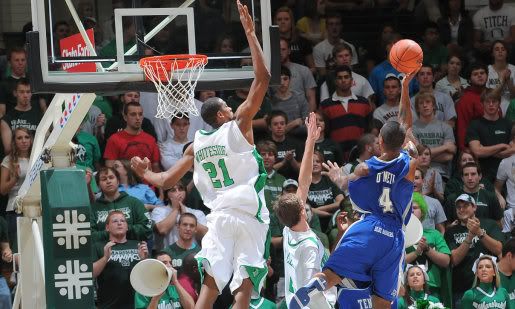
NBA Draft Prospects: Dominique Jones, South Florida

Click here to find all of our 2010 NBA Draft prospect breakdowns.

Stats: 21.4 ppg, 6.1 rpg, 3.6 apg, 1.7 spg, 2.9 t/o's, 45% FG, 31.1% 3PT

Size:

  • Listed: 6'4", 205 lb, 21 yrs old
  • Combine: 6'5" (with shoes), 216 lb, 6'9 1/4" (wingspan)


About Him: South Florida found a diamond in the rough when they landed Dominique Jones three years ago. The Lakes Wales, FL, native averaged 17.1 ppg and 18.1 ppg, respectively, in his first two seasons for the Bulls, but USF didn't have much to show for it in terms of the win column. This past season, however, Jones averaged 21.4 ppg while leading USF to a 20 win season, a 9-9 finish in the Big East, and a trip to the NIT.

Jones' game is based around his ability to get to the basket. Jones is a muscular 6'5", 216 lb, and has a tremendous first step. He uses that strength and quickness when he puts the ball on the floor, and defenders in the Big East had a lot of trouble keeping him out of the paint. He isn't the most explosive leaper, which wasn't as much of an issue at the college level. He had the length (6'9 1/4" wingspan) and the strength to draw fouls and finish through contact, and developed a floater that he was able to knock down consistently.

Perhaps the best aspect of Jones' game is his ability to draw fouls. He has tremendous body control and coordination, and with his frame he is able to bounce off of bigger defenders in and around the paint. He averaged 8.5 FTA a game as a junior an knocked them down at a 74% clip.

Jones ability to penetrate becomes all the more impressive when considering the two areas of his game that are lacking on the offensive end. Jones almost exclusively attacks going to his right hand, showing more confidence and more ability to get all the way to the rim. When he went left, he was much more likely to pull-up in the mid-range. The problem is that the biggest weakness in Jones offensive arsenal is his jumpshot. He has a slow release and pretty poor form, which results in very inconsistent results from the perimeter. It is going to take considerable work to get his jumper to the point that it can be considered a weapon offensively, but if he does, watch out.

Jones projects as a combo guard in the NBA, but he can absolutely play the point. He's not necessarily averse to being a playmaker -- he averaged 3.6 apg this past season. He dominated possession of the ball during his time at South Florida, but for the most part it seemed like he made the effort to find open teammates. His Bull teammates just weren't always that talented. Jones is effective creating in the pick-and-roll, and is a willing passer as well, which is something that will be an asset for NBA teams as Jones seems to be destined to be a sparkplug off the bench.

On the defensive side of the floor, Jones has the potential to be very good. As we mentioned, his physical profile is outstanding. He has the size, strength, and lateral quickness to physically overwhelm a point guard, and given his length he should be able to defend two guards -- especially those on the second team -- effectively. He's an aggressive defender as well, unafraid of going chest to chest with his man when that player has the ball.

Another aspect of his game that deserves mention is Jones ability to rebound the ball. He averaged 6.1 rpg on the season, and collected quite a few of those on the defensive end. He's capable of grabbing a rebound and leading the break.

Comparison:
  • Best Case Scenario: The comparison that I have seen quite a bit is Rodney Stuckey, which is a pretty good best case for Jones. Stuckey is a starter and puts up points with a lacking jumper.
  • Worst Case Scenario: A DaJuan Wagner type of career arc. If Jones can't add a jumper and can't improve his left hand, he won't be playing for long in the NBA.
Outlook: Jones can be a very valuable piece for an NBA team. While I don't think he is necessarily destined to be a starter in the NBA, I think he can be a competant back-up. Here's a guy that clearly knows how to score, he defends well, he plays hard, and he can play either guard spot. He also draw fouls at a good clip. If Jones improves on his weaknesses, he will end up being a very good back up or a starter in the right situation. At the very least, he should be a guy that can come in and get 15-20 points on a given night.

Highlights:


Continue reading...

Sunday, June 20, 2010

NBA Draft Prospects: Ed Davis, UNC

Click here to find all of our 2010 NBA Draft prospect breakdowns.

Stats: 12.9 ppg, 9.7 rpg, 2.7 bpg, 57.8% FG

Size:

  • Listed: 6'9", 215 lb, 21 yrs old
  • Combine: 6'9 3/4" (with shoes), 227 lb, 7'0" (wingspan)


About Him: After a freshman season that saw Davis put together some impressive performances as the sixth man for a national title winning UNC team, there were some lofty expectations for the youngster coming into the 2010 season. An up-and-down year ended when Davis broke his wrist in February, and after a bit of speculation regarding his draft status, Davis decided to turn pro.

Davis has quite a bit of upside, but as a player he is still quite raw. Athletically, Davis is quite impressive. Almost 6'10" in shoes, he's capable of getting out and running the floor. He is quite explosive as well, sporting a 36" max vert. Combine that with his solid wingspan, and Davis has the tools to be an effective pro.

The problem is that Davis currently has no idea how to use those tools. Despite being as athletically gifted as he is, Davis isn't all that coordinated. He moves well when running end to end, but he isn't great when he is forced to get into a defensive stance or make a move in the post or on the perimeter. And while he has a frame that looks like it can hold quite a bit of strength and weight -- broad shoulders, long arms, etc. -- it is going to be a while before he fills outs. This becomes an issue in the post defensively. Far too often, Davis gave up good post position to an offensive player.

As a player, Davis does a couple of things really well. For starters, his length and athleticism allow him to be an excellent target and finisher around the rim. The majority of his points the last two seasons came as a result of finishing off offensive rebounds or dump-offs around the basket. He's also a very good shot-blocker and rebounder, showing an understanding of helpside defense and the discipline not to bite on a shot fake. On the glass, he is active -- on both ends of the floor -- and has the ability to go and get rebounds out of his area. As he improves his strength, and thus his ability to box out, Davis could turn into a very good rebounder at the next level.

Offensively, Davis is still quite raw. His back-to-the-basket game consists almost solely of a left-handed jump hook, which is actually quite effective. Beyond that, however, he looks weak and mechanical when attempting anything more complicated or advanced. His perimeter game is non-existant. According to Draft Express, Davis took four jump shots all season long. He has almost no ball-handling ability, and is not much of a passer. In other words, he has a long way to go before he would be considered an offensive threat in the NBA.

Comparison:
  • Best Case Scenario: The comparison I've seen the most of lat has been Al Horford. I think Davis is a little more athletic, while Horford definitely has more strength than Davis, but it Horford is a pretty good best case scenario. A rebounder and shot-blocker that can get you 12-15 ppg.
  • Worst Case Scenario: The other comparison I've seen quite a bit is another former Tar Heel, Brandan Wright. Both long, slender athletes that left school quite raw offensively. Wright averaged 8 points and 4 boards for the Warriors this year. If his offensive never comes around and Davis spends time in the weight room, a career path along the line of Dale Davis isn't out of the question either.
Outlook: Davis has a long way to go. Any team that drafts him will need to realize that it is quite possible that Davis won't be ready to contribute to an NBA team for two or three years. He needs to fill out and he needs to develop his offensive arsenal. That said, at the very least Davis should be able to be a rebounder and a shot blocker at the next level. One of the bigger questions regarding Davis is whether he can play the power forward position. If he can, which would require him developing his perimeter game on both ends of the floor, than he probably has a better chance of carving himself out an NBA career.

Highlights:


Continue reading...

Saturday, June 19, 2010

NBA Draft Prospects: Jordan Crawford, Xavier

Click here to find all of our 2010 NBA Draft prospect breakdowns.

Stats: 20.5 ppg, 4.7 rpg, 2.9 apg, 1.3 spg, 39.1% 3PT, 46.2% FG, 2.4 t/o's

Size:

  • Listed: 6'4", 195 lb, 21 yrs old
  • Combine: 6'4 1/2" (with shoes), 198 lb, 6'7" (wingspan)


About Him: After a solid, yet unspectacular freshman season at Indiana where he averaged 9.7 ppg on a team that included Eric Gordon, Armon Bassett, and DJ White, Crawford -- the younger brother of former Kentucky star Joe Crawford -- bounced after Kelvin Sampson imploded the Hoosier program, transferring to Xavier. A relative unknown, Crawford put his name on the map during the summer of 2009 when he caught the King himself getting lazy on helpside defense with the dunk heard 'round the world.

Crawford hasn't slowed down since. The 21 year old sophomore got off to a slow start to the season, but finished the year averaging 20.5 ppg as the main offensive option for a Xavier team that tied Temple as the A-10's regular season champ. Crawford is a gunner, through and through. Simply put, the kid can flat out score, and he does so in a variety of ways. He has awesome range on his jumper, which he can hit off the catch or off the dribble, with a hand in his face, out to (no exaggeration here) about 30 feet. Ask Kansas State. He takes quite a few (very) low-percentage three-point shots this season, and he still managed to shoot over 39% from deep. Think about that.

Crawford has also become proficient in the mid-range game. He can knock down pull-up and step-back jumpers at a pretty consistent rate. And while he is at his best with the ball in his hands -- a "slasher" is the term most have used here -- Crawford is much better in the mid range than he is at finishing around the rim. The dunk on LeBron aside, Crawford was just a slightly above average athlete at the college level. He's not terribly explosive, and his slight frame doesn't help him absorb contact all that well. He can does have a few floaters, short jumpers, and runners in his arsenal, but he is inconsistent at knocking those down, mainly because they end up being very difficult shots.

There are two main problems that Crawford has as a prospect. The first is that he needs the ball in his hands to be effective. He's not the kind of player that is going to run off of a screen and knock down jumpers. He's not as effective spotting up on the wing. He's at his best when he has the ball in his hands and is allowed to break down a defense to create a shot for himself. Unfortunately, Crawford is not going to be afforded the opportunity that he had at Xavier; he won't be allowed to take 15-20 shots per game and dominate possession of the ball. If he doesn't develop the ability to play off the ball, he may find his minutes limited at the next level.

The other issue is his shot selection. Crawford makes a lot of very difficult shots, but he also takes quite a few dumb ones as well. Chris Mack had to live with it at Xavier this season because the Musketeers only had limited offensive options. But in the NBA, Crawford isn't going to be able to take contested 27 footers with 15 seconds left on the shot clock.

Defensively, the potential is there. He's got decent lateral quickness, good length, and the size to cover a point guard or a two guard if need be. But at the college level, he gambled too much and never really put in the effort. Part of that was how much Xavier relied on him offensively, the question is going to be, however, how big of a part was it?

Comparison:
  • Best Case Scenario: Jamal Crawford is pretty good comparison for Jordan. Similar size and skills sets, and Jamal had some good seasons in New York. A more realistic best case is probably a more athletic Flip Murray or a bigger Will Bynum, a sparkplug off the bench that gets minutes because they can put up points in a hurry.
  • Worst Case Scenario: Maybe a guy like an Eddie House, if Crawford can get used playing off the ball. A role player that gets limited minutes as a shooter to spread the floor.
Outlook: Crawford probably isn't destined for stardom at the next level, but he is arguably the best pound for pound scorer in this draft. If he can reign in his shot selection, turn up the defensive intensity, and maybe develop an ability to play off the ball, someone will find a spot for a kid that can get 20-25 points on a given night.

Highlights:


Continue reading...

Friday, June 18, 2010

NBA Draft Prospects: Xavier Henry, Kansas

Click here to find all of our 2010 NBA Draft prospect breakdowns.

Stats: 13.4 ppg, 4.4 rpg, 1.5 apg, 1.5 spg, 41.8% 3PT, 1.9 t/o's

Size:

  • Listed: 6'6", 210 lb, 19 yrs old
  • Combine: 6'6 1/2" (with shoes), 210 lb, 6'11 1/4" (wingspan)

About Him: Xavier Henry looked like he was going to be a superstar early on in the season. With the loaded Jayhawks playing a relatively easy schedule in November and December, Henry shined, hitting over 50% from deep for a while and averaging 17 ppg. He had come back down to earth by the end of his freshman campaign, finishing the season with respectable averages of 13.4 ppg and just under 42% from three point range.

As you might imagine, Henry's game centers around his ability to knock down spot-up jumpers. When he gets he feet set, shoulders squared, and a decent look at the rim, Henry is a dangerous shooter off of the catch. He got quite a few of these looks playing alongside Tyshawn Taylor and Sherron Collins as a freshman, taking nearly 50% of his FGA from beyond the arc.

Henry still needs to develop some all-around offensive polish, however. He really struggles when he is forced to shoot off of the dribble, as he just doesn't look comfortable pulling up. Where his form is picture perfect on a catch-and-release, he looks a bit herky-jerky and far less fluid shooting off the bounce. He also struggles a bit when he is forced to get all the way to the rim. While he can really get up when he is given time and space, he's not quite as explosive in traffic. He's a decent finisher around the rim, but given the fact he has a 36.5" max vert (he's only at 28.5" on a no-step vert, which is a huge increase), an excellent wingspan, and one of the stronger frames at his position in this draft, you would expect him to be a better finisher and better at absorbing contact around the rim.

As a passer, Henry only averaged 1.5 apg, but he showed willingness to move the ball within the Jayhawk offense and also proved to be at least capable of finding the open man when he put the ball on the floor. But again, he didn't put the ball on the floor all that much as a freshman, which limited his opportunities.

One other aspect of Henry's offensive game that impressed me during the season was his ability to get out and run a lane on the break. Granted, he was playing with one of the best point guards in the country, but Henry seemed like he really understood spacing on the break, getting quite a few wide open threes and finishing off highlight reel alley-oops with thunderous dunks.

Defensively is where the question mark resides. Henry is a good, not great, athlete, struggling a bit with his lateral quickness. He seemed to have some trouble staying in front of smaller, quicker guards last season, which could be a problem if he is going to play the two in the NBA. He feasibly could be a three, but at 6'6" he might be a touch on the small side (although he nearly 7'0" wingspan helps in that department). To play for Bill Self, you have to be able to defend, so clearly Henry puts in the effort and, at the very least, has an understanding of the fundamentals.

Comparison:
  • Best Case Scenario: Draft Express lists James Posey as Henry's best case, and while I like the comparison as far as roles go, I think Henry has more of an upside than Posey. He's better offensively. How about Jason Richardson late in his career?
  • Worst Case Scenario: A CJ Miles or a Martell Webster.
Outlook: Henry doesn't exactly have the upside of an all-star, but that doesn't mean he can't be a very effective player in the league. Perhaps the most important attribute he displayed at Kansas was his willingness to play a role. Even when he was averaging 17 ppg, he was a guy that got his points mostly in transition and off of a catch-and-shoot. If he can find a position to defend and continue to develop the rest of his offensive repertoire, there's no reason he can't be a 12-15 ppg scorer.

Highlights:


Continue reading...